DRAM Prices Soar 850% in a Year... Selling Smartphones Now Risks Losses [Samsung Semiconductor 'Dilemma']
- Input
- 2026-03-15 18:19:23
- Updated
- 2026-03-15 18:19:23

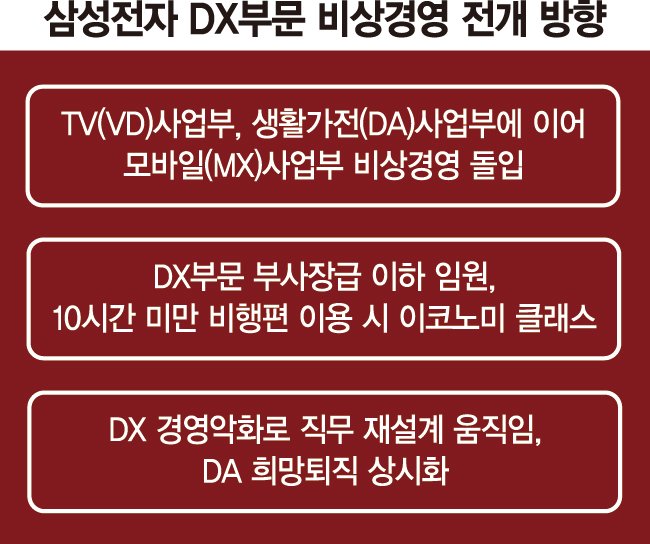
■ Why is the Samsung Electronics DX Division in emergency mode?
On March 15, observers inside and outside Samsung Electronics said the Samsung Electronics DX Division’s decision to place its smartphone business under an emergency management regime, following TVs and home appliances, reflects several factors. They cited structurally weak demand and intensifying competition from Chinese companies, and added that the recent surge in manufacturing costs due to semiconductors and artificial intelligence components has delivered the final blow.
Recently, Roh Tae-moon, head of the Device eXperience (DX) Division and president of Samsung Electronics, lamented, "Rising memory prices are bound to affect product prices." Due to the sharp increase in memory semiconductor prices, the Samsung Galaxy S26 has become more than 400,000 won more expensive than its predecessor at the top end, and for the first time since the S series was launched, the Ultra 512GB model has a factory price exceeding 2 million won. Samsung tried to keep the price hike to a minimum, mindful of consumer resistance, but some inside the company now warn that the more units they sell, the more money they could lose.
Last year, the operating margin of the Mobile eXperience Division (MX Division) hovered around 10–11% each quarter, but this year it is expected to fall to the 2–3% range. More conservative forecasts even suggest it could drop to around 1% or slip into the red.
With the Samsung Electronics DX Division shifting into company-wide emergency management, many expect Roh, as head of the DX Division, to unveil organizational renewal and turnaround strategies at Samsung Electronics’ regular shareholders’ meeting on the 18th of this week.
■ Reassignments and ongoing voluntary retirement in the DX Division
With the once-reliable Mobile eXperience Division now also under emergency management, the Samsung Electronics DX Division is tightening its focus on organizational streamlining and cost cutting. Efforts to optimize the workforce structure are also gaining momentum. In May last year, the Visual Display Business Division, which oversees the TV business, declared emergency management and carried out organizational and personnel restructuring, including one-on-one interviews with some employees. Following that, the Digital Appliances Division has reportedly been accepting voluntary retirement applications on a rolling basis. Internally, the company is also said to be discussing raising the cap on severance pay to make voluntary retirement more attractive.
Employees at Samsung Electronics are closely watching these moves to reshuffle the workforce. The Samsung Electronics branch of the Samsung Group Supercorporate Labor Union has received internal reports that job redesign could continue this year due to the deteriorating performance of the Samsung Electronics DX Division, and has asked management for clarification. The union recently sent the DX Division an official letter titled a "Request for compliance with the collective agreement and consultations regarding ongoing job redesign."
Against this backdrop, cost-cutting measures across the Samsung Electronics DX Division are also expanding. Executives at the vice president level and below in the DX Division have decided to fly economy class on flights of less than 10 hours. Internal budgets and meal allowances for team gatherings are also reportedly being reduced.
As the Samsung Electronics DX Division pushes ahead with sweeping cost reductions and workforce optimization, some predict that more DX employees may join the industrial action being pursued by the union. In particular, the smartphone and home appliance businesses operate on a tightly linked system of flagship product launches, marketing and logistics, so a strike could significantly disrupt operations if it materializes.
However, within the Samsung Electronics DX Division there is also a view that the union’s demand to scrap the cap on the Overall Performance Incentive (OPI) would structurally favor the Device Solutions Division, which is benefiting from the memory boom, making collective action less likely. Last year, Samsung Electronics posted 43.6011 trillion won in operating profit, of which the Device Solutions Division accounted for 24.8581 trillion won and the Samsung Electronics DX Division 12.8527 trillion won, a sizable gap. The contrast was even sharper in the fourth quarter: the Device Solutions Division generated about 16.4 trillion won in operating profit, while the Samsung Electronics DX Division earned only around 1.3 trillion won. As a result, some employees in the Samsung Electronics DX Division suspect that the union’s demands are effectively tailored to the semiconductor business.
One insider said, "Among DX employees, there is a sense that even if the union succeeds in abolishing the cap on performance bonuses, it will not bring substantial benefits to the DX side," adding, "That is why internal sentiment about whether to participate in a strike is so complicated."
[email protected] Eunhyo Cho, Soobin Lim Reporter