How the People Power Party’s Strategic Nomination Could Shake Up the Democratic Party’s Kim Dong-yeon–Choo Mi-ae Primary
- Input
- 2026-03-15 11:54:05
- Updated
- 2026-03-15 11:54:05
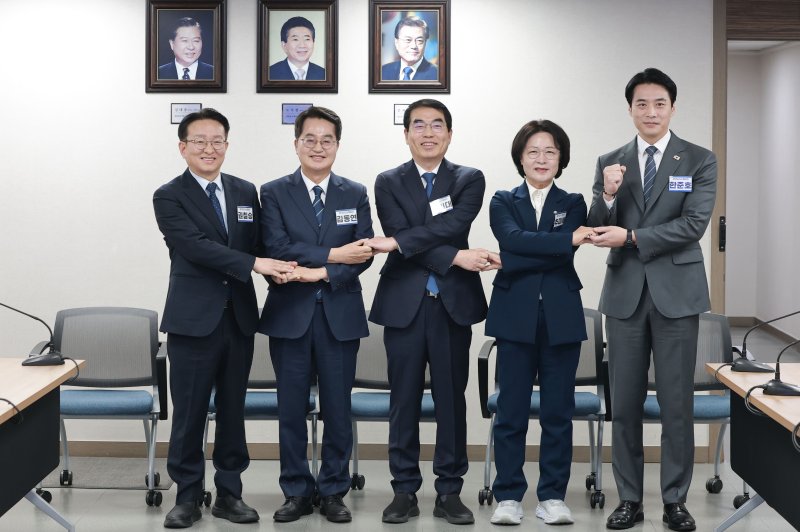
As talk grows within the People Power Party of a “strategic nomination” to overcome a shortage of strong candidates, the Democratic Party of Korea is being pushed to rethink its own primary strategy.
If a political heavyweight from the ruling camp enters the race, observers say the general-election competitiveness of the Democratic Party of Korea’s nominee will inevitably have to be reassessed.
As a result, the party’s primary for Governor of Gyeonggi Province now requires a more strategic choice. The central question is whether Democratic Party of Korea members will choose a candidate who is perfectly aligned with the party’s values, or one who can capture centrist votes in the general election and secure a decisive victory.
PPP expected to make a strategic nomination after the Democratic Party of Korea picks its candidate, creating a new variable for general-election competitiveness
At present, the People Power Party has received applications from two figures seeking the Gyeonggi governorship: Supreme Council member Yang Hyang-ja and former Korea Expressway Corporation president Ham Jin-gyu.However, within the party there are persistent calls to strategically nominate former lawmaker Yoo Seung-min in order to win the Gyeonggi race. Many see a strong possibility that the PPP will play this strategic-nomination card after the Democratic Party of Korea finalizes its own candidate.
If a political heavyweight such as Yoo Seung-min enters the race, the Democratic Party of Korea’s current optimism that "we can win no matter who runs" could evaporate overnight. In that scenario, party members’ criteria are likely to shift rapidly from ideological clarity to an electability-first logic focused on picking a sure winner.
The Democratic Party of Korea primary is effectively shaping up as a two-way contest between Kim Dong-yeon, positioned as a "stable economic administrator" who has proven his ability to run the provincial government, and Choo Mi-ae, cast as a "reform crusader" backed by the party’s hard-core supporters.
A local political insider noted, "If former lawmaker Yoo, seen as a symbol of rational conservatism, enters the race, the fickle centrist voters of Gyeonggi could swing sharply in his direction," adding, "In that case, not only would the Democratic Party of Korea candidates’ general-election competitiveness weaken, but strategic voting within the primary—choosing the candidate who can actually win—would become much more pronounced."
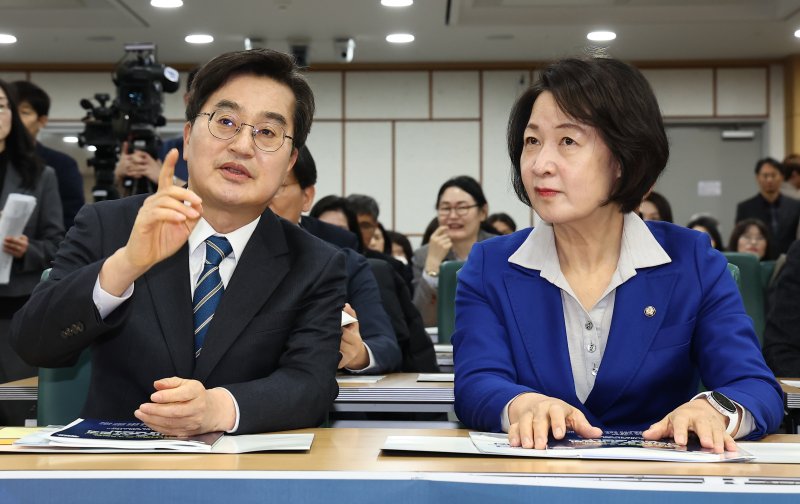
"Kim Dong-yeon leads public sentiment" — tops polls among moderates and conservatives, seen as stronger in a general election
Against this backdrop, the presence of Governor Kim Dong-yeon is standing out even more. Recent opinion polls show Kim widening his lead over other Democratic Party of Korea contenders, drawing solid support not only from progressives but also from moderates and conservatives.In a Gyeonggi Ilbo poll conducted in February on preferred candidates for Governor of Gyeonggi Province, Kim ranked first with 30.0%, followed by lawmaker Choo Mi-ae at 18.3%.
Among Democratic Party of Korea supporters, Kim recorded 33.4% and Choo 32.7%, a virtual dead heat within the margin of error. But among conservative respondents, Kim stood at 27.1% while Choo was at just 6.8%, indicating a widening gap in support from moderate and conservative voters. (For more details, see the Central Election Poll Deliberation Commission.)
Kim’s greatest strength is the sense of stability he conveys as an "economic expert" who previously served as deputy prime minister for the economy at the Ministry of Economy and Finance. Many observers say his image as an administrator focused on livelihoods and economic performance, rather than partisan fights, is resonating even with conservative-leaning voters.
Current affairs journalist Joo Jin-woo also highlighted Kim’s profile in a recent lecture, remarking, "Governor Kim Dong-yeon is the very figure whom the People Power Party leadership most hopes will not run, and whom they fear the most," underscoring both Kim’s competence and his ability to reach beyond the progressive base.
"Hard-core base" candidate Choo Mi-ae faces questions over general-election strength... her ability to broaden support is key
By contrast, Choo Mi-ae, Kim’s strongest rival within the Democratic Party of Korea, faces the challenge of bridging a gap between party members’ sentiment and broader public opinion.Choo enjoys overwhelming backing from the party’s hard-core supporters and has built strong momentum in the early stages of the primary. Yet doubts persist about her competitiveness in a general election among ordinary voters.
Critics worry that her distinctly hardline image could alienate centrist voters in the general election.
If the People Power Party fields a "centrist-expansion" candidate such as Yoo Seung-min, Choo’s limited ability to appeal beyond the base could become a serious liability, making it difficult for the Democratic Party of Korea to be confident of victory.
A local dues-paying party member predicted, "This election will be a complex contest between voters who want to punish the current administration and those who want to evaluate the provincial government’s performance," adding, "The People Power Party’s choice of candidate will play the role of a disruptive catalyst that could upend the dynamics of the Democratic Party of Korea primary."
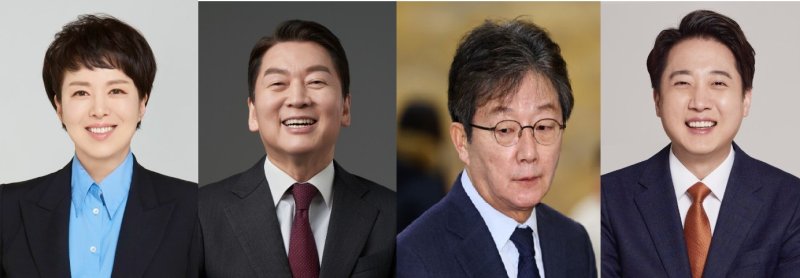
For the Democratic Party of Korea, overcoming the gap between party members and the broader electorate is crucial: "We must choose a candidate who can win the general election"
Accordingly, the Democratic Party of Korea primary will hinge not only on how voters evaluate Kim Dong-yeon and Choo Mi-ae, but also on whether the party can overcome the divergence between public sentiment and the views of its own members.From the People Power Party’s perspective, facing Kim in the general election would be more challenging because of his strong appeal to centrist voters.
If the PPP nominates a centrist-oriented figure like Yoo Seung-min, the Democratic Party of Korea will have little choice but to place greater weight on Kim’s competitiveness in order to hold on to the middle ground.
However, when looking only at Democratic Party of Korea supporters, Choo often leads Kim or runs neck and neck with support levels around 40%.
In the party’s primary system, the preliminary round (cut-off) is decided entirely by dues-paying members, with a "100% party members’ vote". At this stage, there is no room for broader public sentiment to intervene, which gives a decisive advantage to candidates who dominate the party base over those with broader centrist appeal.
The final primary, by contrast, is based on a "50% party members’ vote + 50% public opinion" formula. Even if Kim leads Choo by 10 to 15 percentage points among the general public, the outcome becomes unpredictable if Choo opens up an even larger gap among party members.
In short, Kim’s strength lies in his ability to broaden support, while Choo’s lies in her capacity to rally and solidify the base. Current indicators suggest that Kim holds the advantage in support from moderate and conservative voters.
However, if the People Power Party brings in a "political heavyweight" through a strategic nomination, it is almost certain to alter the psychology of Democratic Party of Korea members. That possibility is emerging as a new and significant variable in the race for Governor of Gyeonggi Province.
[email protected] Reporter Jang Chung-sik Reporter