"Honey, did our neighborhood barbecue place turn into an omakase joint?"... The shock of paying 100,000 won for four servings of pork belly [How Much Is Enough]
- Input
- 2026-03-15 09:02:58
- Updated
- 2026-03-15 09:02:58
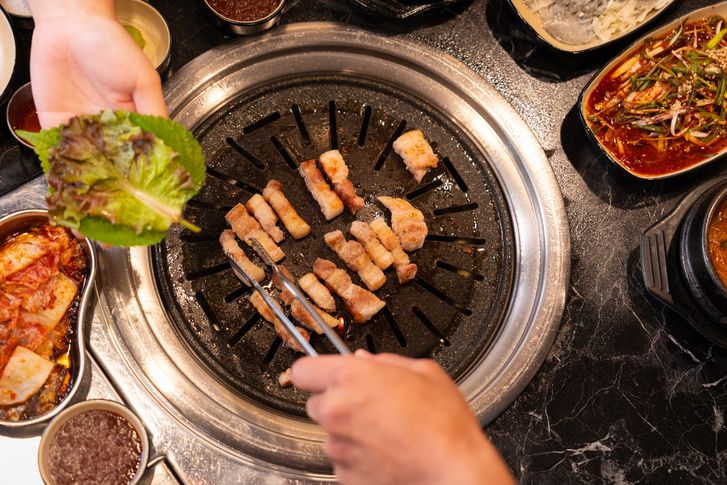
[The Financial News] "Honey, the weather’s getting nicer. How about we take the kids to Hangang Park and then have some pork belly for dinner?"
On the first weekend of March, office worker Mr. A (43) cheerfully suggested a family meal out, buoyed by the spring breeze. A few hours later, standing at the cashier of a neighborhood barbecue restaurant, cold sweat was running down his back.
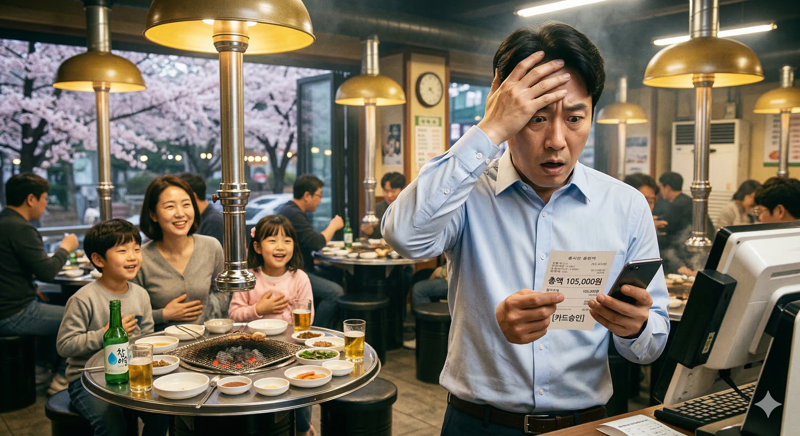
"Four servings of pork belly, one bottle of soju, plus a stew and bowls of rice... that comes to 105,000 won."
With trembling hands, Mr. A handed over his card and screamed inwardly.
"Honey, did our neighborhood pork belly place turn into an omakase restaurant? Why do I feel like I need an overdraft just to eat pork?"
It sounds like a joke, but this is the chilly reality of food prices facing South Korean parents in their 30s and 40s this spring. In this sixth installment, we look into the thinning wallets of breadwinners in an era of high inflation, where even a simple family outing feels daunting.
◇ "21,000 won per serving of pork belly"... Comfort food for ordinary people disappears
Mr. A’s outcry is no exaggeration. An analysis of the latest data from the Price Information Portal "Chamgagyeok" run by the Korea Consumer Agency (KCA) shows that reality is even harsher than people think.
According to data released earlier this year, the average price in Seoul for one serving (200 grams) of pork belly, one of the most popular dining-out menu items, has easily surpassed 21,000 won.
If a family of four sits down at a restaurant and orders only the standard amount of meat, that alone costs 84,000 won. Add a stew, rice, and a bottle of soju, and a single 100,000-won bill is nowhere near enough.
And that’s not all. The average price of jjajangmyeon, a kids’ favorite, climbed past 7,000 won long ago. Kalguksu is nearing 10,000 won, and even a simple roll of gimbap has entered the 3,800-won era.
Statistics Korea’s figures on last month’s dining-out inflation show that staple dishes for ordinary people are rising one after another, tightening the squeeze on household finances.
The phrase "pork belly and a glass of soju with the family" is no longer a modest comfort for the average person. It has turned into an "annual event" you have to brace yourself for.
◇ Mothers push back, experts weigh in: "This isn’t a luxury, it’s a survival menu"
So why do wives still insist on eating out when it’s so expensive? The pushback from mothers on the front line of food prices is just as desperate.
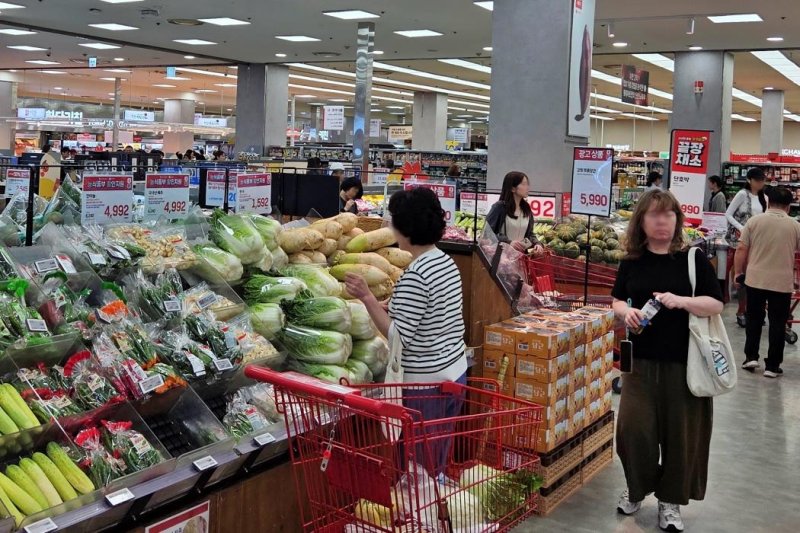
Homemaker Ms. C (39) lamented, "You think we can just cook at home because restaurant prices are high? One trip to the supermarket and I can hardly breathe."
She added, "When it’s scary to even pick up a single bunch of green onions or one zucchini, by the time you buy expensive meat, wash the lettuce, and make a stew, the effort and cost are about the same as going out to eat."
In other words, weekend dining out is not an expression of vanity. It is a survival strategy, a compromise struck between runaway inflation and the burden of housework.
Experts say this is more than just a matter of rising prices; it is a structural problem. One economist noted, "Rising ingredient costs, combined with soaring labor and rent, are creating a situation where both small business owners and consumers are losing," and added, "Perceived inflation—where everything goes up except wages—is robbing ordinary people of even their small weekend pleasures."
◇ "Still, what can you do? It’s spring"
In the end, Mr. A stuffed the receipt deep into his wallet, trying to soothe his aching heart. His bank balance had taken a hit, but he decided to take comfort in his children’s smiles as they patted their bellies and said, "Dad, the meat was really good today!"
From an economics standpoint, it was the worst possible spending in terms of value for money.
But what choice does he have? Knowing that the time spent sitting around the table with family on a weekend evening is worth more than a 100,000-won receipt, breadwinners open their wallets yet again.
"Honey, how about we just make some gimbap at home and go on a picnic next weekend?"
In this blustery March, we wish strength to every breadwinner in South Korea whose resolve wavers in front of frightening bills.
[email protected] Jeon Sang-il Reporter