Hormuz Strait Shock Puts Japan’s Economic Growth and Monetary Policy to the Test [Japan Inside]
- Input
- 2026-03-14 16:54:16
- Updated
- 2026-03-14 16:54:16
As military clashes surrounding the Islamic Republic of Iran intensify in the Middle East, Japan’s economy has once again been put to the test of “geopolitical risk.” Japan is one of the world’s leading energy importers, relying on the Middle East for more than 90% of its crude oil imports. With the de facto blockade of the Strait of Hormuz and a simultaneous surge in international oil prices becoming reality, concerns are mounting that industrial production, financial markets, and even the broader macroeconomic outlook could be shaken.
The impact is particularly severe because around 400 Japanese companies operate in the Middle East, where they are engaged in energy, chemical, and infrastructure projects. As a result, the current crisis is seen not merely as a spike in crude prices, but as a complex economic shock that affects corporate investment, supply chains, and monetary policy.■ Japan’s economic growth under scrutiny as downside risks growJapan’s economy had been on a relatively stable recovery path until recently. The country’s annualized economic growth rate for the fourth quarter of last year was revised up to 1.3%, showing stronger-than-expected resilience.
Real wages have also begun to rise, fueling hopes for a recovery in consumption. In January this year, Japan’s real wages increased for the first time in 13 months.
However, the Middle East risk has emerged as a new variable that could disrupt this recovery trend.
Takahide Kiuchi, an economist at Nomura Research Institute (NRI), warned, “If the rise in oil prices continues, Japan’s economy could face the risk of stagflation.” He estimated that if international crude prices stay around 110 dollars per barrel for a year, Japan’s Gross Domestic Product (GDP) growth rate could fall by about 0.39 percentage points.
Some analysts also suggest that if oil prices climb to around 140 dollars per barrel, Japan could reach a tipping point where its economic growth rate turns negative.■ Direct hit to industry as energy, chemical and manufacturing costs riseThe industrial sector is the most directly exposed to the Middle East crisis.
Japan’s manufacturing base is structurally energy-intensive. Major sectors such as steel, automobiles, semiconductors, and chemicals all consume large amounts of energy. If high oil prices persist, Japanese companies are likely to face higher production costs and a loss of export competitiveness.
Uncertainty is also growing for Japanese companies’ on-the-ground operations in the Middle East.
With the Islamic Republic of Iran blocking the Strait of Hormuz, exports of Liquefied Natural Gas (LNG) and chemical feedstocks have been disrupted, and energy and chemical projects involving Japanese firms are being affected.
According to Teikoku Databank, as of August 2024 there were 443 Japanese companies operating in 13 Middle Eastern countries, excluding the State of Palestine.
By country, 289 companies are in the United Arab Emirates (UAE), 95 in the State of Israel, and 78 in the Kingdom of Saudi Arabia (KSA).
Japanese firms are widely engaged in energy and infrastructure projects across the Middle East, raising concerns that a prolonged crisis could send shockwaves through their entire supply chains and energy procurement structures.
One prominent example is the Fujairah F3 Power Plant in the United Arab Emirates (UAE). This project, jointly funded by Marubeni and Hokuriku Electric Power, began operations in October last year and is one of the largest power plants in the UAE.
In Qatar, LNG production facilities involving ITOCHU Corporation, Mitsui & Co., and LNG Japan have currently halted output. According to people familiar with the matter, it remains unclear when production at this LNG project will resume.
Chiyoda Corporation, a Japanese plant engineering company, is responsible for the Engineering, Procurement and Construction (EPC) of Qatar’s LNG plants, but construction work has been temporarily suspended. This is seen as a prime example of how LNG supply chains involving Japanese companies are directly exposed to geopolitical risks.
In the Kingdom of Saudi Arabia (KSA), the chemical industry is also feeling the impact.
Mitsubishi Gas Chemical has invested in Methanol Chemicals Company (Chemanol), which produces and sells methanol in KSA. However, with the Strait of Hormuz blocked and methanol procurement becoming more difficult, many expect that if the situation drags on, production costs for chemical products such as plastic feedstocks will inevitably rise.■ Financial market impact: higher volatility in yen, stocks and bondsThe Middle East risk is also likely to affect Japan’s financial markets.
Rising international oil prices are highly likely to feed through into higher electricity bills, transportation costs, and food prices.
Consumer prices in Japan are already running above the central bank’s 2% target, so additional upward pressure on inflation is a real concern.
Higher crude prices also worsen Japan’s trade balance. A deteriorating trade balance can weaken the Japanese yen, which in turn pushes up import prices and risks creating a vicious cycle of inflation.
Geopolitical risks typically trigger global stock market declines and a flight to safe assets. Analysts warn that Japan’s stock market could also see heightened volatility amid rising energy prices and fears of a global economic slowdown.■ Bank of Japan caught between rate hikes and slowing growthThese developments are complicating the Bank of Japan’s (BOJ) monetary policy decisions.
The BOJ’s current policy rate stands at around 0.75%. The central bank has been gradually normalizing rates after years of ultra-low interest rate policy.
Market participants expect additional rate hikes this year, with some forecasting that the policy rate could rise to around 1%. A few institutions even suggest the BOJ could raise rates twice within the year.
With both wages and prices climbing, there is growing support within the BOJ for tighter policy.
The problem is that the Middle East crisis is making the BOJ’s policy judgment even more difficult.
Higher oil prices increase inflationary pressure and strengthen the case for rate hikes. At the same time, they can slow economic growth, making it harder for the BOJ to justify raising rates.
Some in the market expect the BOJ to consider another rate hike at its Monetary Policy Meeting in April, but the possibility of a global economic slowdown is seen as a key uncertainty.■ Government response constrained despite release of oil reservesThe Japanese government is responding to the surge in energy prices by releasing strategic petroleum reserves, expanding gasoline subsidies, stepping up LNG diplomacy, and seeking to diversify its energy import sources.
In particular, Tokyo is working with the International Energy Agency (IEA) to release strategic petroleum reserves in an effort to curb domestic gasoline price increases.
However, experts argue that there are structural limits to Japan’s response.
Japan depends on the Middle East for more than 90% of its crude oil and also imports a substantial share of its LNG from the region. In this structure, it is difficult to secure alternative supply sources in the short term. While Japan’s dependence on the Middle East for LNG is relatively low at around 10%, LNG prices are partly linked to crude prices, so a prolonged deterioration in the regional situation could also push LNG higher. If LNG prices rise, electricity bills will inevitably follow.
Expanding energy subsidies could also significantly increase the government’s fiscal burden.
As early as the 16th of this month, Japan plans to release strategic petroleum reserves equivalent to 45 days of domestic consumption into the market. This represents about 18% of the country’s total reserves, which currently cover 254 days of consumption. Critics warn that if the Strait of Hormuz remains blocked for an extended period, such releases will amount to little more than a stopgap measure to buy time.
The government has said it will use a fund created to smooth fluctuations in oil product prices as the source of these subsidies. The fund currently holds about 280 billion yen. If the war in the Middle East does not end quickly, the fund could be depleted within a month or two. Mizuho Research & Technologies estimates that if retail gasoline prices rise to 200 yen per liter and the government pays a subsidy of 30 yen per liter, the 280 billion yen fund would be exhausted in just over a month.
Japan already has the highest government debt-to-GDP ratio in the world, so the room for additional fiscal spending is limited.
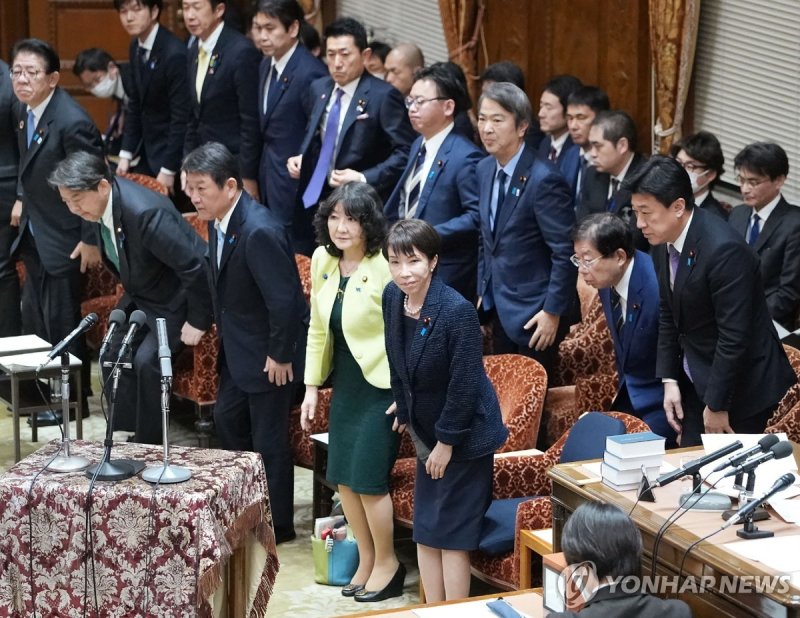
On the 14th, the ruling Liberal Democratic Party (LDP) pushed its budget proposal for fiscal year 2026 (April 2026–March 2027) through the House of Representatives of Japan, despite opposition from opposition parties. The budget totals 122.3 trillion yen, the largest ever, and is 7.1 trillion yen higher than the previous year.
[email protected] Seo Hye-jin Reporter