Kharg Island, Targeted by Trump, Is Iran’s Economic Heart
- Input
- 2026-03-14 13:58:43
- Updated
- 2026-03-14 13:58:43
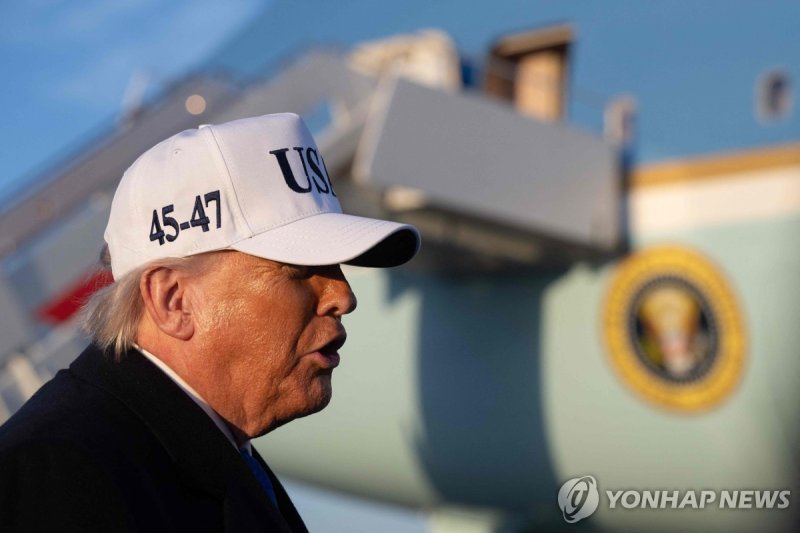
On the 13th local time, Donald Trump announced that US forces had carried out airstrikes on military installations located on Kharg Island in the Persian Gulf. Trump said when he disclosed the operation that energy facilities were deliberately excluded and that only military targets were hit.
However, Trump warned that if the Islamic Republic of Iran or pro-Iranian forces continue to disrupt shipping traffic in the Strait of Hormuz, oil-related facilities on Kharg Island could also come under attack.
Kharg Island is regarded as a core piece of economic infrastructure for the Islamic Republic of Iran. It is a coral island about 8 kilometers long and 4 to 5 kilometers wide, located in the northern Persian Gulf, roughly 55 kilometers from the port of Bushehr. It lies only about 28 kilometers off the Iranian mainland, making it a key strategic outpost.
The island hosts one of the country’s main crude oil export terminals. It handles around 950 million barrels of crude annually, and an estimated 90% of the Islamic Republic of Iran’s total crude exports pass through this single point. Because the surrounding waters are deep enough for very large crude carriers, most of the oil bound for Asian markets such as the People's Republic of China (China) and the Republic of India (India) is shipped via Kharg Island.
The Kharg Island terminal collects crude produced from offshore fields in the Persian Gulf, then stores, processes, and loads it for export. Large storage tanks are clustered on the southern part of the island, alongside berths for ultra-large tankers, a runway, worker housing, and other support facilities. A dense network of subsea pipelines surrounds the island, making it the central hub of the Islamic Republic of Iran’s oil industry.
The facility was first built in the 1960s by the US oil company Amoco. Parts of it were destroyed during air raids in the Iran–Iraq War in the 1980s, but it was later rebuilt and expanded and remains in operation today. In theory, it can load up to 7 million barrels of crude per day, but the Islamic Republic of Iran’s actual exports are currently around 1.6 million barrels a day, leaving substantial spare capacity.
Experts describe Kharg Island as effectively the “lifeline” of the Iranian economy. Until now, the US has applied military pressure on the Islamic Republic of Iran while stopping short of directly attacking oil infrastructure such as Kharg Island, in order to limit the impact on global oil prices. Observers say the latest operation marks a shift, as Washington has now openly raised the possibility of strikes on energy infrastructure.
Consumer News and Business Channel (CNBC), citing a report by JPMorgan Chase, reported that “if the terminal were to be shut down, Iran’s crude storage and export capacity would be severely constrained.” The report noted that the Islamic Republic of Iran currently produces about 3.3 million barrels of crude per day and exports roughly 1.5 million barrels, and warned that if Kharg Island were knocked out, nearly half of national output could be put at risk.
From a military standpoint, Kharg Island is also considered a difficult target. Francis A. Galgano, a military geography expert and associate professor at Villanova University, told CNBC, “To actually seize or completely destroy Kharg Island would require the deployment of large ground forces, potentially on the order of 5,000 troops.”
[email protected] Choi Doo-seon Reporter