"US Rushes Marine Expeditionary Unit (MEU) and Additional Warships to Middle East" WSJ
- Input
- 2026-03-14 03:33:32
- Updated
- 2026-03-14 03:33:32
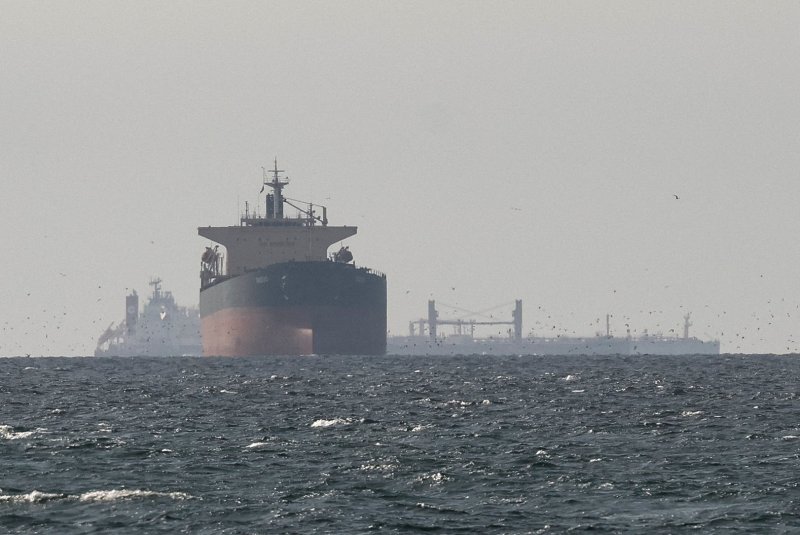
The United States Department of Defense (DoD) is currently moving a Marine Expeditionary Unit (MEU) and additional warships to the Middle East, The Wall Street Journal (WSJ) reported on the 13th (local time). The move comes as the Islamic Republic of Iran steps up attacks on commercial vessels in the Strait of Hormuz, pushing international oil prices above 100 dollars per barrel and disrupting supplies of semiconductors, fertilizer feedstocks, and other raw materials.
Citing three U.S. officials, WSJ reported that Pete Hegseth, the secretary of defense, approved the reinforcement after receiving a request from United States Central Command (CENTCOM).
According to WSJ, the Marine Expeditionary Unit requested by CENTCOM is a rapid-response force capable of conducting independent amphibious landings and operations from the sea. Typically, 2,200 to 2,500 Marines embark on three amphibious assault ships to carry out missions. Including Navy crew members, the total force is about 5,000 personnel.
The MEU integrates ground forces, an aviation combat element of helicopters and fighter jets, and a logistics support unit, enabling it to conduct combat operations independently without additional support.
They are expected to protect commercial vessels against maritime attacks by the Islamic Republic of Iran in the Strait of Hormuz, support the evacuation of nationals if necessary, and carry out precision-strike missions.
John F. Kirby, a former Navy admiral who served as a senior official at The White House during the Biden administration, noted that the MEU is the force the defense secretary can employ with the greatest flexibility. He said it is optimized not for full-scale war, but for rapid intervention in specific crises to stabilize the situation or provide deterrence.
Sending an MEU and additional warships to the Middle East appears aimed at fulfilling Washington’s pledge to escort commercial vessels and neutralize coastal missile sites amid threats from the Islamic Republic of Iran.
The MEU can remain at sea embarked on amphibious assault ships and, when needed, use helicopters or fast boats to rapidly board and protect commercial vessels or block the approach of Iranian fast boats.
Bryan Clark, a senior fellow at the Hudson Institute, explained that in narrow waterways like the Strait of Hormuz, special operations teams and air power from an MEU are far more effective than large warships.
The MEU is also equipped with AV-8B Harrier II and F-35B Lightning II fighter jets, giving it the capability to conduct precision strikes on Iranian coastal bases.
[email protected] Song Kyung-jae Reporter