France and Italy in Contact With Iran to Secure Passage Through Strait of Hormuz: FT
- Input
- 2026-03-14 02:57:52
- Updated
- 2026-03-14 02:57:52
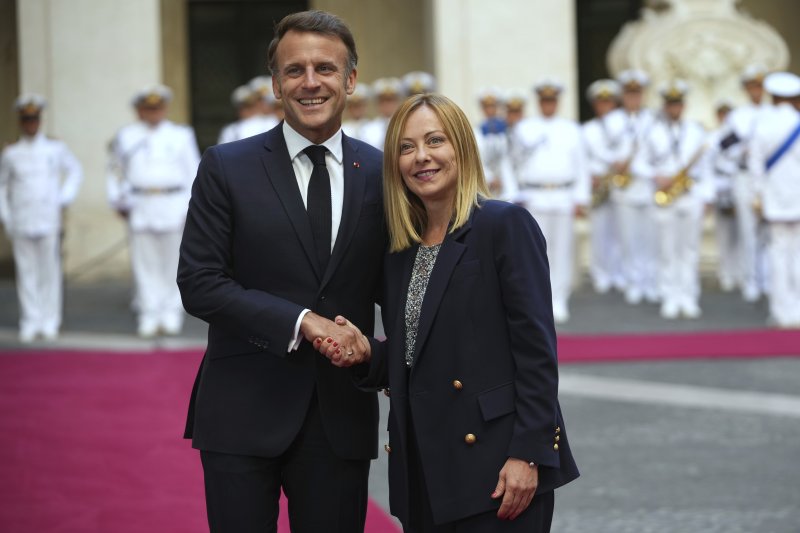
Citing multiple sources, the Financial Times (FT) reported on the 13th, local time, that several European nations, including France, have opened contacts with Tehran to secure safe passage for their vessels through the Strait of Hormuz. The talks are seen as an attempt to restart shipments of crude oil and Liquefied Natural Gas (LNG) from the Gulf region.
The Strait of Hormuz is a critical maritime chokepoint through which about 20% of the world’s crude oil and LNG cargoes pass. However, following attacks on tankers by the Islamic Republic of Iran and a blockade declaration by its new supreme leader, Mojtaba Khamenei, vessel traffic through the area has now virtually come to a halt.
European countries are exploring ways to resume oil and gas shipments without further escalating the conflict. According to FT, France is among the states taking part in the talks, and the Italian Republic has also reportedly sought to establish contact with the Islamic Republic of Iran.
It remains unclear, however, whether the negotiations will make any real progress. Sources noted that it is uncertain whether the Islamic Republic of Iran will even agree to engage in talks. In the market, some observers believe Tehran is trying to push up crude oil and natural gas prices to pressure United States President Donald John Trump into ending the war.
Mojtaba Khamenei, the new supreme leader of the Islamic Republic of Iran, has recently stated that the blockade of the Strait of Hormuz will remain in place. Even so, Iran on the 14th allowed a bulk carrier owned by the Republic of Türkiye to pass through the strait, suggesting that limited passage is being granted to certain vessels.
Europe is trying as much as possible to avoid direct involvement in the current war. Some European countries have even publicly criticized the initial airstrikes by the United States of America (U.S.) and Israel that triggered the regional conflict.
If the Strait of Hormuz remains blocked for an extended period, the impact on the European economy would be severe. International crude prices have climbed from around 60 dollars per barrel at the start of the year to roughly 100 dollars recently. Over the same period, European natural gas prices have surged by about 75%.
The European Union (EU) is currently running the naval mission "Operation Aspides" in the Red Sea to protect commercial shipping, with the Italian Republic, France, and Greece deploying warships. However, according to officials, no European country appears ready to send naval vessels into the Strait of Hormuz to escort ships while the risk of attack remains high.
There are also divisions within Europe. Some countries argue that dialogue with the Islamic Republic of Iran is necessary, while others oppose any such engagement, making a unified response difficult.
Against this backdrop, French President Emmanuel Macron said this week that France is prepared to take part in escort operations for commercial vessels if tensions ease.
[email protected] Reporter Lee Byung-chul Reporter