The Return of $100 Oil: Where Did the U.S. Shale That Once Held Down Prices Go? [Yoon Jae-joon’s World View]
- Input
- 2026-03-14 04:50:00
- Updated
- 2026-03-14 04:50:00
The Islamic Republic of Iran is heightening oil market anxiety by threatening tankers and other vessels passing through the Strait of Hormuz, a chokepoint through which about 20% of the world’s daily oil consumption flows.
In an effort to pull down prices, the United States has decided to release 172 million barrels from its strategic reserves, while the International Energy Agency (IEA) has agreed to a record release of 400 million barrels.
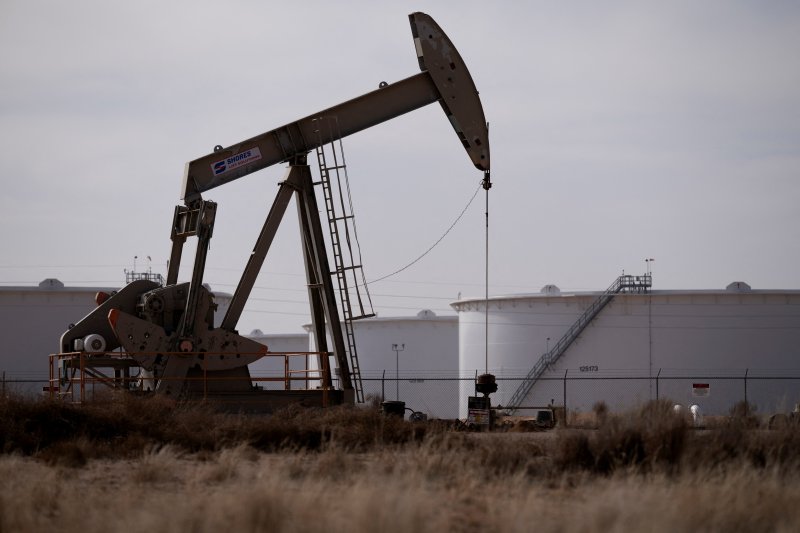
U.S. shale oil, which in the mid-2010s played a major role in driving down international oil prices, is no longer acting as a relief pitcher in today’s bout of price instability.
Amid the boom in U.S. shale oil production, West Texas Intermediate crude oil (WTI) fell to $33.98 per barrel in July 2015, and in April 2020, at the onset of the COVID-19 pandemic, it even traded at minus $37.65 per barrel.
In the past, when prices rose, U.S. shale companies would immediately ramp up drilling activity, helping to push oil prices back down.
At the height of the shale boom, some analysts even argued that the era of $100 oil would never return.
One key reason U.S. shale oil is staying quiet in the current conflict involving the Islamic Republic of Iran is that it has run up against productivity limits.
Core "sweet spots" such as the Permian Basin in the U.S. Southwest, including Texas, are already entering a depletion phase. Even with deeper, more expensive drilling, it is difficult to achieve the kind of production growth seen in the past.
Investor influence has also grown significantly.
Where developers once drilled aggressively even by taking on heavy debt, investors are now demanding dividend payouts instead of further production increases.
Investors are pressing companies to cut costs while still delivering high returns.
Producers know that if they overinvest just because prices have spiked temporarily, they could go under when the war ends and oil prices collapse.
Despite the sharp rise in prices driven by the war, the oil industry is not celebrating.
Analysts say this is because the sector has witnessed extreme price swings over the past several years.
Having experienced the negative prices of 2020 and the surge triggered by the outbreak of the Ukraine war in 2022, oil companies are no longer easily swayed by short-term geopolitical risks.
Some observers even suggest that, as in the past, the Donald Trump administration could reintroduce a domestic oil price cap in the United States.
Oilprice.com reported that at the North American Prospect Expo (NAPE), the largest exploration and production trade show in North America held in February, owners of promising drilling prospects—who used to be courted when prices were high—were pushed to the sidelines. In their place, private equity funds, banks, and other capital providers emerged as the real power brokers in the market, the outlet noted, describing the mood at the event.
Within the industry, the recent rise in oil prices is widely viewed as a short-term phenomenon.
Companies are worried that once the war ends, prices could fall back to the $50–60 per barrel range.
Industry players believe that for oilfield service and production companies to fully mobilize again, there must be a fundamental shift in the supply-demand balance and a sustained price level in the $70–80 per barrel range.
Against this backdrop, some forecasts suggest that global energy security could stabilize if the United States secures what it wants from the Bolivarian Republic of Venezuela and the Islamic Republic of Iran.
On the 3rd, The Wall Street Journal (WSJ) reported that if the Islamic Republic of Iran and the Bolivarian Republic of Venezuela, both hostile to the United States, were to shift to a neutral or even pro-U.S. stance, the geopolitical risks that have shaken global oil prices for generations could be dramatically reduced.
Before the 1979 Islamic Revolution, the Islamic Republic of Iran produced 5–6 million barrels of crude per day. According to Rystad Energy, its current daily production capacity is about 3.8 million barrels.
Since the revolution, the country has repeatedly disrupted global oil supplies, including through its eight-year war with Iraq in the 1980s and long-running sanctions imposed over suspicions about its nuclear program.
Back in 1987, the Islamic Republic of Iran also threatened shipping in the Persian Gulf by launching missile attacks on tankers and laying naval mines.
A similar situation is now unfolding again.
If the chronic geopolitical risk stemming from the Islamic Republic of Iran were to disappear, the resulting decline in volatility could inject new vitality into the global economy.
Should the Russian Federation lose allies such as the Bolivarian Republic of Venezuela and the Islamic Republic of Iran, and if China can no longer buy Iranian crude at steep discounts, the broader geopolitical landscape could also shift.
The United States would then be able to redeploy military assets from the Middle East to the Indo-Pacific region.
During The Gulf War in 1991, the United States drove Iraqi forces out of the State of Kuwait with a multinational coalition. However, it stopped short of attempting regime change against Saddam Hussein, opting instead for sanctions and the establishment of no-fly zones—an approach it later came to regret.
In other words, it failed to eliminate the threat that Iraq posed to the Middle East.
The United States was only able to capture Saddam Hussein in 2003, after sacrificing thousands of soldiers.
President Donald Trump has signaled that he will not repeat that scenario, drawing attention to how the war with the Islamic Republic of Iran will unfold from here.
[email protected] Yoon Jae-joon Reporter