"China could attack South Korea in a contingency" – warning drawn from Iran's strike on US bases
- Input
- 2026-03-13 19:46:38
- Updated
- 2026-03-13 19:46:38
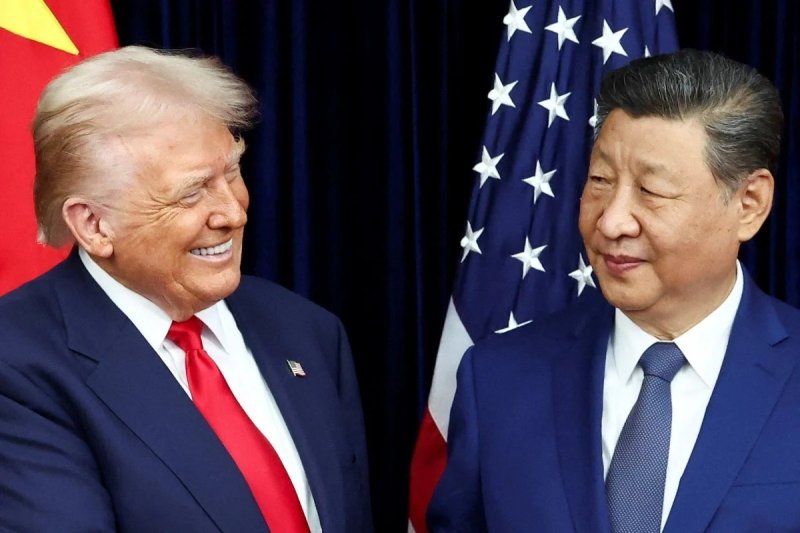
According to The Financial News, analysts warn that the People's Republic of China (China) could model itself on the Islamic Republic of Iran and, in the event of a future clash in the Taiwan Strait, strike United States Armed Forces bases across Asia, including those in South Korea and Japan.
On the 13th, the Hong Kong-based South China Morning Post (SCMP) reported that "Iran's attacks on US military bases across the Middle East using missiles and drones are a harbinger of how China could target US bases in Asia if a conflict breaks out in the Taiwan Strait."
Since the 28th of last month, the Islamic Republic of Iran has launched missiles and drones at Gulf states that host US military bases, including the Kingdom of Saudi Arabia (KSA), the State of Qatar and the State of Kuwait, in retaliation for large-scale airstrikes by the United States and the State of Israel. The targets included Al Udeid Air Base in Qatar, the largest US base in the Middle East and the regional headquarters of US Central Command (CENTCOM).
The administration of Donald Trump did not disclose detailed figures on the damage to US bases from Iran's attacks. However, foreign media reports indicate that at least 11 US military installations in the Middle East sustained damage.
The outlet assessed that Iran's strikes could serve as a template for a potential future conflict in the Taiwan Strait.
Lyle Goldstein, a senior research fellow at the Watson Institute for International and Public Affairs at Brown University, stated, "Iran's attacks on US bases near the Persian Gulf demonstrate the possibility that, in a Taiwan contingency, China could target US military bases across the Asia-Pacific region (APAC)." He added, "Concerns that US forces stationed in Japan, the Republic of the Philippines and South Korea may be vulnerable to large-scale attacks by China have been raised for many years."
According to a 2024 report by the Congressional Research Service (CRS), the Indo-Pacific hosts 24 permanent US bases, along with 20 additional military facilities available for use by the US Department of Defense.
Major installations include Kadena Air Base in Okinawa Prefecture, Japan, and Camp Humphreys in Pyeongtaek, South Korea. The Republic of the Philippines had, as of 2023, expanded the number of military facilities available to US forces to nine, three of which are located on Luzon Island, close to Taiwan.
Lyle Morris, a China expert and senior fellow at the Asia Society Policy Institute (ASPI), predicted, "In a Taiwan contingency, China would be able to inflict far more precise and extensive damage on US bases in the Asia-Pacific region than Iran did."
Goldstein likewise assessed, "China already has the capability to inflict serious damage on targeted US bases in the APAC within just a few hours of the outbreak of a military clash."
However, he projected that "if the United States chooses not to intervene in a conflict between China and Taiwan, China would likely exercise restraint and refrain from attacking US bases in the Asia-Pacific region."
Since the August 2022 visit to Taiwan by Nancy Patricia Pelosi, then Speaker of the United States House of Representatives, China has repeatedly conducted Taiwan blockade drills.
SCMP reported that since 2022, the Chinese military has carried out a total of seven Taiwan blockade drills around Taiwan, focusing on blocking or deterring access and support from external actors such as the United States and Japan in the event of a contingency.
[email protected] Moon Young-jin Reporter