Vietnam readjusts fuel prices amid spreading Middle East war... Five adjustments in just one week
- Input
- 2026-03-13 16:08:40
- Updated
- 2026-03-13 16:08:40
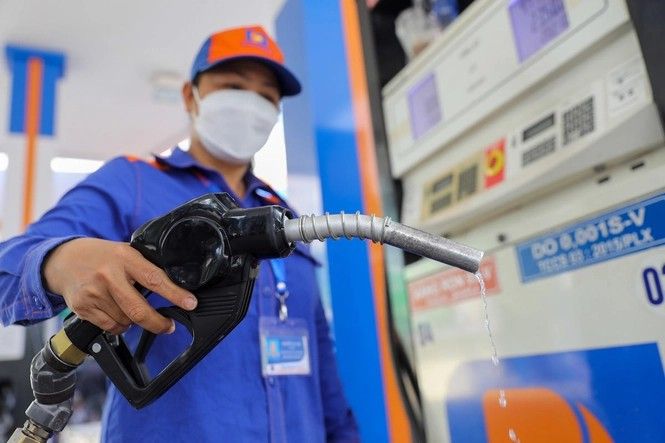
[Hanoi (Vietnam) = Bu Thi Tien] Most fuel products in Vietnam have inched up after the Ministry of Industry and Trade of Vietnam (MOIT) and the Ministry of Finance of Vietnam abruptly revised local fuel prices. The move is attributed to worsening supply and demand caused by the spreading war in the Middle East, with kerosene prices in particular seeing a sharp increase.
According to local media reports on the 13th, MOIT and the Ministry of Finance of Vietnam carried out a fuel price adjustment effective from the night of the 12th and applied the new prices immediately.
By product, Gasoline RON 95-III, the most commonly used fuel on the market, was raised by 330 dong per liter to 25,570 dong (about 1,454.93 won). In contrast, E5 RON 92 bio-gasoline fell by 450 dong per liter, bringing its new price to 22,500 dong (about 1,278 won).
The increase was steeper for household and industrial fuels such as Diesel and kerosene. Diesel fuel rose by 550 dong per liter to 27,020 dong (about 1,534.74 won). Kerosene jumped by as much as 2,520 dong per liter, climbing to 26,930 dong (about 1,529.62 won). Meanwhile, heavy fuel oil (mazut) edged down by 340 dong per kilogram to 18,660 dong (about 1,071.25 won).
Over the past week alone, domestic fuel prices in Vietnam have been adjusted five times, an unusually high frequency under the current management regime. RON 95 gasoline, the country’s main fuel grade, has seen nine price hikes and five cuts so far this year. This latest adjustment is also notable because MOIT and the Ministry of Finance of Vietnam tapped the Petroleum Price Stabilization Fund for the third consecutive time.
On the same day, Prime Minister Pham Minh Chinh issued an official directive warning that instability in the Middle East could disrupt global energy supply chains and push up international oil prices. He urgently instructed MOIT and the Ministry of Finance of Vietnam to expand national fuel reserves and to establish a supply system that can be deployed immediately in emergencies.
Vietnam is currently maintaining mandatory fuel reserves equivalent to more than 20 days of consumption through major fuel distributors. In a meeting earlier this week, Deputy Minister of Industry and Trade Nguyen Sinh Nhat Tan stated, "We have sufficient volumes to meet domestic demand through the end of March, so at this point there is no need to draw on national reserves."
The Vietnamese government is also actively using tax policy to stabilize supply and curb prices. After lowering the import tariff under most-favored-nation treatment (MFN treatment) to 0%, it is reportedly considering cutting the environmental protection tax on fuel to zero dong.
[email protected] Bu Thi Tien Reporter