On First Day of Oil Price Cap System, Gasoline and Diesel Fall to 1,800 Won Range Nationwide
- Input
- 2026-03-13 09:56:04
- Updated
- 2026-03-13 09:56:04
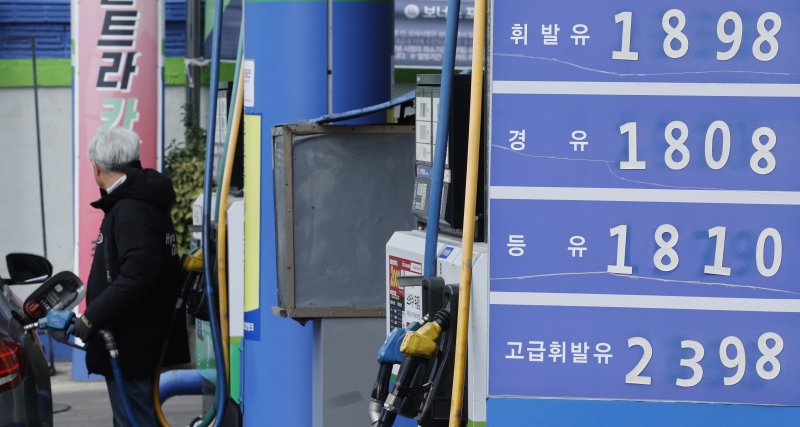
According to Financial News, on the 13th, the first day the oil price cap system took effect, the nationwide average price of gasoline and diesel at gas stations fell for the third consecutive day, bringing both fuels down into the 1,800 won per liter range.
Data from the Korea National Oil Corporation (KNOC) oil price information system Opinet show that as of 9 a.m. that day, the nationwide average gasoline price at gas stations was 1,883.8 won per liter, down 15 won from the previous day. Over the same period, the average diesel price was 1,897.9 won per liter, a decrease of 21.1 won.
Fuel prices in Seoul also continued to decline. The average gasoline price in Seoul stood at 1,906.4 won per liter, down 20.7 won from the day before. The average diesel price in Seoul was 1,905.5 won per liter, a drop of 30.6 won.
Domestic gas station fuel prices have been on a downward trend since peaking on the 10th following the outbreak of war between the United States of America (U.S.) and the Islamic Republic of Iran. On the 12th, the nationwide average gasoline price was 1,898.8 won and the diesel price was 1,919.0 won, down 5.5 won and 8.5 won, respectively, from the previous day.
From midnight on the 13th, the government implemented the oil price cap system, setting maximum wholesale prices charged by refiners at 1,724 won per liter for regular gasoline, 1,713 won for automotive diesel, and 1,320 won for indoor kerosene. Authorities plan to review conditions in the Middle East and global oil price movements and reset the caps every two weeks.
An industry official noted, "Of the roughly 10,700 gas stations nationwide, only about 580, or around 5%, are directly operated by the four major refiners, while budget gas stations account for about 10%." The official added, "Most of the rest are run by individual business owners, who adjust prices independently after considering existing inventory levels, so price cuts may take effect somewhat later than at directly operated stations."
[email protected] Koo Ja-yoon Reporter