"Throwing in the Towel at $100 Oil"...U.S. Temporarily Lifts Curbs on Russian Crude for a Month
- Input
- 2026-03-13 09:45:05
- Updated
- 2026-03-13 09:45:05
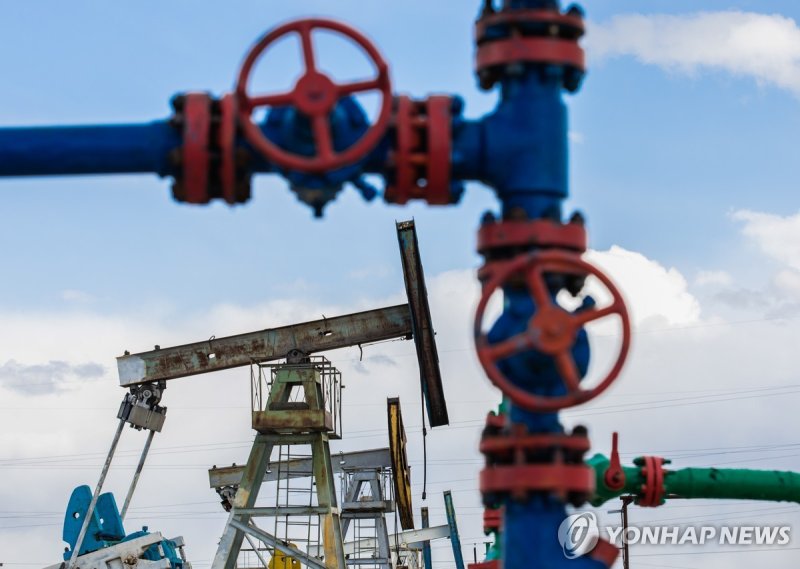
[Financial News] The United States of America (U.S.) has temporarily eased sanctions on Russian crude oil and petroleum products in an effort to curb a sharp rise in oil prices. After Israel and the U.S. carried out airstrikes on Iran and the war in the Middle East widened, international oil prices spiked to around 100 dollars per barrel, prompting an emergency move to contain the surge.
The Office of Foreign Assets Control of the U.S. Department of the Treasury (OFAC) on the 12th issued Russia-related General License 134 (GL 134), which temporarily allows the shipment, delivery and sale of Russian crude oil and petroleum products. On OFAC’s sanctions webpage, the license is described as permitting the "delivery and sale of Russian crude oil and petroleum products loaded on vessels as of March 12, 2026."
This measure is not a permanent lifting of sanctions but a time-limited exemption. The U.S. Treasury has allowed transactions of the relevant cargoes only until April 11. By opening the way for Russian crude and petroleum products that are already on board ships to reach the market, Washington aims to ease short-term supply shocks.
Earlier, on March 5, the U.S. had already issued Russia-related General License 133 (GL 133), which allowed the sale of Russian crude oil destined for India. The latest step broadens that scope into a wider, temporary authorization that does not specify a particular destination.
Brent Crude Oil climbed intraday to 101.6 dollars per barrel on the 12th. Markets are increasingly pricing in risks such as a possible blockade of the Strait of Hormuz and attacks on oil tankers, heightening concerns over supply disruptions. On the same day, the U.S. stock market also fell across the board on worries about surging oil prices and inflation.
Alongside the temporary exemption for Russian crude, the U.S. also pulled out the strategic petroleum reserve (SPR) card. The United States Department of Energy (DOE) announced the previous day that it would release 172 million barrels from the SPR. The International Energy Agency (IEA) and its 32 member countries likewise agreed to supply a total of 400 million barrels of stockpiled oil to the market. By combining limited distribution of Russian volumes, the U.S. SPR release, and a coordinated IEA response, policymakers are trying to cap war-driven spikes in oil prices.
However, analysts say the move is more of an emergency measure to prevent an energy price shock than a shift in Washington’s overall sanctions stance toward Russia. In fact, OFAC listed the new license as an exception within the existing Russia sanctions framework, and restricted the scope of permitted transactions to cargoes that had already been loaded.
[email protected] Kim Kyung-min Reporter