International Oil Prices Break Above 100 Dollars a Barrel Again: "For Oil, Duration Matters More Than the Peak"
- Input
- 2026-03-13 06:15:49
- Updated
- 2026-03-13 06:15:49
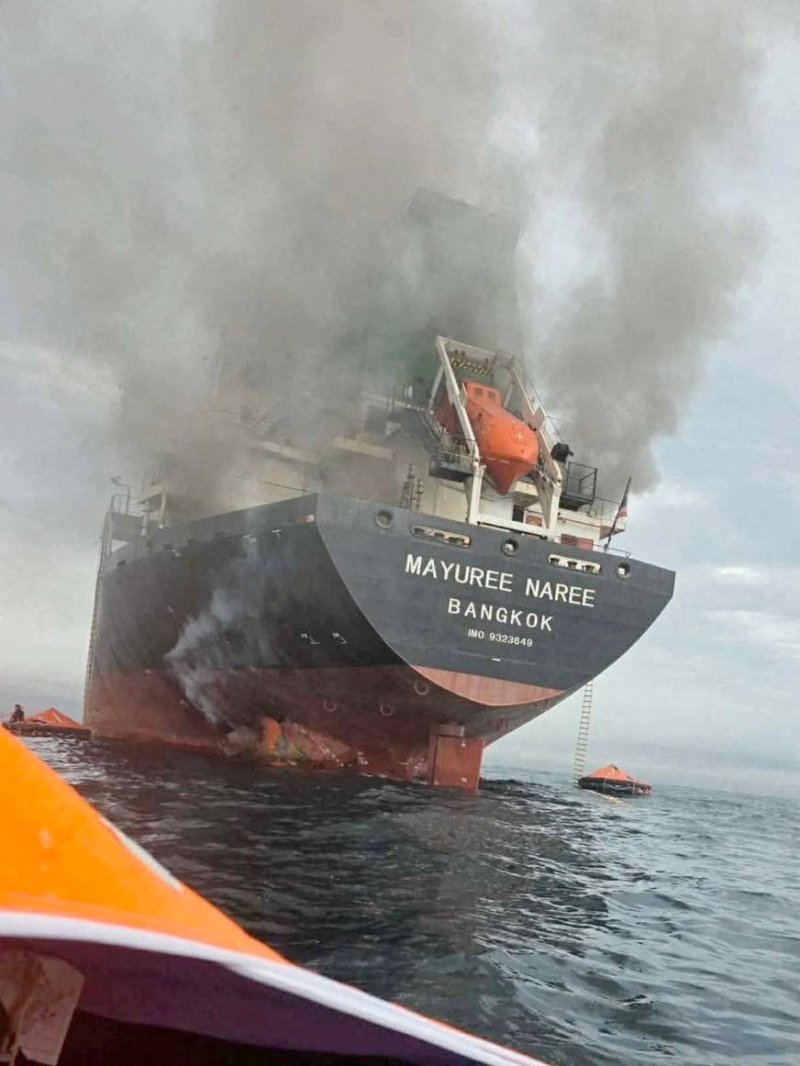
International oil prices once again broke above 100 dollars a barrel on the 12th (local time).
Energy Secretary Chris Wright stated that, for now, the U.S. Navy cannot escort commercial vessels in the Strait of Hormuz, a remark that unleashed a fresh surge in oil prices.
Treasury Secretary Scott Besant moved quickly to contain the fallout, but investor anxiety did not subside.
Confusing and conflicting comments from U.S. officials roiled the market, and oil prices extended their gains in after-hours trading.
Meanwhile, some analysts argued that what matters more than how high oil prices spike is how long the period of elevated prices lasts.
Break above 100 dollars
According to Consumer News and Business Channel (CNBC), Brent Crude Oil for May delivery, the global benchmark, soared 8.48 dollars, or 9.22%, to settle at 100.46 dollars a barrel.
West Texas Intermediate crude oil (WTI), the U.S. benchmark, also jumped, with the front-month April contract surging 8.48 dollars, or 9.72%, to close at 95.73 dollars a barrel.
Oil prices extended their rally in after-hours trading.
Brent Crude Oil climbed further, jumping 9.36 dollars (10.18%) to 101.34 dollars a barrel, while WTI rose another 9.04 dollars (10.36%) to 96.29 dollars a barrel.
Confusion amid Iran’s blockade threat
As the new supreme leader of the Islamic Republic of Iran, Mojtaba Hosseini Khamenei, declared that the blockade of the Strait of Hormuz must continue to pressure the United States, Washington continued to stumble in its response.
Wright poured cold water on the market by saying, "Right now, escort operations are impossible." Brent Crude Oil at one point spiked more than 17% intraday.
Besant rushed in to put out the fire.
As oil prices broke through 100 dollars a barrel and panic selling erupted, Besant tried to soothe markets, saying, "We will move to provide escorts as quickly as is militarily possible."
His comments helped cool the extreme spike somewhat, and regular trading ended with Brent still up 9.22%.
However, as U.S. officials continued to send mixed signals, investor unease persisted, and gains in after-hours trading once again reached double digits.
The psychological threshold of 100 dollars could not be defended.
Although Besant did attempt damage control, markets appeared to focus on the fact that his remarks were not substantially different from Wright’s.
Wright explained that U.S. military resources are currently concentrated on neutralizing the Islamic Republic of Iran’s offensive capabilities, leaving no capacity for escorts, and added that escort missions could begin toward the end of this month. In effect, the emphasis fell on the point that "for the time being, there is no capacity for escorts."
Besant tried to reassure markets by saying escorts would begin "as soon as possible," but in substance his position did not differ much from Wright’s. He said escorts would start "once the military is ready," without specifying a date. Like Wright, he may also have been implicitly pointing to the end of this month.
The market had already been rattled when The White House denied Wright’s earlier claim on the 10th that "we escorted one merchant vessel." On the 12th, as policy officials again sent conflicting messages, investors appeared to harden their stance that they "will not believe anything until they see it with their own eyes."
For high oil prices, duration matters more than the peak
In an analysis released that day, ING Bank stated that a sustained period of low oil prices is impossible until the Strait of Hormuz stabilizes.
ING Bank noted, "As we have repeatedly pointed out, the only way for oil prices to trade at consistently low levels is to ensure that crude continues to flow through the Strait of Hormuz," and warned, "If that does not happen, oil prices will keep climbing."
Philipp Carlsson-Szlezak, global chief economist at Boston Consulting Group (BCG), argued that what matters more than how high prices go this time is how long the period of elevated oil prices lasts.
According to Barron's, Carlsson-Szlezak wrote in a research note, "It is far better to have oil at 100 dollars a barrel for a few days than to have 150-dollar oil for several months."
The problem is that no one knows how long this will last — not even The White House, which is a direct party to the current conflict.
Carlsson-Szlezak pointed out that markets are focused not on the Islamic Republic of Iran’s political stability but on U.S. escort operations and navigation through the Strait of Hormuz. However, he stressed that safe passage is virtually impossible unless the underlying issues are resolved.
He warned, "This waterway is vulnerable to cheap weapons and asymmetric tactics, including naval mines and airstrikes," and said that unless there is a substantive agreement with the Islamic Republic of Iran that halts further provocations, disruptions to navigation in the strait and a prolonged period of high oil prices will be unavoidable.
If high oil prices persist, concerns about inflation will likely rule out interest rate cuts by the Federal Reserve System (Fed), a development that could deal a severe blow to financial markets.
[email protected] Song Kyung-jae Reporter