KFTC speeds up crackdown on price-fixing for everyday food items... Next targets are school uniforms, oil and funeral homes
- Input
- 2026-03-12 19:00:00
- Updated
- 2026-03-12 19:00:00
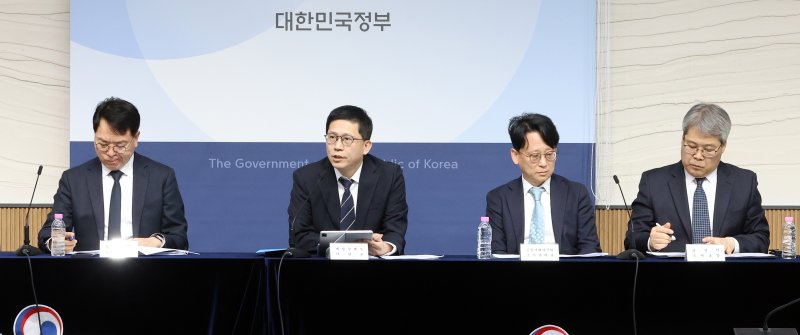
On the 12th, the KFTC presented a report titled “Cases of Sanctions and Response Status on Price-Fixing of Essential Consumer Goods” at the Ministerial Task Force on Special Management of Consumer Prices.
First, the KFTC plans to finalize deliberations on the flour price-fixing case within the first half of this year. The commission has already completed its investigation into seven companies, including CJ CheilJedang, Daehan Flour Mills and Samyang, on suspicion of colluding on sales prices and volumes for about six years.
The KFTC believes these firms colluded by pre-arranging prices and quantities in both direct transactions with major buyers such as ramen, confectionery and bakery companies, and in agency transactions with small and mid-sized customers. KFTC investigators have recommended corrective orders, including a mandate to reset prices, along with fines of up to 1.16 trillion won. If the recommendation is adopted as is, the total fines are expected to exceed 1 trillion won.
The starch syrup case is also scheduled to be deliberated and finalized in the first half of this year. In this case, four companies—Daesang, Sajo CPK, Samyang and CJ CheilJedang—are accused of agreeing on the prices of starch syrup supplied to beverage, confectionery and bakery companies over roughly seven and a half years. KFTC investigators have recommended corrective orders, criminal referrals of executives and employees, and fines of up to 1.2 trillion won. Yoo Sung-wook, Director General for Investigation Management at the KFTC, noted, “For both items, the investigations were completed in less than five months, which is remarkably swift,” and added, “There were also positive outcomes, such as companies voluntarily lowering prices during the KFTC’s investigation.”
In addition, the KFTC has brought a case involving six paper companies accused of colluding on printing paper prices before a plenary meeting. Through deliberation, the commission will decide within the first half of the year whether to impose sanctions and at what level.
In the pork sector, sanctions have already been completed. The KFTC found that nine companies, including Dodram, Sunjin and Farmstory, colluded on the prices of both regular pork and branded pork supplied to major discount retailer Emart. The investigation revealed that for regular pork, they fixed bid prices submitted to Emart, while for branded pork, they agreed on prices based on weekly quotations.
Accordingly, at a plenary meeting held the previous day, the KFTC decided to impose a total of 3.165 billion won in fines, along with corrective orders and criminal referrals. Earlier in February, the commission had imposed roughly 400 billion won in fines in a separate sugar price-fixing case.
The KFTC also plans to move quickly on investigations into school uniforms, oil and funeral homes. In the school uniform sector, it launched a probe in February into alleged collusion involving four uniform manufacturers and 38 uniform dealers nationwide. In the oil sector, the commission is investigating four refiners and gas stations in Busan, North Gyeongsang Province and Jeju Special Self-Governing Province for possible price-fixing. For funeral homes, it is examining rebate-related allegations at major facilities across five regions nationwide. Yoo stressed, “With the understanding that stabilizing everyday consumer prices is the top priority, we are handling cases swiftly, focusing on staple foods for the public such as sugar, pork, flour and starch syrup.”
[email protected] Kim Chan-mi Reporter