BTS concert tickets sold for 150,000 won on social media despite government’s tough warning against scalping
- Input
- 2026-03-12 18:25:06
- Updated
- 2026-03-12 18:25:06
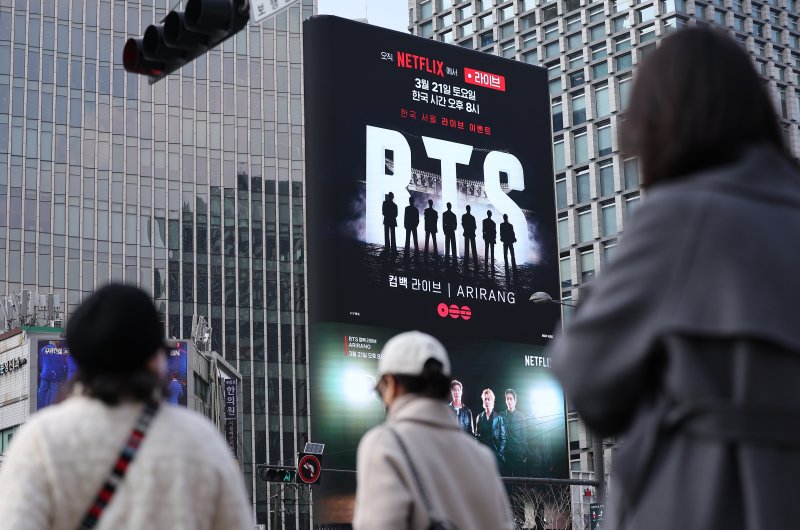

Scalped tickets thriving on resale platforms and social media
According to reporting by The Financial News on the 12th, tickets for BTS’s free concert are being sold at a premium on some secondhand trading platforms and on social media, including X (formerly Twitter). Although the tickets were distributed free of charge for fans, some scalpers have been found demanding 100,000 to 150,000 won per ticket under the pretext of “ticket transfer.”
Most of the sales posts list both the seat location and the asking price, trying to lure buyers with phrases such as “Great view, very close to the stage” and “Absolutely not a scam.” Some sellers urge buyers to “make an offer first” and then steer them into open group chats. There are also posts using terms like “ID transfer” and “wristband transfer,” suggesting various transaction methods. In these cases, the seller cancels the original reservation so the buyer can immediately rebook, or hands over an on-site pickup wristband directly to the buyer.
The scalping situation is even more serious for BTS’s paid concert scheduled for April in Goyang-si, Gyeonggi Province. Official ticket prices for that show range from 198,000 to 264,000 won depending on the seat, but on social media some listings have reportedly soared to around 1.6 million won. In other words, tickets are being traded with premiums exceeding 1 million won over face value.
Such resale of tickets at prices far above face value has become a recurring problem at major events. Because demand for tickets greatly exceeds supply, many fans feel they cannot secure seats without paying a markup. As a result, ticket scalping and price gouging have been consistently cited as serious issues at large concerts, sports games, and other major events.
However, there has been criticism that current laws and regulations are not sufficient to curb the surge in online ticket scalping. The existing Public Performance Act limits punishable conduct to cases where admission tickets are fraudulently sold using macro programs on a habitual or commercial basis. Another regulatory statute, the Punishment of Minor Offenses Act, was enacted in 1973 and has remained largely unchanged, defining scalping only as reselling tickets at a markup on-site.
BTS Gwanghwamun concert becomes test case for anti-scalping measures
Reflecting this reality, the government has revised the Public Performance Act and the National Sports Promotion Act to tackle the scalping problem at its root. The amendments ban all illicit ticket transactions regardless of whether macro programs are used and allow authorities to impose fines of up to 50 times the amount of the illegal sale. A new reward system for reporting scalping has also been introduced. The revised laws were promulgated on February 27 and will take effect on August 28.
Attorney Baek Se-hee, head of Baek Sehee Law Office Art& and a specialist in culture and arts, stated, “Because we now have a legal basis to impose fines on ticket scalpers regardless of whether they use macros, we can expect the act of scalping itself to decrease.” She added, “However, the key issue will be how to prove that a scalper’s activities are habitual or commercial in order to impose those fines.”
In line with this, the government is mounting an all-out response to eradicate scalping. Minister of Culture, Sports and Tourism Chae Hwi-young said earlier this month, “This BTS concert will be an important test case for our anti-scalping efforts,” and announced plans for strict enforcement.
In practice, the Ministry of Culture, Sports and Tourism (MCST) has already asked the Korean National Police Agency (KNPA) to investigate four cases suspected of illegal scalping, including attempts to secure multiple tickets for the same performance and resell them with large markups.
Police are also tightening their crackdown. Through October, they have launched a large-scale special enforcement campaign targeting crimes that disrupt everyday prices, such as ticket scalping. A police official said, “We are conducting intensive crackdowns on online ticket scalping, led by the Cyber Crime Investigation Unit at the Seoul Metropolitan Police Agency (SMPA),” adding, “We are also working with ticketing agencies and online platforms to detect scalping activities.”
[email protected] Jang Yoo-ha Reporter