High Oil Prices Still a Concern Despite Stockpile Release... “April Will Be Critical for Petrochemicals”
- Input
- 2026-03-13 06:00:00
- Updated
- 2026-03-13 06:00:00
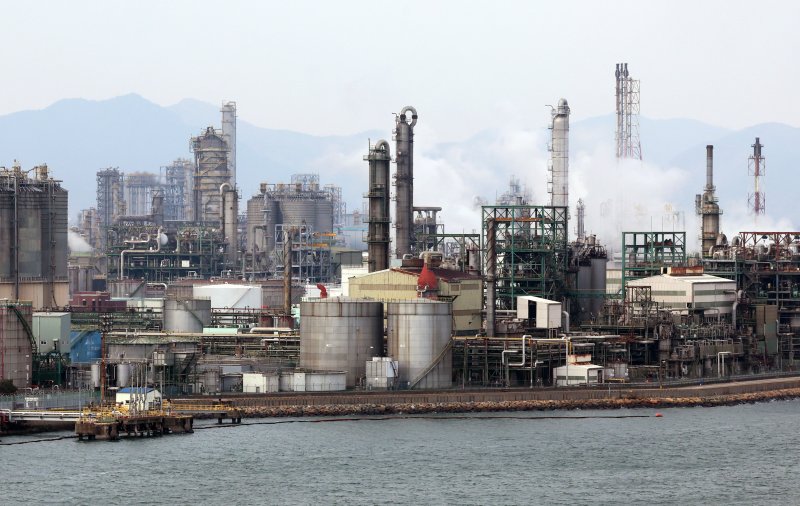
[Financial News] Geopolitical risks in the Middle East are hitting the petrochemical sector head-on. The International Energy Agency (IEA) has decided on a record release of oil reserves, yet concerns over persistently high crude prices are growing and petrochemical shares continue to weaken.
According to the Korea Exchange on the 13th, flagship petrochemical stock LG Chem closed down 3.01% the previous day. Lotte Chemical fell 2.76%, Kumho Petrochemical dropped 4.23%, and Hyosung TNC declined 2.64%.
Share prices in the petrochemical sector have been sliding across the board amid the war involving the United States, Israel and Iran. So far this month alone, LG Chem has plunged 26.71%. Lotte Chemical is down 22.84%, Kumho Petrochemical 21.77%, and Hyosung TNC 17.63%.
The IEA has approved the largest-ever release of oil reserves to ease the global energy crisis triggered by the war in the Middle East, but international oil prices remain elevated. On the 11th (local time), the IEA decided to tap strategic reserves for the first time in four years. The emergency release will total 400 million barrels, the biggest on record.
Even so, on the same day futures prices for West Texas Intermediate (WTI) crude on the New York Mercantile Exchange (NYMEX) closed up 4.55%, while Brent crude futures on the ICE Futures Exchange rose 4.76%.
Kim Kwang-rae, an analyst at Samsung Futures, noted, “The IEA proposed releasing 400 million barrels from strategic reserves, the largest amount ever, to curb the surge in oil prices, but the market judged this to be insufficient compared with the scale of supply disruptions.” He added, “Operations at the Ruwais Refinery Complex of Abu Dhabi National Oil Company (ADNOC) have been halted following a fire caused by a drone attack.”
Brokerages expect domestic petrochemical producers to face a critical test next month due to the impact of a potential blockade of the Strait of Hormuz.
Hwang Kyu-won, an analyst at Yuanta Securities Korea, explained, “Domestic naphtha cracker (NCC) companies hold only about two to three weeks’ worth of naphtha feedstock, and they cannot rely on strategic reserves from the Korea National Oil Corporation (KNOC).”
He went on, “If naphtha shipments from the Strait of Hormuz do not arrive in Korea by early April, NCC facilities that depend on imports will have to shut down. Producers of IT casings, automotive materials, construction materials and textile materials could then face severe shortages of chemical products.”
[email protected] Seo Min-ji Reporter