President Lee: "Pass extra budget as quickly as possible... Freeze public utility fees in first half"
- Input
- 2026-03-12 15:19:34
- Updated
- 2026-03-12 15:19:34
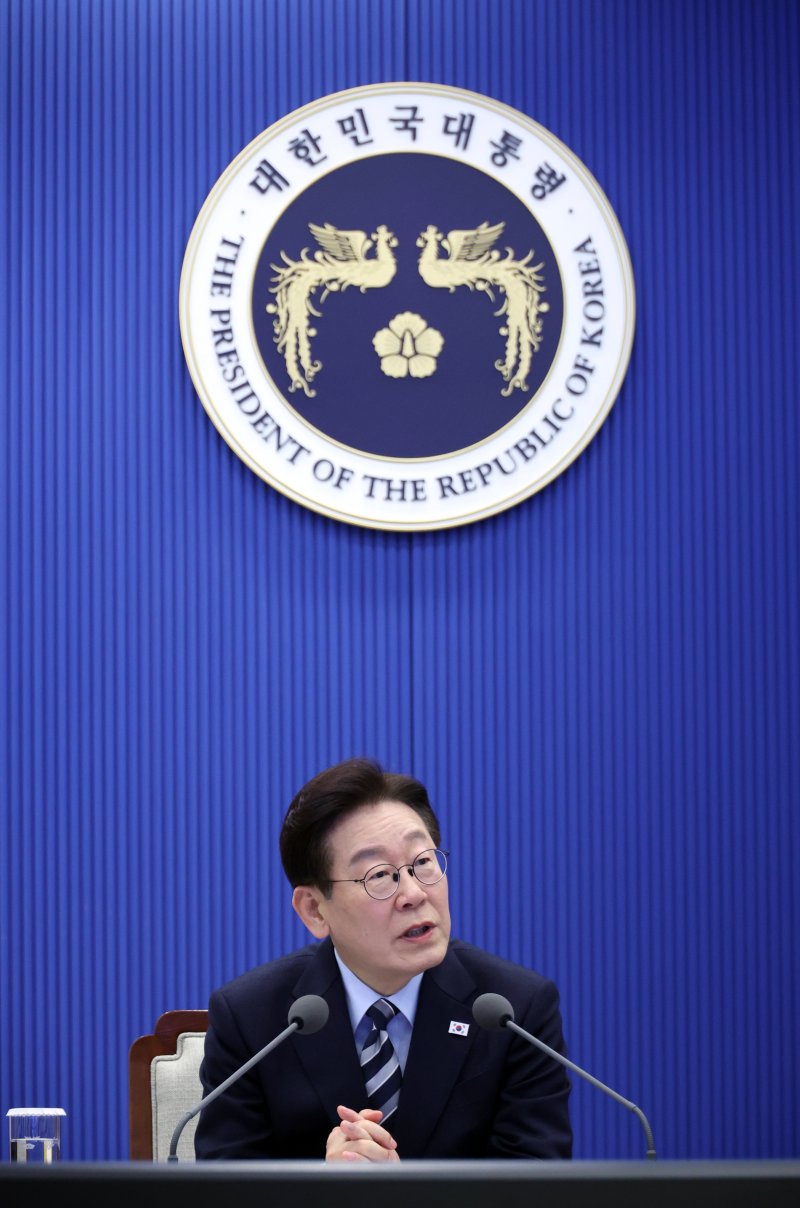
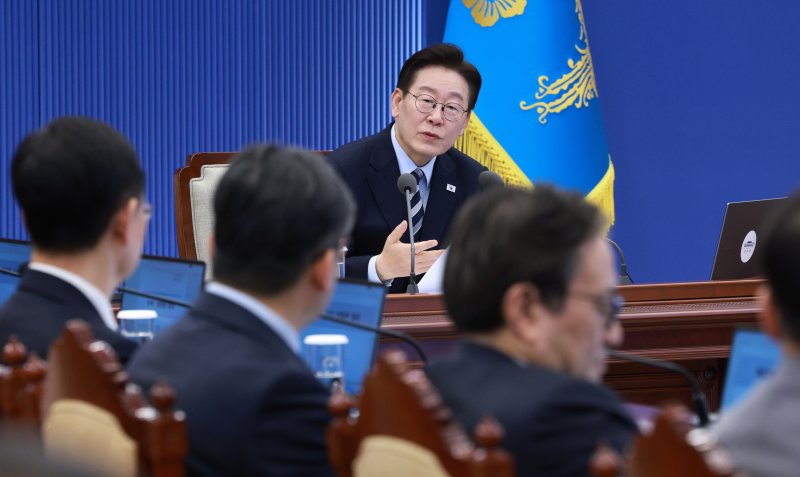
[Financial News] President Lee Jae Myung stated on the 12th, "In times of crisis, it is essential to inject fiscal resources quickly so that people’s livelihoods and economic recovery do not fall behind," adding, "In the end, we cannot avoid drawing up a supplementary budget, and I ask that the extra budget be prepared as swiftly as possible."
At the Senior Presidential Aides Meeting he chaired that day at Cheong Wa Dae, Lee said, "We must never waste the golden time for easing the shock to the everyday economy," reiterating this position.
Previously, at a State Council of South Korea meeting on the 10th, Lee had already said that an early supplementary budget was needed to respond to the economic fallout from instability in the Middle East. At the Senior Presidential Aides Meeting on this day, he went a step further and called for the extra budget to be drawn up with a strong sense of urgency.
Regarding the recent instability in the Middle East, Lee warned, "If this situation continues, consumer and investment sentiment will shrink, and the hard-won momentum of economic recovery could weaken." He continued, "Once we decide to prepare a supplementary budget, the usual practice seems to be that it takes one or two months, but even if it is difficult, please do it as quickly as possible," stressing, "We must design it meticulously, and although it will be challenging, doing so is a matter of competence and capability."
Lee went on, "From experience, we know that when conditions become this difficult, the lives of ordinary people grow harsher and the distribution of wealth tends to worsen. This deepens polarization and inequality and ultimately leads to social unrest," adding, "We must mobilize every policy tool available from multiple angles and focus our capabilities on implementing them swiftly and precisely."
In particular, he called for speeding up measures such as freezing public utility fees in the first half of the year, expanding discount support for agricultural, livestock, and fishery products, cutting fuel taxes, and providing fuel subsidies for freight trucks, public transportation, and farmers and fishers. On how to structure the support, he said that differentiated assistance was needed rather than uniform payments. Lee explained, "For example, there are various ways such as direct support, indirect support, tax expenditures, and fiscal spending. If we apply them uniformly, it becomes difficult to prevent a worsening of polarization," and added, "We should shift toward direct support and, through differentiated assistance, make sure that those in greater difficulty receive more help."
Lee also said, "We must make every effort to secure supplies of key raw materials such as Naphtha," and noted, "I have just received a report that cooking oil and instant noodle manufacturers will cut prices on some products by up to double digits starting with shipments next month. This will greatly help ease the burden of prices on the public and stabilize livelihoods." He continued, "At a time of such change, I suspect it is almost the first case of companies lowering product prices. I would like to express my gratitude to the companies that have joined in overcoming this crisis."
He added, "In fact, companies themselves are not in an easy situation. They are exposed to international competition and must engage in endless rivalry, so I understand that they need to secure as much profit as possible within the scope of what they can do," but went on, "Globally, prices in Korea are said to be among the highest, and the lives of ordinary people are very tough. I ask that, as members of our community, you consider making some concessions in these difficult times and think of it as sharing the hardship together."
Turning to his aides, he said, "It is not just a few specific products that are the problem. As industries as a whole become more oligopolistic and larger in scale, there are many cases where dominant or oligopolistic positions are being abused," and instructed, "Please identify these areas carefully so that each ministry can actively investigate, track, and take corrective action against items where unjust profits are being made."
Lee said that beyond merely overcoming the current crisis in people’s livelihoods and the real economy, the country needs the wisdom to turn it into a new opportunity for a major national transformation. He stated, "We must accelerate efforts to diversify energy supply routes, reform the distorted fuel market, and strengthen transparency in capital markets, so that we can quickly shift toward a system centered on renewable energy," adding, "We must also push ahead without wavering with reforms of key industries, including restructuring in the petrochemical sector."
Regarding the bipartisan passage of the Special Act on Investment in the United States, which cleared the hurdle of the National Assembly of the Republic of Korea that day, he said, "I would like to once again thank the opposition parties, including the People Power Party (PPP). Despite the many difficulties, I am grateful for their cooperation so that this does not become an issue in our external relations."
[email protected] Choi Jong-geun and Sung Seok-woo Reporter