U.S. launches Section 301 probe, raising concerns over Korea’s network usage fees and online platform law
- Input
- 2026-03-12 15:43:50
- Updated
- 2026-03-12 15:43:50
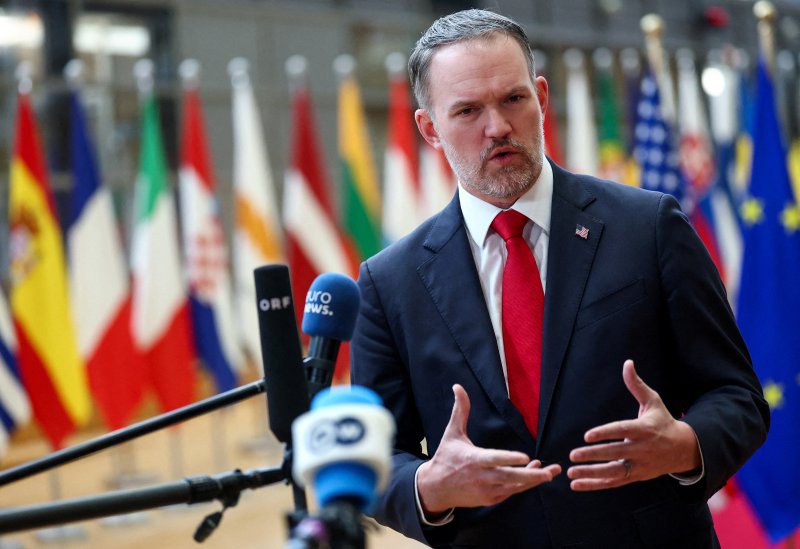
Jamieson Greer of the USTR said in a White House–hosted press call that "this investigation focuses on countries that have been running persistent and large trade surpluses" and that he expects "to uncover unfair trade practices by major trading partners related to structural excess capacity and production in manufacturing." Although he pointed to the manufacturing industry as the main target, worries remain because the USTR has repeatedly criticized Korea’s digital policies, including moves to institutionalize a network usage fee, the Online Platform Fairness Act, and regulations on the cloud industry.
Concerns grow over impact on network usage fees, Online Platform Fairness Act and cloud policies
The USTR has consistently expressed dissatisfaction with Korea’s digital policy framework. In its 2025 National Trade Estimate Report on Foreign Trade Barriers, it cited as trade barriers Korea’s regulation of online platform monopolies, the imposition by Internet service providers (ISP) of network usage fees on global content providers (CP), entry barriers to the public cloud market, and limits on foreign equity investment in telecommunications and broadcasting.One of the most prominent non-tariff barriers flagged by U.S. companies in the digital sector has been restrictions on exporting high-precision map data. On this issue, the Korean government partially stepped back on the 27th of last month by granting Google conditional approval.
Industry officials expect Korea’s cloud industry policy, which Republican Party (GOP) members of the U.S. House of Representatives recently asked the USTR to address, to become an immediate flashpoint. While the Korean government has already decided to migrate government data to private-sector clouds, providers that wish to enter the public cloud market must obtain a medium or high rating under the Cloud Security Assurance Program (CSAP). To qualify, they must meet requirements such as physical network separation, operating domestic data centers, and maintaining on-site staff in Korea. Amazon Web Services (AWS) has applied for this level of certification but has failed to obtain it for several years, fueling concerns in the industry that the USTR could use the investigation to press for changes.
There are also fears that the policy to require content companies such as YouTube and Netflix to pay ISPs network usage fees in proportion to their traffic could be blocked. The Online Platform Fairness Act is currently pending in the National Assembly of the Republic of Korea, and the USTR has repeatedly argued that the bill discriminates against U.S. companies, seeking to slow its progress.
Yeo Han-koo, Head of Trade Negotiations at the Ministry of Trade, Industry and Resources (MOTIR), said the current investigation is focused on the manufacturing industry and is a separate matter from issues involving Coupang or other digital topics. However, he added, "Since the joint explanatory document agreed by the two countries last year includes a principle of non-discrimination in the digital sector, we will manage related trade issues carefully so that they do not escalate into friction."
Korea must avoid creating a tilted playing field against its own firms
For the Korean government, the challenge is to avoid creating the kind of non-tariff barriers criticized by the USTR while also preventing a tilted playing field that disadvantages Korean companies. It must simultaneously ensure security in the public cloud and, under U.S. trade pressure, expand market openness—effectively chasing two goals at once. As for the Online Platform Fairness Act, industry voices argue that, in its current form, it could end up regulating only Korean platform companies, and that the bill therefore needs a comprehensive overhaul.cafe9@fnnews.com Lee Gu-soon Reporter