"Oil Seen Hitting $150" as Hormuz Crisis Deepens, Overwhelming Emergency Stockpile Releases
- Input
- 2026-03-12 13:17:04
- Updated
- 2026-03-12 13:17:04
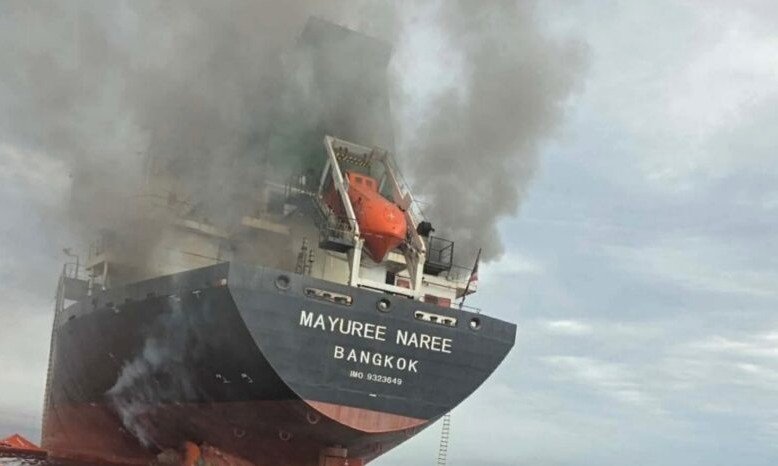
The Financial News, New York City – by correspondent Lee Byung-chulThe International Energy Agency (IEA) has approved a record release of 400 million barrels from strategic petroleum reserves, yet international oil prices have continued to rise. As the war involving the United States of America (U.S.), Israel, and Iran intensifies, Iran has stepped up attacks on merchant ships and oil tankers near the Strait of Hormuz.
Roughly 20% of the world’s crude oil shipments pass through the Strait of Hormuz, so as long as security there is not assured, global oil prices are structurally subject to upward pressure. Iran has warned that crude prices could climb to $200 per barrel and is escalating the scale and frequency of attacks on vessels in the area.
On the 11th (local time), 32 IEA member countries agreed to release strategic petroleum reserves. The U.S. decided to draw down 172 million barrels from its Strategic Petroleum Reserve (SPR). Donald John Trump said the IEA decision "will significantly lower oil prices while ending the threat to America and the world."
Ahead of the IEA’s official announcement, Germany, the Republic of Austria, and Japan had already said they would tap their own strategic reserves. A Ministry of Economy, Trade and Industry (METI) official in Japan told a briefing that the country plans to release about 80 million barrels from combined public and private oil stockpiles. After the IEA announcement, the United Kingdom of Great Britain and Northern Ireland (UK) said it would release 13.5 million barrels, while South Korea would release 22.46 million barrels, according to its Ministry of Trade, Industry and Energy. France’s President Emmanuel Macron also announced a plan to release 14.5 million barrels.
Market reaction, however, has been skeptical. The 400 million barrels cover only about 20 days of crude shipments that normally pass through the Strait of Hormuz. Macquarie Group Limited noted in a report that this volume is equivalent to roughly four days of global oil production.
Saul Kavonic, an energy analyst at Australia-based investment firm MST Marquee, told Consumer News and Business Channel (CNBC), "If the Strait of Hormuz is closed, the release would offset only about a quarter of the 20 million barrels per day that would be lost."
Bjarne Schieldrop, an analyst at Skandinaviska Enskilda Banken AB (SEB), told Reuters, "Even though this is the largest-ever release of strategic petroleum reserves, the market seems to believe it will not be enough to resolve the current crisis."
In fact, attacks on ships near the Strait of Hormuz have continued. On the morning of the 11th, three cargo vessels were attacked, and later in the afternoon two tankers carrying Iraqi crude were hit by shells, sparking fires. According to Reuters, at least 14 ships have been struck in the strait and surrounding waters since the outbreak of the war with Iran.
Tony Sycamore, a market strategist at IG Group (IG), told Reuters, "Iran’s actions appear to be a direct and forceful response to the IEA’s announcement of a massive strategic reserve release aimed at curbing the surge in oil prices."
A spokesperson for Iran’s armed forces claimed that the Strait of Hormuz is "without a doubt under Iran’s control." The Khatam al-Anbiya Central Military Headquarters, Iran’s joint military command, also declared, "You cannot artificially depress oil and energy prices," adding, "Oil prices depend on the regional security situation that you have destabilized. Brace for $200 a barrel."
Energy research and consulting firm Wood Mackenzie forecast that if a blockade of the Strait of Hormuz drags on, international crude prices could climb to as high as $150 per barrel.
[email protected] Reporter Lee Byung-chul Reporter