On First Day of ‘Three Judicial Reform Bills,’ Judges Nationwide Hold Chief Judges’ Meeting
- Input
- 2026-03-12 12:47:52
- Updated
- 2026-03-12 12:47:52
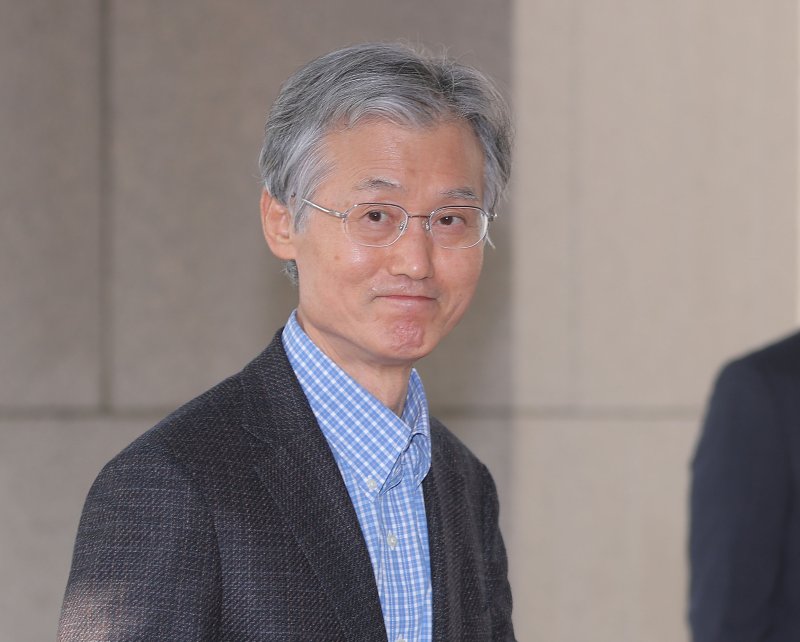
According to The Financial News, on the first day the three judicial reform bills (judicial distortion offense, constitutional complaint against court rulings, and expansion of Supreme Court justices) came into force, judges from across the country are gathering for a nationwide chief judges’ meeting to discuss how to respond. The closed-door meeting is being held in Jecheon, North Chungcheong Province, from the 12th to the 13th, and the Supreme Court of Korea plans to issue a press release stating its position as soon as the first day’s session concludes.
The legal community reports that the National Court Administration of the Supreme Court of Korea will hold the meeting from 2 p.m. that day, chaired by Kim Si-cheol, President of the Judicial Research and Training Institute (19th class of the Judicial Research and Training Institute). Forty-five chief judges from courts nationwide will attend, along with Ki Woo-jong, Deputy Minister of the National Court Administration (26th class), and various directors and bureau chiefs.
Chief Justice Cho Hee-dae is also expected to stop by the meeting to deliver brief remarks. On his way into work that morning, however, Cho did not offer any specific comment when reporters asked about follow-up measures regarding the three judicial reform bills.
Agenda items for the meeting include: follow-up measures for the overhaul of the judicial system; support measures for criminal court judges in connection with the judicial distortion offense; and the need for, and phased tasks related to, the development of artificial intelligence (AI) to improve public access to judicial services. On this first day, the participants are expected to focus on issues related to the three judicial reform bills, excluding the AI-related agenda.
The judicial distortion offense and the constitutional complaint against court rulings were promulgated and took effect immediately at midnight on the 12th. Notably, on the very first day the judicial distortion offense came into force, Chief Justice Cho Hee-dae and Supreme Court Justice Park Young-jae, former head of the National Court Administration, were reported to the National Office of Investigation (NOI) of the Korean National Police Agency (KNPA) on allegations of judicial distortion in connection with the Supreme Court’s remand decision in President of the Republic of Korea Lee Jae Myung’s Public Official Election Act violation case.
Attorney Lee Byung-chul of Chan-Jong LLC stated that he had submitted a criminal complaint to the NOI on the 2nd, seeking punishment for Chief Justice Cho and Justice Park. Although this was before the law took effect, he filed the complaint in advance with the intention that investigators would launch an inquiry immediately once the law came into force.
Previously, in May last year, the Supreme Court Grand Bench remanded President Lee’s Public Official Election Act violation case with a finding of guilt. This prompted claims, particularly from the ruling camp at the time, that it was physically impossible for the justices to have reviewed some 70,000 pages of case records in writing within just nine days. Critics argued that the judiciary was attempting to intervene in the presidential election.
Under Chief Justice Cho’s leadership, judges nationwide had outwardly maintained a united front, but signs of internal division have recently begun to emerge. On the 10th, Song Seung-yong, a sitting senior judge at the Seoul Central District Court, posted a message on CourtNet, the judiciary’s internal online network, criticizing the Supreme Court of Korea. Song wrote, "The judiciary, which cannot exist without the trust of the people, has lost that trust and become an object of reform," adding, "Even in this situation, the Chief Justice has not expressed any position." He went on to say, "The nomination of a successor to the already vacant Supreme Court seat has not been made," and argued, "This is effectively abandoning a grave constitutional duty concerning the composition of a constitutional institution."
From midnight that day, the courts also began accepting constitutional complaints against court rulings, and as of that morning a total of four such cases had been filed. The first case reportedly involves a foreign national from the Syrian Arab Republic seeking to overturn a deportation order and a related detention order.
Within the judiciary, there is concern that even the mere filing of complaints or accusations under the judicial distortion offense could discourage judges from carrying out their duties. The National Court Administration is also said to be reviewing, through its various departments and bureaus, potential problems that could arise within the existing judicial framework once the constitutional complaint against court rulings system is implemented.
[email protected] Lee Hwan-joo Reporter