Hanwha Ocean management performance bonuses not included in severance pay, Supreme Court rules
- Input
- 2026-03-12 10:36:56
- Updated
- 2026-03-12 10:36:56
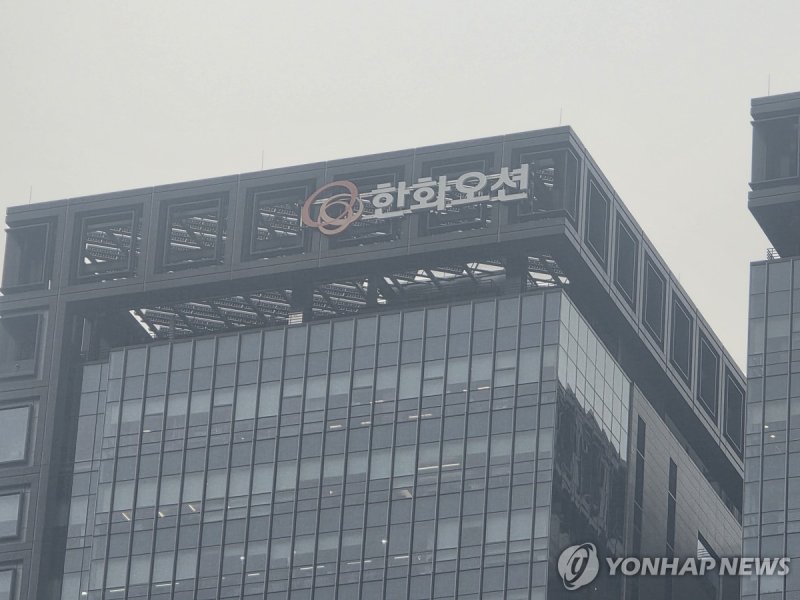
According to The Financial News, the Supreme Court of Korea has ruled that management performance bonuses paid by Hanwha Ocean, formerly Daewoo Shipbuilding & Marine Engineering, cannot be regarded as wages and therefore are not to be included in severance pay.
On the 12th, the legal community reported that the Second Division of the Supreme Court of Korea, presided over by Justice Eom Sang-pil, upheld a lower court ruling that found no fault with Hanwha Ocean’s decision to exclude employees’ management performance bonuses from the calculation of their average wage. The average wage is the total amount of wages received during the three months prior to retirement and serves as the basis for calculating severance pay.
The Hanwha Ocean employees who filed the lawsuit had, since 2001, negotiated each year with the labor union over whether management performance bonuses would be paid, as well as the criteria and payment rates, and received those bonuses accordingly. However, the company did not treat the management performance bonuses as wages forming the basis for calculating the average wage. The plaintiffs, who had already received their severance pay or interim settlements, brought the suit claiming that "the management performance bonuses must be included in the average wage and severance pay must be recalculated."
Earlier, the Civil Division 5 of the Changwon District Court, which heard the case at first instance, ruled against roughly 900 current and former Hanwha Ocean employees who had sued the company for additional severance pay. The court held that the management performance bonuses were merely a distribution of business profits and could not be viewed as directly or closely linked to the provision of labor. The appellate court reached the same conclusion.
Attention had focused on the Supreme Court’s decision in this case because in January it ruled, in a severance pay lawsuit filed by former employees of Samsung Electronics, that a portion of their bonuses known as the "target incentive" was akin to an ex post settlement of work performance and therefore had to be treated as wages.
At that time, the Supreme Court divided Samsung Electronics’ management performance bonuses into "target incentives" and "performance incentives," and found that the target incentive had the character of an average wage. It reasoned that the target incentive amount was determined in advance and was paid differentially in proportion to the quality and quantity of work performed, and therefore constituted wages as "consideration for labor."
By contrast, the court explained that Hanwha Ocean’s management performance bonuses correspond to Samsung Electronics’ "performance incentives," whose total amount is not fixed in advance and whose size fluctuates. For that reason, they do not have the nature of an average wage.
A Supreme Court of Korea official explained, "For money or benefits paid by an employer to qualify as wages, they must be paid as consideration for labor, and the obligation to pay them must arise in a way that is directly and closely connected to the provision of labor. This decision reaffirms that established legal principle."
[email protected] Lee Hwan-joo Reporter