"KOSPI shows a classic bubble pattern...even more extreme than gold," says global investment bank
- Input
- 2026-03-12 11:11:57
- Updated
- 2026-03-12 11:11:57
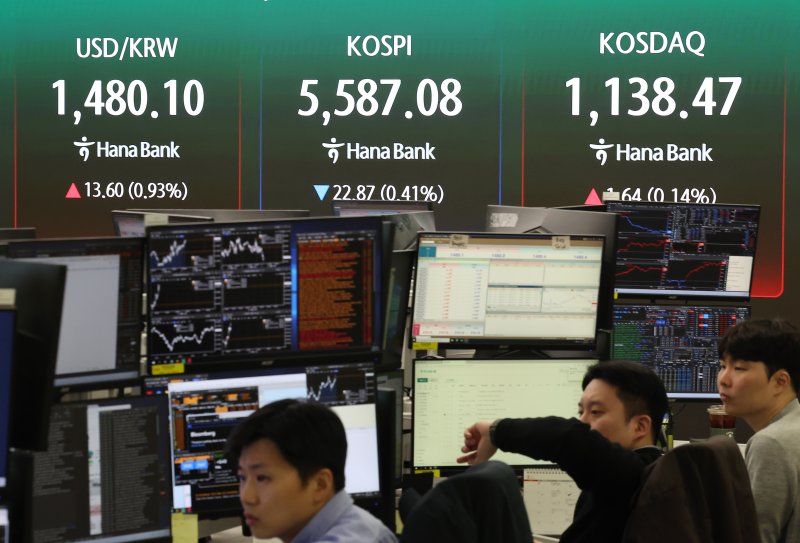
According to The Financial News, equity strategists at Bank of America (BofA) have described the recent moves in the Korean stock market, including a 12% drop and a 10% rebound in the KOSPI, as a "classic bubble pattern."
Citing MarketWatch on the 11th, BofA equity strategists pointed to the recent 12% plunge in the KOSPI followed by a 10% rebound. They explained that this behavior resembles the kind of extreme market instability seen during the 1997 Asian financial crisis, the dot-com bubble, and the 2008 global financial crisis.
BofA uses its own metric, the Bubble Risk Indicator (BRI), which compresses an asset’s return, volatility, momentum, and vulnerability into a single score between 0 and 1. The closer the reading is to 1, the more it signals extreme bubble-like price swings. The bank assessed that the KOSPI’s current Bubble Risk Indicator is close to 1.
The strategists noted that the KOSPI’s Bubble Risk Indicator has reached an extreme level and that signs of overheating are also visible in the options market. They added, "The active participation of Korean retail investors, who have driven the recent historic rally (including in Leveraged Exchange-Traded Funds (Leveraged ETF) and inverse ETFs), only reinforces the typical bubble environment observed in the KOSPI last week."
BofA said that, based on data prior to the recent sharp swings in oil prices, the KOSPI showed the most extreme bubble characteristics among major assets. It further argued that the bubble in the KOSPI appears even more severe than in highly frothy assets such as gold, Brent Crude Oil, the Bloomberg Commodity Index, and silver.
[email protected] Kim Hee-sun Reporter