"If You Can Afford Pork Belly, You're Rich"... In Era of High Prices, More Consumers Choose Half-Price Leg Cuts
- Input
- 2026-03-12 10:05:16
- Updated
- 2026-03-12 10:05:16
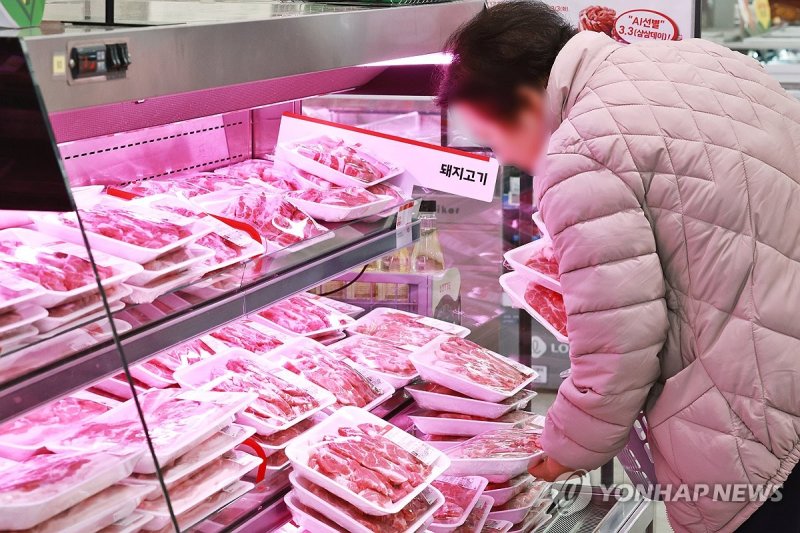
[The Financial News] In an era of high inflation, the way people consume pork is changing. Sales of pork belly, traditionally the most popular cut, are losing share, while more value-conscious shoppers are turning to cheaper front and hind leg cuts.
According to the Korea Institute for Animal Products Quality Evaluation (KAPE) on the 12th, sales of domestically produced pork belly reached 5,206,984 kilograms last year, a level similar to the 5,210,423 kilograms recorded in 2024. What stands out is the growth in front leg sales over the same period. Volumes rose 19%, from 2,440,874 kilograms to 2,912,657 kilograms. Front leg sales, which had been less than half of pork belly, climbed to about 56% of pork belly volumes. Sales of hind leg cuts also increased 34% year-on-year to 895,976 kilograms last year.
These shifts in consumer behavior are also reflected in pork sales at large discount stores.
Emart analyzed sales of chilled pork by cut over the past three years and found that, starting in 2024, pork belly’s share of total chilled pork sales fell below 50%. By year, pork belly accounted for 50.0% in 2023, 48.9% in 2024, and 47.9% in 2025, showing a steady downward trend.
In contrast, sales of front leg cuts rose 2% in 2024 and a further 7% last year. Hind leg cuts posted a 14% increase in sales last year, marking double-digit growth.
The decline in pork belly sales and the rise in front and hind leg sales appear to be driven by price competitiveness. Last year, the average retail price of front leg cuts was 1,509 won per 100 grams, about 60% of pork belly, which cost 2,642 won.
Compared with pork belly, leg cuts contain more lean meat and less fat, and their chewy texture makes them suitable not only for marinated dishes but also for grilling.
y27k@fnnews.com Seo Yoon-kyung Reporter