"If it falls, I buy more"... Retail investors pile on debt as KOSPI roller-coaster adds 10 trillion won in three months
- Input
- 2026-03-12 08:15:42
- Updated
- 2026-03-12 08:15:42
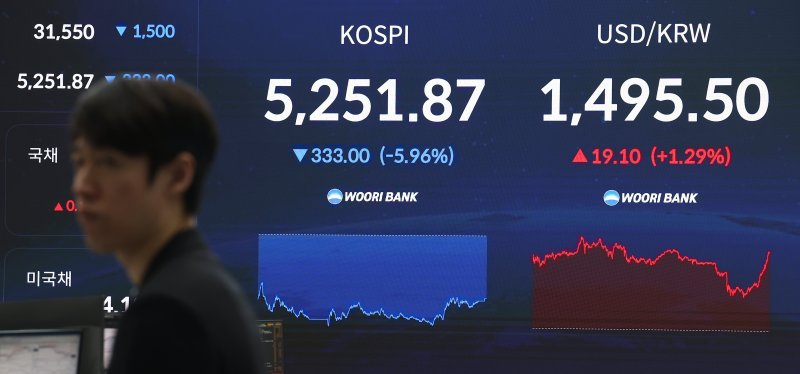
According to The Financial News, volatility in domestic and overseas stock markets has been rising recently, yet aggressive buying by individual investors, including debt-fueled stock investing, continues. In particular, as KOSPI repeatedly swings around the 5,600 level in a highly unstable pattern, many are sticking to an all-in buying strategy that treats market downturns as buying opportunities, fueling growing concern.
Retail investors keep buying despite volatile markets
According to the Korea Exchange (KRX), on the 11th the KOSPI index closed at 5,609.95, up 77.36 points (1.40%) from the previous session. During intraday trading it briefly surged to the 5,746 level, but later gave back much of its gains, showing sharp volatility. By contrast, the KOSDAQ slipped under selling pressure from both foreign and institutional investors, ending at 1,136.83, down 0.85 points (0.07%).
What stands out is the behavior of retail investors. Whenever the market wobbles on external uncertainties such as geopolitical risks and interest-rate prospects, individuals have actually been ramping up their buying. On the 11th, while foreigners and institutions were net sellers on the KOSDAQ market by 82.2 billion won and 127.4 billion won respectively, individuals were net buyers of 256.8 billion won, effectively propping up the index. This underscores the aggressive nature of Korean retail investors, often called “ants,” who tend to view sharp sell-offs as opportunities.
Their aggressive stance is also evident in the steep rise in margin lending balances. Margin lending balance refers to the amount investors have borrowed from securities firms to buy stocks and have yet to repay. The rapid build-up of this debt-fueled stock investing, where investors take out margin loans in hopes of a big rebound, is raising alarms in the market.
Margin lending tops 30 trillion won... Warning signs of forced liquidations
According to the Korea Financial Investment Association (KOFIA), margin lending balances stood at 32.8 trillion won as of the 6th. That is more than a 10 trillion won jump in just three months compared with the end of 2025, when the balance was 21 trillion won, before edging down slightly to around 31.7 trillion won as of the 9th. As a share of total market capitalization, the ratio is about 0.6%, lower than the 0.9% seen in 2021. However, the sheer size of the balance has grown so large that, when volatility spikes, there are mounting concerns that large-scale forced liquidations could intensify downward pressure on the market.
In fact, as of the 5th, actual forced liquidation amounts reached 77.7 billion won, measured against unsettled receivables from entrusted trades. This was the largest level since October 24, 2023, when the KOSPI had fallen to the 2,200 range, and forced liquidations accounted for 6.5% of unsettled receivables. After the KOSPI plunged 12.06% in a single day on the 4th, many investors who had bought on credit failed to meet payment deadlines, triggering large-scale forced selling on the next trading day.
Credit transactions of this kind allow investors to buy stocks without having the cash on hand, on the condition that they settle the payment within two business days, the standard settlement date. If they fail to repay within that period, the securities firm forcibly sells the stocks through a margin call and forced liquidation. When markets are tumbling and such forced sales occur one after another, the additional supply of shares can flood the market and deepen the decline in a vicious cycle.
Regulators are also on alert, as the Middle East crisis has heightened financial market volatility and could amplify investor losses from high-risk trades. Lee Chan-jin, Governor of the Financial Supervisory Service (FSS), on the previous day ordered stronger investor risk disclosures related to margin trading and potential forced liquidations, and instructed officials to closely monitor retail investors’ positions in high-risk products such as Leveraged Exchange-Traded Funds (Leveraged ETFs).
[email protected] Kim Hee-sun Reporter