Japan to Fully Subsidize Gasoline Prices Above 170 Yen per Liter Amid Surge
- Input
- 2026-03-12 08:27:36
- Updated
- 2026-03-12 08:27:36
Financial News, Tokyo – As tensions in the Middle East push gasoline prices higher, the Japanese government has decided to fully subsidize the difference for oil refiners when the retail gasoline price exceeds 170 yen (about 1,580 won) per liter. The same subsidy scheme will apply to diesel, heavy oil, and kerosene.
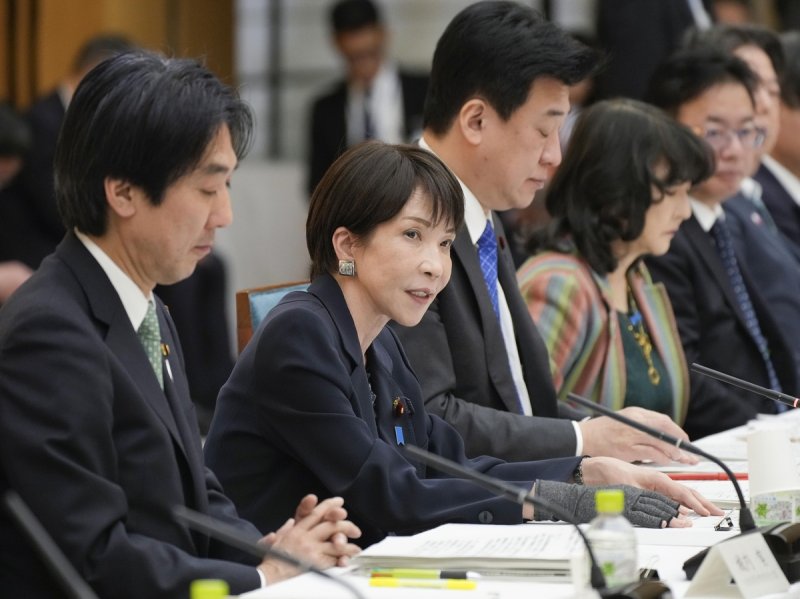
According to the Nihon Keizai Shimbun on the 12th, Prime Minister Sanae Takaichi told reporters at the Prime Minister's Official Residence of Japan the previous day that she had instructed Minister of Economy, Trade and Industry Ryosei Akazawa to immediately implement measures to curb volatility in response to the sharp rise in crude oil prices caused by the deteriorating situation in the Middle East.
Prime Minister Takaichi said, “We cannot rule out the possibility that gasoline prices will exceed 200 yen per liter,” and announced that subsidies will be provided starting with shipments on the 19th so that pump prices do not rise above 170 yen.
More specifically, the Ministry of Economy, Trade and Industry (METI) will fully subsidize oil refiners for any portion of the retail price that exceeds 170 yen per liter. The same level of support will be applied to diesel, heavy oil, and kerosene. The program will draw on a remaining 280 billion yen (about 2.6 trillion won) in the fuel subsidy fund.
METI said that as of the 9th, the nationwide average retail price of regular gasoline stood at 161.8 yen per liter, up 3.3 yen from the previous week. It is the first time in three months, since December last year, that gasoline prices in Japan have exceeded 160 yen. Prices have been rising for four consecutive weeks.
The Japan Oil Information Center projected that, due to the worsening situation in the Middle East, gasoline prices could jump by more than 20 yen next week and break through 180 yen per liter. If that happens, gasoline would surge by more than 10% in just one week.
Prime Minister Takaichi stressed, “We will continue to take necessary measures while closely monitoring developments in the Middle East and the resulting level of crude oil prices.” She added, “Even if the situation becomes prolonged, we will keep reviewing support measures flexibly so that we can continue to support people’s livelihoods.”
She also revealed Japan’s plan to release strategic oil reserves ahead of an official announcement by the International Energy Agency (IEA).
Prime Minister Takaichi said, “Even before a formal international decision on reserve releases, Japan has decided to take the lead and begin releasing reserves on the 16th.” She continued, “With Iran effectively blocking the Strait of Hormuz, crude oil imports to Japan are expected to fall sharply from late this month,” and added, “To avoid any disruption in the supply of gasoline and other petroleum products, we will work with the Group of Seven (G7) and the IEA and make use of Japan’s oil reserves.”
A METI official said at a briefing that Japan plans to release about 80 million barrels from its public and private oil reserves.
The IEA, for its part, announced that it had decided to release strategic oil reserves for the first time in four years to ease the global energy crisis triggered by the war in the Middle East. The emergency release will total 400 million barrels, the largest volume in the IEA’s history.
IEA Executive Director Fatih Birol said, “The challenges currently facing the oil market are unprecedented in scale, and I am very pleased that IEA member countries have responded with an emergency collective action of unprecedented magnitude.”
According to the IEA, strategic reserves will be supplied to the market over a period appropriate to each member country’s circumstances. Some countries are expected to complement this with additional emergency measures.
[email protected] Seo Hye-jin Reporter