U.S. forces now targeting civilian ports in Strait of Hormuz, expanding scope of war
- Input
- 2026-03-12 06:16:19
- Updated
- 2026-03-12 06:16:19
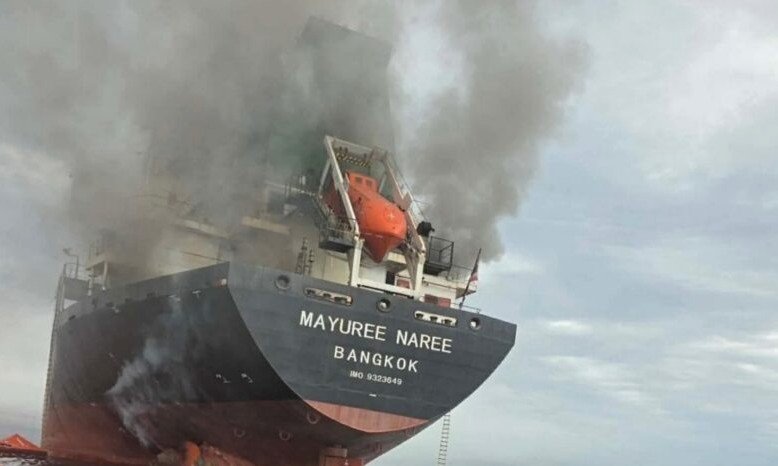
According to Financial News, on the 11th (local time), the 12th day of Operation Epic Fury, a military campaign targeting the Islamic Republic of Iran, United States forces officially warned that they could strike civilian ports around the Strait of Hormuz. Tensions are rising further in and around the Strait of Hormuz, a vital chokepoint for global crude oil shipments.
United States Central Command (CENTCOM) issued a statement that day urging civilians in the Islamic Republic of Iran to leave, saying, "Immediately evacuate all port facilities where Islamic Republic of Iran Navy units are conducting operations."
CENTCOM argued that "the Iranian regime is using civilian ports along the Strait of Hormuz to conduct military operations that threaten international shipping." It went on to warn, "Civilian ports used for military purposes lose their protected status and become lawful military targets under international law." The command also pointed out that "the Islamic Republic of Iran Navy has deployed warships and equipment to civilian ports used for commercial maritime traffic."
The latest warning from United States forces is being interpreted as a signal that not only naval bases near the Strait of Hormuz, but also civilian ports, could become targets for airstrikes.
Since the outbreak of the war, the Islamic Republic of Iran has effectively blockaded the Strait of Hormuz, through which about 20% of the world’s seaborne crude oil trade passes. On this day alone, three vessels, including Thai- and Japan-flagged ships, came under attack from unidentified projectiles. In total, at least 14 civilian ships are reported to have been struck in and around the strait so far.
United States forces stated that, in the course of the current operation, they have so far struck more than 5,500 targets, including 60 ships belonging to the Islamic Republic of Iran Navy.
In a video posted on X (formerly Twitter) the same day, Admiral Brad Cooper, commander of U.S. Central Command, explained, "We have struck more than 5,500 Iranian targets, including over 60 vessels, using a variety of precision weapons systems."
Admiral Brad Cooper further announced that United States forces have destroyed the last remaining Shahid Soleimani-class corvette, the main surface combatant of the Islamic Republic of Iran Navy, out of a total of four. "This means that one of Iran’s major warship classes has been completely removed from combat," he said.
He also released satellite images showing Iranian warships moored at ports or naval bases before and after the strikes, using them to highlight the results of the operation.
United States forces said they are simultaneously targeting not only the Islamic Republic of Iran’s missile and drone capabilities, but also its defense industrial infrastructure. Admiral Brad Cooper stated, "Our bomber units have struck a major ballistic missile production facility," adding, "This is intended to eliminate threats not only in the present but also in the future."
The operation is also making use of artificial intelligence (AI)-based analysis systems. Admiral Brad Cooper explained, "They analyze vast amounts of data in seconds, allowing commanders to make decisions faster than the enemy can react," and added, "Humans still decide what to strike and when, but AI reduces analysis processes that used to take hours or days to just a few seconds."
[email protected] Kim Kyung-min Reporter