Trump Says He Will Release Oil From Strategic Petroleum Reserve
- Input
- 2026-03-12 06:24:31
- Updated
- 2026-03-12 06:24:31
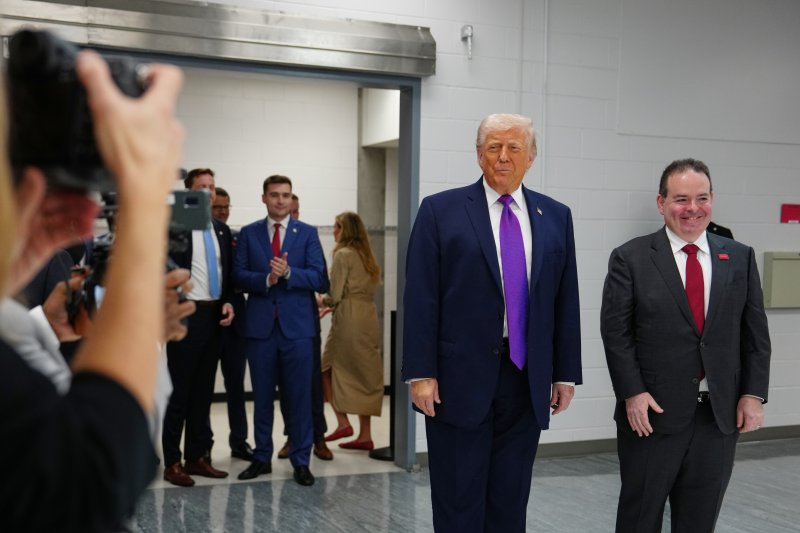
Donald Trump, President of the United States, announced on the 11th (local time) that he would release oil from the strategic petroleum reserve (SPR).
His remarks came after the International Energy Agency (IEA) earlier in the day announced that it had agreed, for the first time ever, to release 400 million barrels.
The United States is one of the 32 IEA member countries, but any decision to release oil from the SPR ultimately depends on the will of the President of the United States.
According to Consumer News and Business Channel (CNBC), Trump, during a visit to Cincinnati, Ohio, told local broadcaster WKRC-TV in an interview that he would release oil from the reserve.
He stated, "We are going to do that, and then we will refill it (the SPR) afterward."
Trump added, "We filled it up once, and now we are going to fill it again, but for now we need to draw it down a bit to bring prices down."
In other words, he plans to lower oil prices by releasing crude from the SPR and then replenish the storage facilities later.
With the midterm elections in November approaching, soaring U.S. gasoline prices driven by the war involving the Islamic Republic of Iran have been putting pressure on Trump.
According to the American Automobile Association (AAA), the average U.S. gasoline price has jumped to $3.58 per 3.78 liters, spiking on supply disruptions caused by the closure of the Strait of Hormuz. This is nearly a 22% surge from $2.94 at the end of last month.
Although the United States, as an IEA member, was expected to join the coordinated release of reserves, United States Secretary of the Interior Doug Burgum previously told CNBC that whether the U.S. would participate ultimately depended on Trump’s final decision, leaving the matter open.
Meanwhile, the U.S. SPR currently holds about 415 million barrels, roughly 58% of its total buffer capacity of 714 million barrels.
[email protected] Reporter Song Kyung-jae Reporter