IEA to Release 400 Million Barrels of Reserves as Iran Warns of $200 Oil
- Input
- 2026-03-12 01:12:04
- Updated
- 2026-03-12 01:12:04

IEA to release record 400 million barrels from reserves
On the 11th (local time), the IEA agreed to release a total of 400 million barrels of oil from emergency reserves to offset supply disruptions triggered by the war involving the Islamic Republic of Iran. This will be the largest coordinated release of strategic reserves in the agency’s history. Until now, the biggest drawdown by IEA member states was 182 million barrels following Russia’s invasion of Ukraine in 2022.
The IEA did not specify exactly when the reserves would hit the market. It explained that the 32 member countries will release oil in stages, tailored to their respective situations.
Japan’s Prime Minister Sanae Takaichi announced that Tokyo will unilaterally begin releasing oil from its strategic reserves on the 16th. The plan calls for drawing down the equivalent of 15 days of private-sector stockpiles and 30 days of government reserves.
IEA Executive Director Fatih Birol said in a statement, "The challenges we face in today’s oil market are unprecedented in scale," adding, "I welcome the decision by our member countries to launch an emergency collective response of an unprecedented magnitude."
He went on to say, "Because the oil market is global, the response to a major supply disruption must also be global," and stressed, "Energy security is at the core of the IEA’s founding mission, and our member countries have demonstrated strong solidarity by acting together."
Even so, experts believe that this release of reserves will not be enough to fully offset the supply shock.
Energy analysts noted that even at maximum capacity, the IEA’s release would struggle to replace the roughly 20 million barrels of crude that flow through the Strait of Hormuz each day.
The Strait of Hormuz is a narrow waterway off the coast of the Islamic Republic of Iran that links the Persian Gulf with the Gulf of Oman. About 20% of the world’s seaborne crude oil and gas shipments pass through this chokepoint.
Iran warns oil could hit $200 as ships attacked in Hormuz
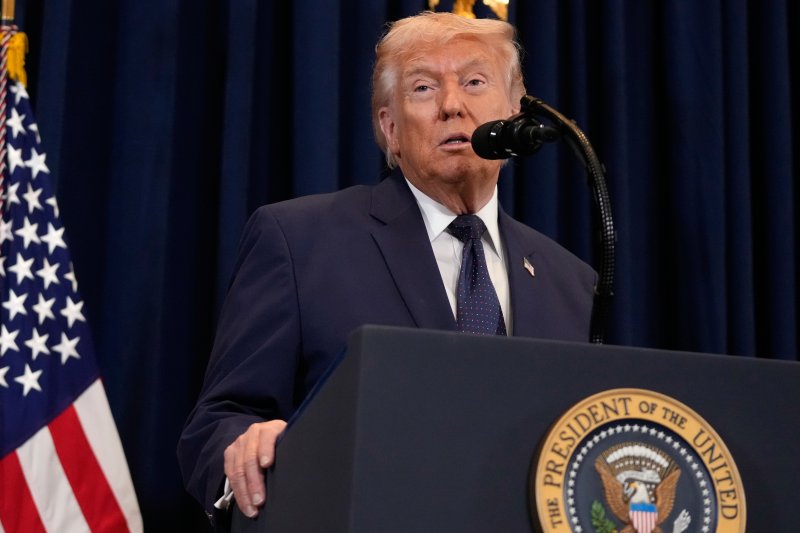
The Islamic Republic of Iran and its proxy forces have warned that international oil prices could climb to $200 per barrel. According to Reuters news agency, Ebrahim Zolfaqari, spokesperson for Iran’s armed forces, addressed the U.S., saying, "Prepare for oil to reach $200 a barrel. Oil prices depend on the security of a region that you have destabilized."
Three ships were attacked in the Strait of Hormuz that day. Since the war involving the Islamic Republic of Iran began, the number of vessels attacked in the area has risen to at least 13 to 14.
The New York Times (NYT), citing United Kingdom Maritime Trade Operations (UKMTO), reported that two cargo ships were struck by unidentified projectiles in the Strait of Hormuz, while a third vessel was attacked about 80 kilometers northwest of Dubai in the waters off the United Arab Emirates (UAE).
Reuters news agency reported that the Thai-flagged bulk carrier Mayuri Nari (Mayuree Naree) caught fire and suffered damage to its engine room after being hit by two projectiles of unknown origin while transiting the Strait of Hormuz.
Precious Shipping PCL, the vessel’s operator, said in a statement that three crew members were missing and might be trapped in the engine room. The remaining 20 crew members evacuated safely and were transported to the Sultanate of Oman.
That same day, the Japanese-flagged container ship ONE MAJESTY also sustained minor damage after being struck by an unidentified projectile in waters near Ras Al Khaimah in the United Arab Emirates (UAE).
Another bulk carrier, the Marshall Islands–flagged Star Gwyneth, was hit by a projectile northwest of Dubai, causing partial damage to its hull. There were no reports of crew injuries.
According to UKMTO, a total of 13 to 14 ships have been attacked in and around the Strait of Hormuz, the Persian Gulf, and the Gulf of Oman since the 28th of last month.
The shipping industry has been calling for naval escorts for vessels transiting the Strait of Hormuz, but the U.S. Navy is reportedly refusing, saying the risk of attack is currently too high.
Oil trading around $90 a barrel
International oil prices have not fallen significantly, weighed by tensions in the Middle East.
On the ICE Futures Exchange, May-delivery Brent Crude Oil futures were trading at $90.9 per barrel as of 11 a.m. Eastern Time, up 3.5% from the previous session.
On the New York Mercantile Exchange, April-delivery West Texas Intermediate crude oil (WTI) futures were trading at $86.2 per barrel at the same time, up 3.3% from the prior close.
Brent Crude Oil briefly climbed above $100 per barrel on the 9th, then quickly pulled back. It is now fluctuating in a range between the mid-$80s and low $90s.
In a note to investors, Goldman Sachs estimated that the war involving the Islamic Republic of Iran could reduce crude exports from the Gulf region by as much as 15.4 million barrels per day.
Based on Goldman Sachs’ estimate, the planned release of strategic reserves would cover roughly 26 days of lost supply.
[email protected] Reporter Lee Byung-chul Reporter