"More Frightening Than the Oil Price Cap System... The Real Variable Is..."
- Input
- 2026-03-12 05:59:00
- Updated
- 2026-03-12 05:59:00
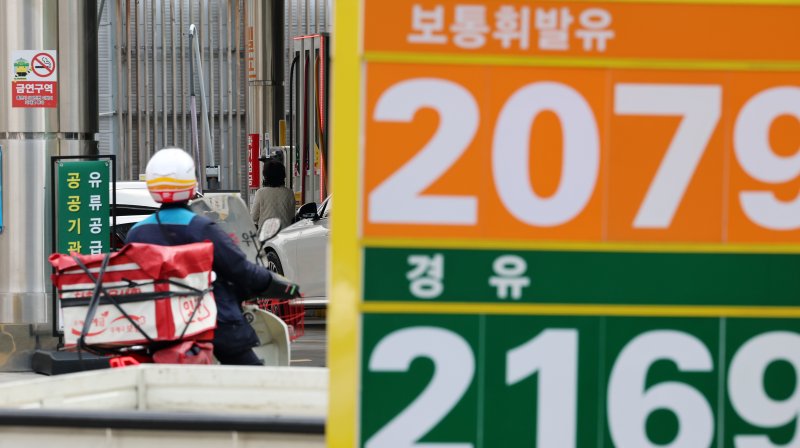
[Financial News] The government has decided to introduce an oil price cap system in response to the surge in global oil prices. However, some analysts warn that instability in crude oil supply could prove a bigger variable than price controls themselves, as concerns grow over potential disruptions to oil supplies due to the Middle East conflict.
According to the industry on the 12th, Hyunryul Cho, an analyst at Samsung Securities, recently wrote in a report, "What matters more than a price ceiling system for petroleum products is whether crude oil that can be processed in refining facilities can be secured in a stable manner," adding, "Even if a domestic price ceiling is implemented, profitability will improve as long as refineries can maintain their operating rates."
Since the outbreak of the Middle East war, global refining capacity of about 1.58 million barrels per day has been announced as shut down, equivalent to roughly 1.5% of total worldwide capacity. Of this, about 59% is in the Middle East, with the remaining 41% in Asia.
In response, the government plans to introduce the oil price cap system starting this week.
Deputy Prime Minister and Minister of Finance and Economy Koo Yun-cheol stated at a full session of the National Assembly Planning and Finance Committee the previous day, "The oil price cap system will be operated while monitoring market conditions in two-week intervals," and added, "The appropriate price level will be in the 1,800 won per liter range."
Securities firms generally expect the impact of the price ceiling on the refining industry to be limited, as domestic sales of gasoline and diesel account for only about 18–32% of total sales for the four major Korean oil refiners.
However, many point out that the key variable is whether crude oil supplies remain stable. The crude distillation unit (CDU) capacity of Korean refiners is currently about 3.33 million barrels per day, and roughly 1.88 million barrels of that is estimated to depend on crude from the Middle East.
Cho noted, "In theory, if the government utilizes its strategic petroleum reserve, additional operations would be possible for about 45 days," and observed, "Considering that existing refinery inventories cover roughly 17–20 days, operating rates could be maintained for up to around 60 days in total."
[email protected] Reporter Koo Ja-yoon Reporter