Koo Yun-cheol: "Fuel price ceiling will be withdrawn if prices fall to 1,800 won" [US–Iran war]
- Input
- 2026-03-11 18:32:43
- Updated
- 2026-03-11 18:32:43
On the 11th, the Ministry of Land, Infrastructure and Transport announced that it will extend the diesel fuel price-linked subsidy, which ended in February, for an additional two months from March to April to ease the burden on the transport and logistics sectors from high oil prices.
The fuel price-linked subsidy was introduced in April 2022 to reduce the burden on the transport and logistics industries, where fuel costs account for a large share of total costs when oil prices spike. When the diesel price exceeds the reference level of 1,700 won per liter, a certain portion of the excess is subsidized. The program covers 380,000 diesel trucks, 16,000 route buses, and about 270 taxis.
The Ministry of Land, Infrastructure and Transport will revise its subsidy payment guidelines so that diesel fuel price-linked subsidies are paid from March 11 through April, and it will also apply the subsidy retroactively to fuel purchased by operators between March 1 and 10.
In addition, the ministry plans to raise the subsidy rate from the current 50% to 70% of the amount exceeding the reference price of 1,700 won per liter. This higher rate will also be applied retroactively to fuel purchased on or after March 1. Based on a 25-ton truck using an average of 2,402 liters of fuel per month, the ministry expects the fuel price-linked subsidy to reduce monthly fuel costs by up to 440,000 won.
The ministry stated that it will continue to closely monitor the highly volatile oil market even after these measures take effect and will consider additional support if necessary.
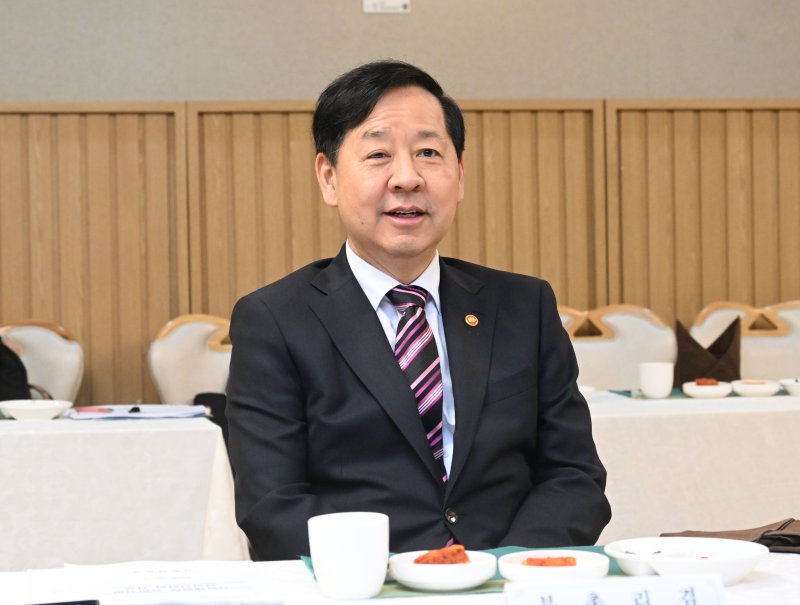
Meanwhile, Deputy Prime Minister and Minister of Finance and Economy Koo Yun-cheol said the government could withdraw the fuel price ceiling system once fuel prices fall to around 1,800 won per liter after the system is introduced.
At a full session of the National Assembly Planning and Finance Committee on the 11th, Koo said, "If we set the ceiling price at a level that reasonably reflects the difference between pre-war oil prices and the current higher prices, the subsidy itself will not increase," adding, "If oil prices continue to rise, we will adjust the price ceiling system again."
Koo also stated, "The government is preparing a comprehensive package that includes setting a reasonable fuel price ceiling, cutting fuel taxes, and, if necessary, drawing up an extra budget limited to vulnerable groups who are suffering losses."
Asked at what price level the government could scrap the price cap system, he replied, "When prices stabilize and fall below the level we set," and went on, "It would be around the average price level, such as fuel prices before the war and the typical rate of increase in the international oil market." When pressed for a specific figure, he said, "I think it would be when prices are in the 1,800-won range." In response to a question on what benchmark would be used given that prices differ by gas station, he answered, "We plan to base it on the supply prices of refiners."
Separately, nationwide average gasoline and diesel prices turned downward on the 10th after ten days of sharp increases. According to Opinet, the oil price information system run by Korea National Oil Corporation (KNOC), as of 2 p.m. that day the average gasoline price at gas stations nationwide was 1,905.8 won per liter, down 1.1 won from the previous day. The diesel price was 1,930 won at the same time, a decrease of 1.7 won.
[email protected] Choi Ga-young, Jang In-seo and Koo Ja-yoon Reporter