Three Judicial Laws to Be Promulgated Tomorrow: First Major Overhaul in 40 Years, Distortion of Law Offense and Constitutional Complaint System Take Immediate Effect
- Input
- 2026-03-11 16:27:07
- Updated
- 2026-03-11 16:27:07
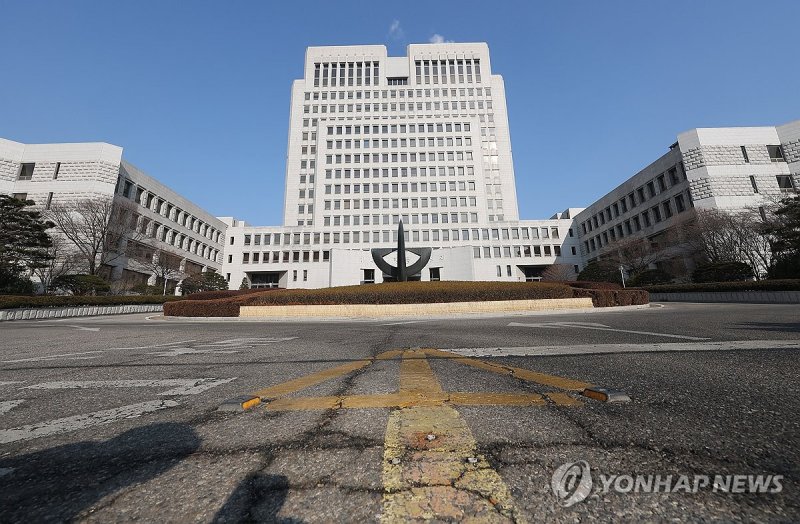
[Financial News] The so-called Three Judicial Laws, centered on the introduction of the distortion of law offense, the launch of a constitutional complaint against court rulings, and an increase in the number of Supreme Court justices, will be promulgated on the 12th.
According to the official gazette on the 11th, the Government of South Korea plans to publish the amended Criminal Act (introducing the distortion of law offense), the amended Constitutional Court Act (Act on Constitutional Complaints against Court Rulings), and the amended Court Organization Act (Act on Increasing the Number of Supreme Court Justices) in the electronic official gazette dated the 12th. This comes just one week after the bills passed the State Council of South Korea on the 5th. The distortion of law offense and the constitutional complaint against court rulings will take effect immediately upon promulgation, while the increase in the number of Supreme Court justices will apply starting two years after promulgation.
As a result, judges and prosecutors involved in investigations and trials can now face criminal charges, and the door has been opened for filing constitutional complaints with the Constitutional Court of Korea against final court rulings.
The distortion of law offense stipulates that judges and prosecutors participating in criminal trials, as well as those performing criminal investigation duties, may be punished by up to 10 years in prison and disqualification from office if they distort the law with the intent to grant unlawful or unjust benefits to others or to infringe on their rights and interests. The Act on Constitutional Complaints against Court Rulings expands the scope of constitutional complaints to include “court judgments,” which had previously been excluded. If a court ruling is deemed unconstitutional, the Constitutional Court of Korea may annul that ruling, and the courts must conduct a new trial in line with the Constitutional Court’s decision.
The Act on Increasing the Number of Supreme Court Justices provides that the current number of 14 justices will be expanded to 26, by adding four justices each year for three years starting two years after the law is promulgated. The first four additional justices are to be appointed in March 2028, and the expansion is scheduled to be completed by the end of President Lee Jae Myung’s term.
These bills were passed between the 26th and 28th of last month under the lead of the Democratic Party of Korea (DPK), which holds a majority in the National Assembly of the Republic of Korea, despite concerns about potential unconstitutionality and calls for broader public debate. The Government of South Korea deliberated and approved them at an extraordinary meeting of the State Council of South Korea chaired by President Lee on the 5th. With the overhaul of a judicial system that has remained largely unchanged since the 1987 constitutional amendment now imminent, the Supreme Court of Korea and the Constitutional Court of Korea are preparing follow-up measures.
The National Court Administration of the Supreme Court of Korea is holding a two-day nationwide conference of chief judges in Jecheon, North Chungcheong Province starting today to discuss follow-up measures to the judicial reform and ways to support judges. The Constitutional Court of Korea will, on the same day, activate a system within the Electronic Constitutional Adjudication Center for filing constitutional complaints against court rulings in line with the law’s entry into force. In addition, through its Administrative Preparatory Team, it is revising internal rules such as adjudication regulations.
[email protected] Jung Kyung-su Reporter