"We Can't Ship Because There's a War"—Will That Argument Hold Up? The Ministry of Justice's Strategy for a Possible Blockade of the Strait of Hormuz [US–Iran War]
- Input
- 2026-03-11 14:42:25
- Updated
- 2026-03-11 14:42:25
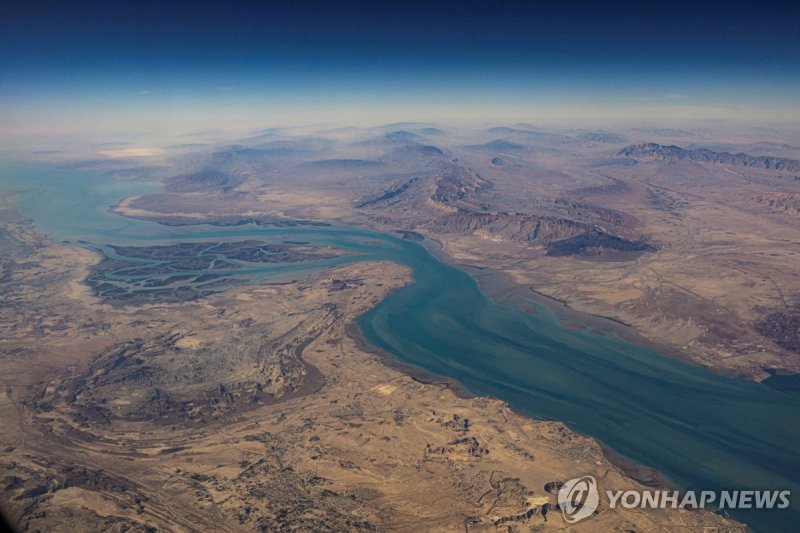
According to Financial News, the Ministry of Justice has urgently issued guidance to Korean companies on how to respond to "force majeure" (force majeure) in anticipation of international trade disputes arising from escalating tensions in the Middle East. The ministry noted that a mere external development such as the closure of a strait does not automatically guarantee exemption from liability, and that the key issues will be how the contract is interpreted and what evidence the parties can secure.
Guidelines released by the Ministry of Justice on the 11th explain that even when uncontrollable events such as war or a maritime blockade occur, companies may avoid legal liability or seek relief from losses depending on how they invoke the force majeure clause in their contracts.
As a first step, companies must check exactly which events are covered by the force majeure clause in their contracts and review the scope of exemption from liability under the governing law.
To have force majeure recognized, the event must have occurred outside the party’s sphere of control (externality), and performance must have been delayed despite the exercise of reasonable efforts (irresistibility). It is also crucial to prove that, at the time the contract was concluded, the occurrence of the event could not reasonably have been foreseen (unpredictability).
Korean courts have likewise recognized force majeure only in limited circumstances where external factors clearly fall outside a company’s control. Representative examples include construction projects halted due to a government travel ban during the Libyan Civil War, and business operations suspended after the government ordered the complete shutdown of the Kaesong Industrial Complex. In other words, companies can be relieved of liability when the direct cause is a factor—such as war or the exercise of public authority—that makes it practically impossible for them to take remedial measures.
In contracts governed by common law, the presence or absence of a force majeure clause can be decisive for exemption from liability. The Ministry of Justice cautioned, "If a party neglects its duty to give notice—promptly informing the counterparty of the event through proper procedures—it may be denied legal protection even in a genuine force majeure situation."
The ministry also emphasized that companies should collect evidence in advance showing that they did everything reasonably possible to minimize losses, such as attempting to secure alternative means of transportation. To assist with legal analysis and the preparation of supporting evidence, the Task Force for International Legal Support to Overseas Korean Companies under the Ministry of Justice is providing free legal advice, mobilizing more than 200 experts including public prosecutors and Foreign Legal Consultants.
An official from the Ministry of Justice stated, "As uncertainty grows in international transactions due to developments such as rising tensions in the Middle East, we will spare no effort in providing legal support so that Korean companies can conduct their business in a stable manner."
[email protected] Kim Dong-gyu Reporter