Windfall tax back on the table amid surging oil prices: seen as complement to maximum price system
- Input
- 2026-03-11 11:53:37
- Updated
- 2026-03-11 11:53:37
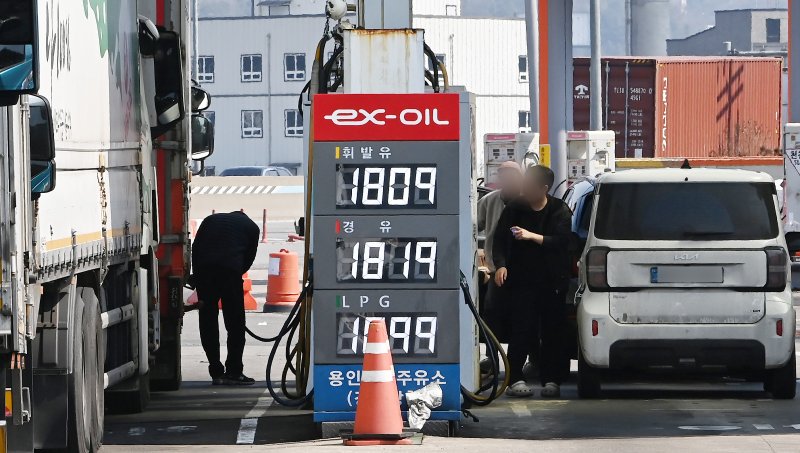
[The Financial News] As global oil prices soar due to the war involving Iran, the Democratic Party of Korea (DPK) has once again brought out the idea of a windfall tax. Several such bills were introduced in the 21st National Assembly of the Republic of Korea, and the proposal has now resurfaced in the 22nd National Assembly of the Republic of Korea.
On the 11th, DPK lawmaker Jang Cheol-min introduced an amendment to the Corporate Tax Act to impose a so-called windfall tax that would claw back excess profits earned by energy companies from oil price volatility.
Under the amendment, listed oil refining companies and liquefied petroleum gas (LPG) bulk suppliers would be required to pay an additional 20% corporate tax on any excess income that exceeds the average of the previous three years by more than 500 million won.
Earlier, on the 9th, during a meeting of the National Assembly's Trade, Industry, Energy, SMEs, and Startups Committee, Jang criticized oil refining companies for passing on the burden of rising international oil prices to consumers too quickly and argued that a windfall tax is necessary.
Jang contends that once introduced, a windfall tax could support the Lee Jae-myung administration’s current measures to counter the spike in oil prices. The government’s main tool is the designation of maximum prices under the Petroleum and Alternative Fuel Business Act, and he argues that a windfall tax shares the same purpose of curbing excessive profits by oil refiners.
It was President Lee Jae-myung who had previously championed the windfall tax idea. During the 2022–2023 boom in oil refiners and financial institutions driven by higher crude oil and commodity prices, Lee, then leader of the Democratic Party of Korea, said, "Even if we do not go as far as Europe’s windfall tax, I hope we can at least offset the public’s hardship through a surcharge."
Spurred by this, the broader pro-ruling camp introduced five windfall tax-related bills in the 21st National Assembly of the Republic of Korea. They included two amendments to the Corporate Tax Act imposing an excess profit tax on oil refiners similar to Jang’s proposal, and three bills to levy surcharges on excess profits in the financial sector.
However, the government is still not considering the introduction of a windfall tax. Within the Democratic Party Task Force on Economic Response to the Middle East Crisis, some lawmakers have voiced support for such a tax, but full-scale discussions have yet to begin.
[email protected] Kim Yun-ho Reporter