Saudi Arabia shifts oil exports to Red Sea, but fully replacing Hormuz seen as difficult
- Input
- 2026-03-11 11:23:07
- Updated
- 2026-03-11 11:23:07
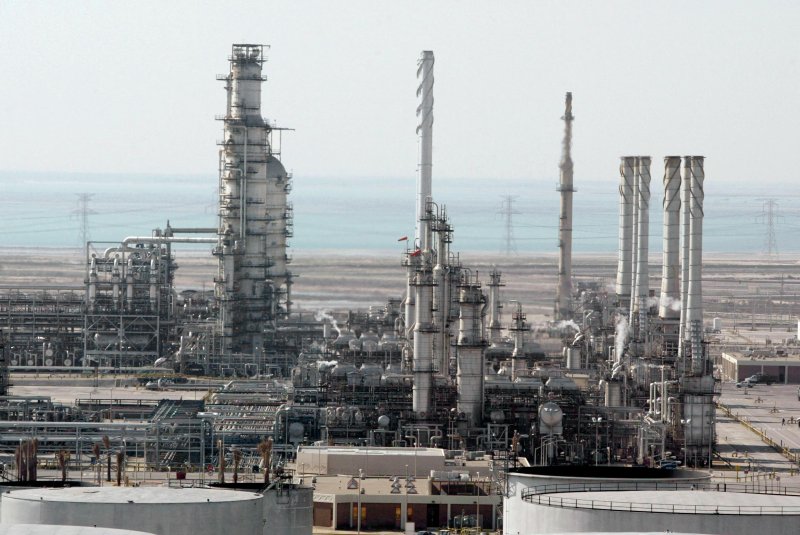
[Financial News] The Kingdom of Saudi Arabia (KSA), the world’s largest oil exporter and the country that relied most heavily on the Strait of Hormuz, has begun in earnest to change its export routes. With the waterway blocked by the war involving the Islamic Republic of Iran, KSA now plans to use the Red Sea instead.
Saudi tanker fleet converges on Red Sea as exports are rerouted
U.S. outlets including Yahoo Finance reported on the 10th (local time), citing shipping data, that at least 25 oil tankers are moving toward Yanbu Port in central-western KSA. The crude these vessels can carry is estimated at about 50 million barrels. The actual number of ships heading to Yanbu Port could be higher if tankers that have not disclosed their destinations for security reasons are included.
Bordered by the Red Sea to the west and the Persian Gulf to the east, KSA ranked first in global oil exports in 2024, shipping an average of 6 million barrels per day. The country uses pipelines and tankers to export crude, but has mainly relied on the Strait of Hormuz, which connects the Persian Gulf to the Indian Ocean. This is because its core oil fields are concentrated in the east. According to multinational data and analysis firm Visual Capitalist, an average of 14.22 million barrels of oil per day passed through the Strait of Hormuz by tanker in the first quarter of last year, accounting for about 25% of global seaborne oil trade. Of that volume, the largest share, 37.2% or 5.29 million barrels per day, originated from KSA.
Commodity market research firm Kpler noted that tanker traffic through the Strait of Hormuz plunged by about 90% within a week after the United States and Israel launched airstrikes on the Islamic Republic of Iran on the 28th of last month and Iran responded by closing the strait. Cable News Network (CNN) reported on the 10th, citing sources, that Iran has recently begun laying naval mines in the strait to effectively seal it off. On the same day, a U.S. official told political outlet Axios that American forces had sunk at least 16 Iranian vessels used for mine-laying operations around the strait.
Arab oil producers on the Persian Gulf, including KSA, Iraq and the United Arab Emirates (UAE), have cut output to free up storage capacity after their export routes were blocked. Foreign media report that global oil production fell by about 6% between the outbreak of the war involving Iran and the 10th.

Fully replacing Hormuz seen as unlikely
Amin H. Nasser, chief executive officer (CEO) of Saudi Arabian Oil Company (Saudi Aramco), stressed during an earnings call on the 10th that the company is seeking alternative transport routes. He pointed to a 1,200-kilometer pipeline running from the Abqaiq oil field area in the east across KSA to Yanbu Port on the Red Sea. The line is believed to have a capacity of 5 million to 7 million barrels per day. Nasser explained that throughput on this pipeline is expected to reach its maximum soon. He added that the company is also working to expand handling capacity at Yanbu Port and argued that within a few days it would be able to "supply 5 million barrels of oil per day to the global market." That would amount to roughly 70% of KSA’s export volume before the war involving Iran. According to London Stock Exchange Group (LSEG), crude loading capacity at Yanbu Port averaged about 2.2 million barrels per day in the roughly nine days since the war began, nearly double last month’s average of 1.1 million barrels per day.For neighboring UAE, using a 370-kilometer pipeline that links oil fields near Abu Dhabi to the Port of Fujairah on the Indian Ocean makes it possible to continue exporting crude while bypassing the Strait of Hormuz. In a report published last June, the U.S. Energy Information Administration (EIA) estimated that if KSA and the UAE operated their pipelines at full capacity, they could export 2.6 million barrels of oil per day without using the Strait of Hormuz.
Market participants, however, believe that even if KSA uses pipelines and the Red Sea, it will be difficult to fully replace the Strait of Hormuz. According to Kpler, KSA exported an average of 7.2 million barrels of oil per day in February, of which 6.38 million barrels, or 88.6%, went through the Strait of Hormuz. Nasser of Saudi Aramco emphasized, "We have experienced supply disruptions in the past, but this crisis is the most serious challenge ever faced by the Middle East’s oil and natural gas industry." He warned, "If supply disruptions continue, the global oil market will face catastrophic consequences, and the impact on the world economy will become even more severe."

[email protected] Reporter Park Jong-won Reporter