Deleted Tweet by U.S. Energy Secretary Triggers Market Turmoil
- Input
- 2026-03-11 06:57:38
- Updated
- 2026-03-11 06:57:38
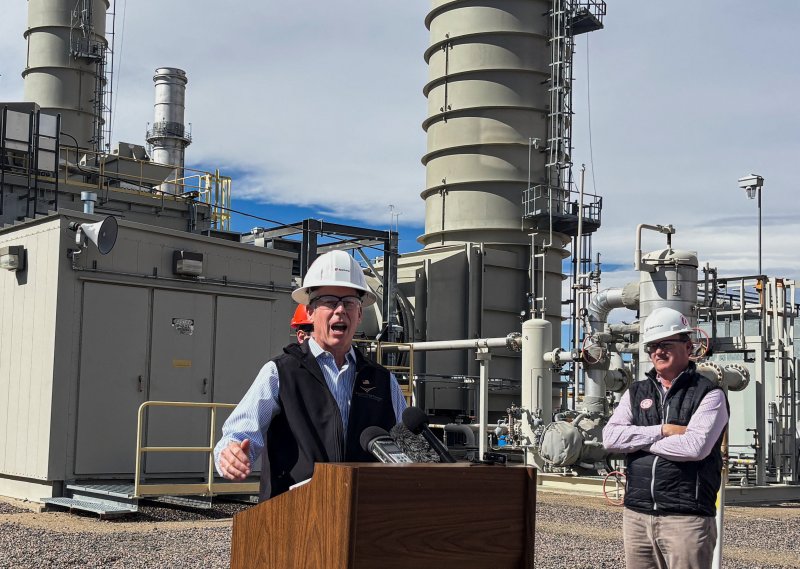
According to The Financial News, a social media post by the U.S. energy secretary sent markets into chaos, with oil prices suffering an unprecedented plunge.
On the 10th (local time), The Wall Street Journal (WSJ) reported that traders in New York City, London, and Singapore were watching videos of missiles and drones flying over the Middle East when a single post on social media caused oil prices to crash and markets to swing wildly.
A post that Christopher Allen Wright, U.S. Secretary of Energy, uploaded to his account on X (formerly Twitter) set off the turmoil. In the post, he stated, "The U.S. Navy has successfully escorted oil tankers through the Strait of Hormuz to ensure the flow of oil to global markets."
On expectations that the energy supply shock might ease, West Texas Intermediate (WTI) crude oil futures on the New York Mercantile Exchange (NYMEX) suddenly plunged 19%, dropping to $76.73 per barrel. In just 10 minutes, $84 million (about 110 billion won) in market capitalization was wiped out from oil-related ETFs.
However, the post was deleted within minutes. A U.S. government official said, "A video with an incorrect caption was posted due to an error by a DOE staff member," and officially denied the claim, adding, "The Navy is not currently escorting commercial vessels."
Robert Yawger, a commodities specialist at Mizuho Securities, sharply criticized the incident, calling it "an unforgivable, fatal mistake."
Some of the losses triggered by the false information were later recovered, but WTI futures still closed at $83.45 per barrel, down 12% from the previous day. It was the steepest one-day decline in four years.
Wall Street in New York City has been hoping that President Donald Trump would adjust his military operations against the Islamic Republic of Iran, amid concerns that surging oil prices ahead of the November midterm elections could damage the U.S. economy.
Oil prices have been extremely volatile this week. After surging to $119.48 per barrel on the 8th, prices fell 36% from that peak in just two days.
The entire financial market has been unable to find direction, shrouded in the "fog of war."
The S&P 500 Index (-0.2%) and the Dow Jones Industrial Average (DJIA, -0.1%) briefly turned higher during the session on the back of falling oil prices, but ultimately finished lower.
Shares of artificial intelligence (AI)-related companies such as SanDisk and Micron Technology rose more than 3%, but that was not enough to offset the broader market downturn.
Major airlines exposed to sharp swings in oil prices, including Delta Air Lines, American Airlines, and United Airlines, fell more than 2%. The S&P 500 Energy Sector, which includes large energy companies such as Exxon Mobil, dropped 1.3%, making it the worst-performing sector of the day.
Separate from the market turmoil, tensions on the ground are rising further. Pete Hegseth, United States Secretary of Defense, warned the Islamic Republic of Iran of "the most powerful airstrikes ever," while the Minister of Foreign Affairs of Iran responded, "There will be no cease-fire talks."
Amin H. Nasser, Chief Executive Officer (CEO) of Saudi Arabian Oil Company (Saudi Aramco), said during an earnings call that the situation is "the greatest crisis the oil and gas industry has ever faced," warning that "if the disruption to energy flows is prolonged, it will have catastrophic consequences for the market."
[email protected] Yoon Jae-joon Reporter