"Work from home" and "Keep it at 26 degrees"... Southeast Asia rolls out measures as Iran-driven oil prices surge
- Input
- 2026-03-11 01:01:49
- Updated
- 2026-03-11 01:01:49
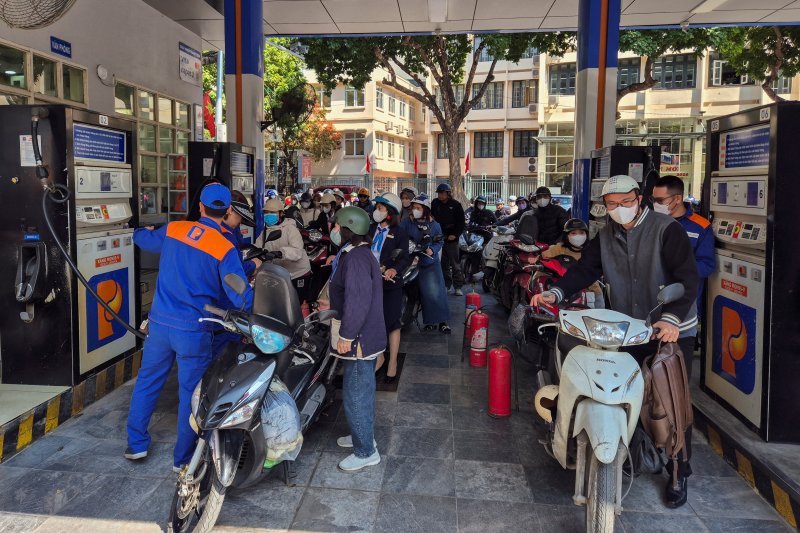
On the 10th, the Government of Vietnam urged businesses and citizens to conserve energy and recommended expanding remote work wherever possible. It also called on people to refrain from using private cars and instead use public transport, bicycles, or carpools, while warning against hoarding fuel or engaging in speculative trading.
The Ministry of Industry and Trade of Vietnam (MOIT) said in a statement that Vietnam is highly dependent on energy imports from the Middle East and is therefore being hit hard by recent disruptions in fuel supplies.
According to Vietnam National Petroleum Group Petrolimex, since Iran began its airstrikes on the 28th of last month, gasoline prices in Vietnam have risen by 32%, diesel by 56%, and kerosene by 80%.
In major cities such as Hanoi, long lines of cars and motorbikes have been seen forming at gas stations as people try to secure fuel. Some small gas stations have reportedly suspended operations temporarily or shortened their business hours due to supply shortages.
The Government of Vietnam is also working on measures to stabilize supply. Prime Minister Pham Minh Chinh has held successive phone calls with the leaders of the State of Kuwait, Qatar, and the United Arab Emirates (UAE) to discuss ways to secure crude oil and fuel supplies.
The Government of Thailand has likewise begun implementing concrete steps to curb energy consumption.
The Cabinet of Thailand ordered civil servants, except for essential staff providing public-facing services, to work from home. It also asked officials to refrain from nonessential overseas business trips and instructed government offices to keep air conditioners set at 26 degrees Celsius, strengthening energy-saving measures in the public sector.
In a statement, the Office of the National Economic and Social Development Council (NESDC) described the move as "a preemptive measure to reduce energy consumption" and added, "The government expects all sectors to use resources efficiently."
The Government of Thailand is considering even stronger steps if the situation worsens, such as switching off signboard lighting after 10 p.m. or restricting gas station operating hours. Thailand is believed to hold about two months’ worth of strategic oil reserves.
The Government of the Philippines has also introduced emergency measures to cut fuel consumption.
The Government of the Philippines has adopted a four-day workweek for government agencies, excluding frontline public service workers such as police and firefighters. It has also ordered all public offices to reduce fuel and electricity use by 10–20% and banned unnecessary business trips and in-person meetings.
President of the Philippines Ferdinand Marcos said in a statement, "We do not know when the turmoil in the Middle East will end," adding, "We have become victims of a war we never wanted." The Republic of the Philippines imports most of its crude oil from the Middle East and still relies heavily on oil-fired power generation.
[email protected] Kim Jun-seok Reporter