[Editorial] More Than 800 Construction Firms Have Already Closed This Year: Is There No Way to Save the Industry?
- Input
- 2026-03-10 18:28:44
- Updated
- 2026-03-10 18:28:44
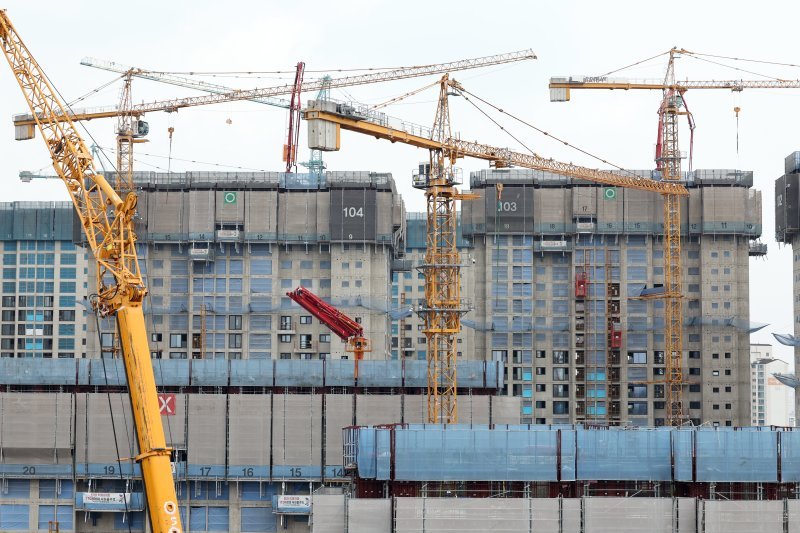
Construction performance, measured by the scale of work under way, also confirms the deep freeze in the industry. In January, construction output stood at 9.8019 trillion won, falling below the 10 trillion won mark for the first time in 59 months. During last year’s record-breaking slump, the lowest monthly construction output was recorded in October. Even then, however, it still exceeded 10.1 trillion won. This shows that the chill in the construction sector has not eased at all this year and has in fact intensified.
The wave of construction company closures stems from the prolonged period of high interest rates and rising construction and labor costs, which have left many weak project financing (PF) sites unable to move into groundbreaking or pre-sales. The business environment for construction may become even harsher. As external conditions worsen, including the Middle East war, there are growing concerns that various raw material costs could snowball. The construction downturn should not be viewed as a problem confined to certain regions or sectors, but as a serious issue affecting the entire national economy. If construction investment plunges and the sector fails to climb out of recession, employment, domestic demand, overall growth, and incomes will all suffer.
When the construction industry loses momentum, the damage spreads not only to steel, cement, and building materials companies, but also to furniture, interior design, electrical installation, and transport businesses. Because of these spillover effects, some analyses suggest that about 15% of the nation’s gross domestic product (GDP) comes from construction. The recent steady decline in the number of employed people is also closely linked to the slump in construction. When construction contracts, jobs for ordinary workers inevitably shrink, and day laborers in particular bear heavy losses.
A weak construction market also delivers a direct blow to the economies of small and mid-sized cities in the provinces. Construction has long served as a pillar of local economies. When regional small and mid-sized builders collapse, nearby partner firms and suppliers shut down one after another, and small self-employed business owners and temporary workers alike are put at risk. For the sake of ordinary livelihoods, domestic demand, and regional revitalization, the construction market must recover. In the longer term, a healthier construction sector can also help stabilize housing prices.
For the construction industry to regain its footing, an orderly restructuring of construction firms is essential. Companies with no prospect of recovery must be identified quickly and guided through an exit process. Under the government’s firm stance on stabilizing the real estate market, it is difficult to foresee interest rate cuts anytime soon. Firms barely surviving on loan rollovers and interest deferrals are a drag on market soundness. Failing to liquidate insolvent builders in time could end up harming healthy companies and even the financial system. Instead, the authorities should devise maximum support measures for fundamentally sound firms that are only facing temporary liquidity problems. It is also urgent to accelerate deregulation that can reduce construction costs. Only when the construction market revives can employment and economic growth improve.