US Says THAAD Deployed in South Korea Is Being Moved to Middle East; President Lee Insists "No Problem for Deterrence Against North"
- Input
- 2026-03-10 18:18:38
- Updated
- 2026-03-10 18:18:38
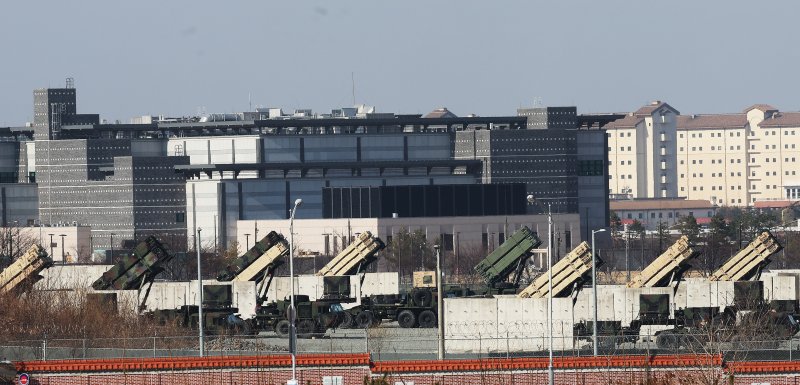
On the same day, The Washington Post, citing two US government officials, reported that some of the Terminal High Altitude Area Defense (THAAD) systems deployed in South Korea are being moved to the Middle East. The officials also said the military is drawing on stockpiles of Patriot interceptor missiles deployed in the Indo-Pacific and other regions to strengthen defenses against drone and ballistic missile attacks from the Islamic Republic of Iran (Iran).
At the State Council of South Korea meeting, President Lee said, "The government expects that USFK will fully contribute to peace and stability on the Korean Peninsula, and we believe it has done so up to now." At the same time, he noted, "We are expressing opposition to USFK removing some air defense weapons for its own military needs, but the stark reality is that we cannot fully impose our position."
His remarks were interpreted as acknowledging that, in practical terms, it would be difficult to prevent the United States from relocating USFK air defense assets to the Middle East in response to the situation there. However, Lee strongly stressed that even if such withdrawals occur, there would be no problem at all with deterrence against North Korea.
Lee argued that the impact of USFK weapons withdrawals on South Korea’s defense posture would be limited, saying, "Objectively speaking, South Korea’s military defense spending level is very high by global standards. International organizations also rank our military strength fifth in the world, which shows how strong our defense capabilities are."
He went on, "Our annual defense spending is 1.4 times higher than the Gross Domestic Product (GDP) of the Democratic People's Republic of Korea (North Korea). In objective terms, the gap with North Korea is enormous," adding, "Of course, there is the special factor of North Korea’s nuclear weapons, but when it comes to conventional combat and military capabilities, it is clear that we are overwhelmingly superior beyond comparison."
Lee then underscored the importance of self-reliant defense. "In truth, national defense is something a nation must take responsibility for on its own," he said. "If you depend on someone else, there can come a time when that support collapses." He added, "We must always prepare for the worst, and this is equally true for defense and military spending."
He continued, "We are not spending because war is about to break out immediately, but to prepare for any contingency that might occur. We must always consider what we would do if, in such a contingency, external support were not available," adding, "Just as we routinely prepare for a war whose probability is very low, there can be many situations in which, depending on changes in the international order, external support disappears, against our wishes and intentions. Even in such circumstances, we must be fully equipped with what is commonly called self-reliant defense capabilities so that we can defend ourselves on our own."