Unending Infighting Over ‘Prosecution Reform’... President Steps In to Contain Fallout
- Input
- 2026-03-10 17:00:22
- Updated
- 2026-03-10 17:00:22
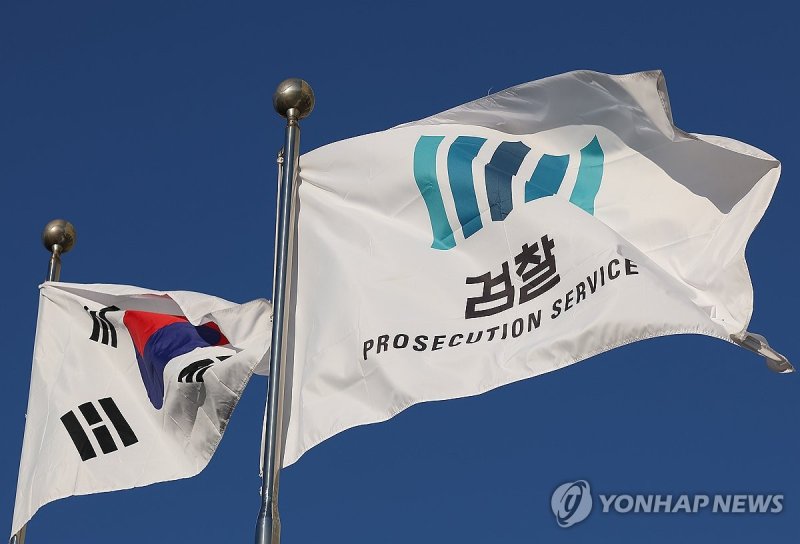
According to legal circles on the 10th, Representative Kim Yong-min of the Democratic Party of Korea (DPK), a member of the National Assembly Legislation and Judiciary Committee, appeared on the YouTube program “Maebul Show” on the 9th. He said, “If you look at the content of the government’s proposal, I don’t think the prosecution service will be abolished,” adding, “Its powers will actually expand, and we will end up with a Public Prosecution Office that is even more powerful than the current prosecution, without effective checks.”
He specifically took issue with the provisions on mandatory transfer of all cases and on warrant request and command authority that are included in the current government draft of the Indictment Agency Act. Kim argued that under these provisions, prosecutors at the Public Prosecution Office could have any case they want transferred to the office and then declare they will conduct direct investigations under the pretext of supplementary investigation. “If they take both the full transfer of cases and the power to conduct supplementary investigations,” he asserted, “the Public Prosecution Office will become far more powerful than today’s prosecution service.” He went on, “Under the current Criminal Procedure Act of the Republic of Korea, prosecutors can direct the execution of warrants, while investigative agencies decide on their own when to request warrants. But the Indictment Agency Act stipulates that prosecutors will also direct warrant requests. That means prosecutors will be directing all coercive investigations conducted by the police.”
The Prosecution Reform Task Force under the Office for Government Policy Coordination prepared revised drafts of the Serious Crimes Investigation Agency Act and the Indictment Agency Act on the 24th of last month. The original government proposal had drawn criticism for straying from the purpose of Prosecution Reform, as it envisioned a dual-track structure at the Serious Crimes Investigation Agency, separating prosecutors and other legal professionals from general investigators, and it defined nine categories of crimes within the agency’s investigative scope. In response, the task force pulled back. The revised draft unifies investigators into a single track and narrows the investigative scope to six major crime categories.
The hardline faction within the Democratic Party is reportedly insisting that not only the Serious Crimes Investigation Agency, which would take over the prosecution’s investigative function, but also the Public Prosecution Office, which would inherit its indictment function, must have their roles further reduced. Their stated aim is to return to the original purpose of Prosecution Reform, which is to weaken the power of prosecutors who have abused investigative authority in politically charged cases.
As these hardline demands continued, Professor Park Chan-un resigned as chair of the advisory committee of the Prosecution Reform Task Force on the 9th. Announcing his intention to step down, he warned that the hardline faction’s proposals “carry a high risk of pushing our criminal justice procedure into a level of chaos that would be intolerable.” He explained, “Prosecutors do not simply review the records of cases transferred by investigative agencies and stop there. They check for missing evidence, examine inconsistencies in statements, and determine whether the case can be sustained in court before deciding whether to indict.” He added, “In this process, most cases, to a greater or lesser extent, have gone through supplementary investigations led by prosecutors.”
He continued, “There are many cases where a single additional witness interview or one more piece of evidence determines whether a suspect is indicted or not indicted,” and added, “You cannot close a case solely on the basis of police records, nor can you ask the same police officer who issued a non-referral decision in a case where the police investigation is in doubt to conduct supplementary investigations.”
President Lee Jae-myung likewise wrote on his X (formerly Twitter) account on the 9th, “Even when pursuing necessary reforms, we must be careful not to end up condemning everyone across the board and treating all of them as targets of reform, which would be like burning down the whole house just to get rid of bedbugs.” He added, “To solve problems, we must accurately identify their causes and clearly distinguish what should be kept from what should be discarded.”
The president went on, “We must remove the problems and hold those responsible strictly to account, but at the same time we should minimize any loss of motivation or harm suffered by the many members who are not involved,” and stressed, “No matter how difficult the reform, we must never give it up. Yet we must exercise the utmost caution, again and again, to minimize the wounds and conflicts that may result.”
Justice Minister Jeong Seong-ho also wrote on his Facebook page on the 9th, “The slogan of reform may belong to us, but the criminal justice system belongs to all the people.” He added, “The government’s recent bills for the Serious Crimes Investigation Agency Act and the Indictment Agency Act, which were submitted to the National Assembly, are designed to realize that principle. They are bills that the government drafted after intensive deliberation, incorporating many of the Democratic Party’s revision proposals from February.”
He further stated, “The Lee Jae-myung administration’s complete abolition of prosecutors’ authority to initiate direct investigations, and the separation of the prosecution service into the Serious Crimes Investigation Agency and the Public Prosecution Office, are historic achievements that no previous democratic administration has managed to accomplish.”
However, the hardline faction within the Democratic Party does not appear likely to back down easily. Appearing on MBC Radio that day, Representative Kim Yong-min again argued, “If the government’s Prosecution Reform plan is implemented, it will actually undermine the purpose of Prosecution Reform and carry extremely serious risks.” When the host suggested that President Lee Jae-myung’s remark about not “burning down the house to catch bedbugs” was being interpreted as a message aimed at those opposing the government’s proposal, Kim replied, “I cannot say for sure what the president’s true intention is.”
In legal circles, some argue that it is not reasonable to interpret prosecutors’ actions—such as rejecting warrant applications or returning case files submitted by investigative agencies, as part of exercising their exclusive indictment authority and checking investigative powers—as a “resurgence of political prosecutors.” Critics also point out that, if prosecutors do not “direct” investigative agencies as the hardline faction within the Democratic Party demands, it will be ordinary citizens who suffer from abuses of investigative power by those agencies.
A legal community source commented, “Prosecutors were introduced into the criminal procedure system to keep the police, who wield the enormous power to detain people, in check and to prevent inhumane investigations,” and asked rhetorically, “If we call it ‘command’ when prosecutors use their indictment authority to keep investigative agencies in check, then what is the point of having a criminal procedure system at all?”
[email protected] Reporter Kim Dong-gyu Reporter