Government Subsidies ‘Leaking Everywhere’... Authorities Failed to Detect Hundreds of Billions of Won in Fraud for Years
- Input
- 2026-03-10 16:09:44
- Updated
- 2026-03-10 16:09:44
[Financial News] Government subsidies funded by public finances are being misused and are leaking everywhere. Several companies colluded to siphon off tens of billions of won in subsidies to line their own pockets, and in one case, the head of an association monopolized hundreds of billions of won in subsidies that were supposed to benefit members and the local community. The methods are increasingly brazen.
These findings emerged after President Lee Jae Myung of South Korea ordered a thorough investigation into the organized abuse of government subsidies, prompting the government to review a portion of cases. However, the cases uncovered so far are seen as only the tip of the iceberg.
Hundreds of different subsidy programs are being misused and drained, making it difficult for the government to avoid criticism that its oversight and supervision have been extremely lax. The central government and local government are also being blamed for their loose and overly lenient management, which failed to detect the bold behavior of companies and associations in advance.
For years, repeated warnings were raised about sloppy management of subsidies—treated as “easy money”—and about delayed and weak sanctions. Yet government authorities merely papered over the issue, citing ministerial autonomy, and postponed any fundamental overhaul of the system.
Government subsidies totaled 126 trillion won last year based on disbursements, with about 226,000 recipients. The size of subsidies is increasing every year and is expected to exceed 130 trillion won this year.
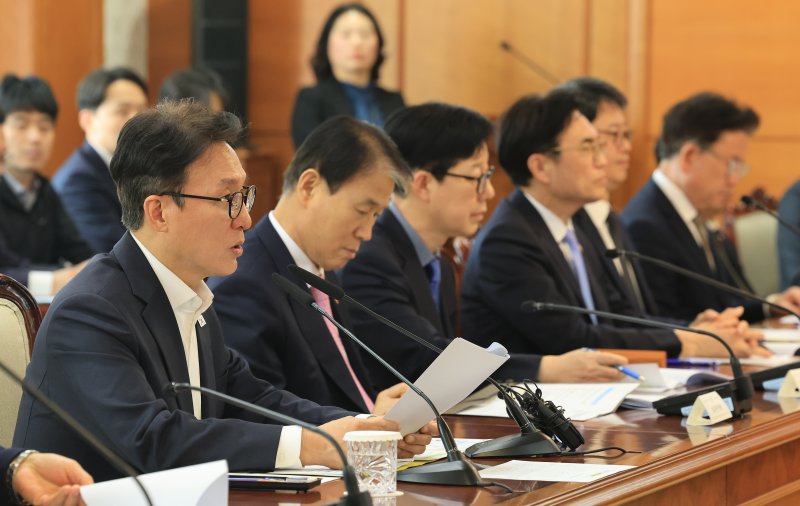
On the 10th, the Government of South Korea announced that, to penalize fraudulent receipt of government subsidies, it will impose penalties of up to eight times the illicit gains and significantly raise whistleblower rewards to 30% of the amount recovered to the treasury. On that day, the government, chaired by Prime Minister Kim Min-seok at Government Complex Seoul, held a meeting of relevant ministers on eradicating subsidy fraud and approved these measures.
Under the new policy, the government will raise sanctions for fraudulent receipt of subsidies to the maximum level allowed by law and increase rewards for whistleblowers. The Ministry of Planning and Budget, as the lead ministry, will review and manage decisions on fraud and sanctions that are currently dispersed across individual ministries and local governments.
In addition, the government plans to overhaul the outdated subsidy management system.
Before that, the government plans to launch a comprehensive inspection of subsidy fraud this year. The number of private subsidy projects subject to inspection will be expanded to 6,500 cases, more than ten times the number reviewed last year.
The government will also newly inspect 6,700 local government subsidy projects worth 1 billion won or more that previously were not reviewed. To do this, it will form a joint special inspection task force of 440 personnel in 24 teams—ten times larger than before—and operate it for six months.
The special inspection task force will also review whether follow-up measures taken by each ministry were appropriate in 1,746 cases of subsidy fraud uncovered over the past five years. However, criticism is mounting that this is a case of locking the stable door after the horse has bolted, as the government had left sanction decisions to each ministry and is only now reviewing five years’ worth of cases after problems surfaced.
Skeptics also question whether the government will be able to properly recover the penalties corresponding to the unjust gains from subsidy fraud.
Jang Young-jin said, "Currently, when fraud is detected, each ministry’s own Fraud Review Committee determines the level of sanctions. Because of concerns about being held accountable for management failures and due to a culture of leniency, strict sanctions have not been imposed."
Even the partial picture of subsidy abuse disclosed by the Ministry of Planning and Budget that day was shocking. Many are reacting with disbelief that subsidy management could have been so sloppy and chaotic, and they question how the government failed to recognize such widespread leakage of subsidies over many years.
In fact, the findings are based on an inspection of 992 cases out of 46,942 subsidy projects in the second half of 2024. The amount of misuse uncovered reached 66.8 billion won.
Even if one excludes about 13,000 benefit-type subsidy projects such as the Basic Pension—worth 67 trillion won—the inspected cases still represent less than 1% of all subsidy projects (by number of project operators). Yet this small sample already revealed this scale of abuse.
Experts point out that if a full-scale inspection were conducted, the actual extent of fraud would be far greater, and that the cases disclosed that day are only the tip of the iceberg.
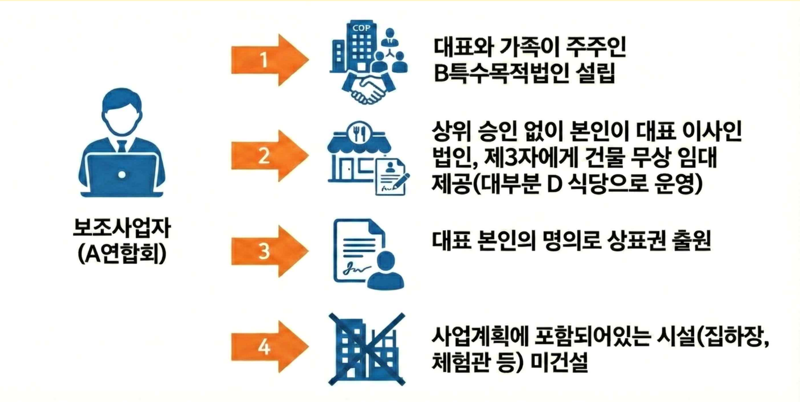
Among the examples of fraudulent receipt of government subsidies released by the Ministry of Planning and Budget on the 10th is a flow chart of a case in which an association head monopolized 19.8 billion won in subsidies that should have gone to members. Provided by the Ministry of Planning and Budget.
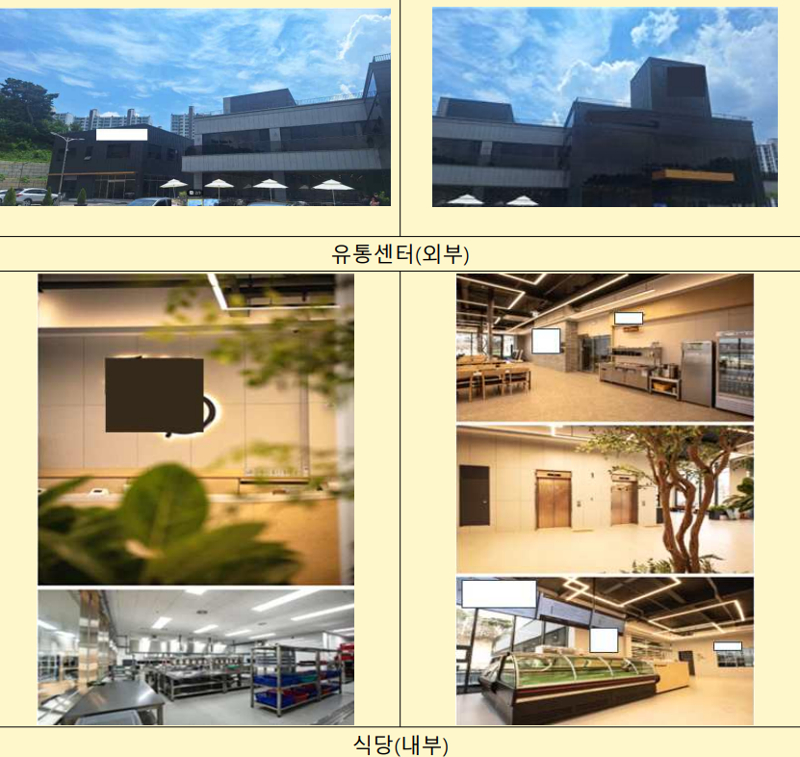
Among the examples of fraudulent receipt of government subsidies released by the Ministry of Planning and Budget on the 10th is an on-site photo related to a case in which an association head monopolized 19.8 billion won in subsidies that should have gone to members. Provided by the Ministry of Planning and Budget.
One case highlighted by President Lee Jae Myung involved a corporate-style broker who siphoned off more than 5 billion won in subsidies, using a highly calculated scheme. The broker embezzled 5.1 billion won in subsidies intended for a project that installs Internet of Things (IoT) sensors on manufacturing equipment and tools to collect and analyze production data, innovate processes, and improve productivity. In this case, 20 lead client companies took most of the IoT and software costs that should have been distributed to 557 project operators. They submitted falsified inspection reports, passed off Chinese-made products as domestically produced, and supplied used, low-cost rental equipment at inflated prices. Jang Young-jin commented, "This case effectively nullified the original purpose of the government project, and the broker extracted the largest economic benefit." There was also a case in which the head of a federation embezzled 19.8 billion won in subsidies (disbursed between 2017 and 2023) that had been granted under the FTA Damage Support Program to build auction houses, collection centers, sales centers, and experience facilities. The federation head arranged for a special-purpose company established by himself and his family to control the project as the largest shareholder and de facto owner. Using the 19.8 billion won in subsidies and matching funds, they acquired the land and buildings for a distribution center. He then leased this real estate free of charge to another company where he served as CEO and to a third party (a privately run restaurant), and operated most of the building as a restaurant. In this case, subsidies were paid out over more than six years, yet there was virtually no oversight of whether the funds were being used properly. This has prompted criticism and questions about whether such abuse could really have been the work of a single individual acting alone. On this point, Jang Young-jin said, "It is reasonable to suspect that this may not have been the act of a single individual," adding, "We will look more closely into whether additional parties were involved in the fraudulent receipt of subsidies." Some government subsidies were diverted to pay for overseas golf trips for certain companies, and in other cases they were used to cover meal expenses for individuals and their families. In one case, a company that received more than 200 million won in subsidies to support overseas expansion of industrial services using Information and Communication Technology (ICT) rented a golf course in Thailand and sold golf package tours instead. The post-project service report was also cobbled together and falsified before submission. Another case involved a project that received subsidies to develop a semi-permanent air purifier filter. About 100 million won of the project funds were spent on purchasing materials for a private laboratory and on meal expenses for the project head and his family. In a project intended to increase farm household income, several million won in subsidies were used to purchase golf equipment and mobile phones. In another case, 240 million won in subsidies for a project to develop a joint youth brand for local products was diverted to pay for interior renovation of a coffee shop and wedding hall located in the building owned by the project operator’s mother. In a separate project to remodel a local branch school into a camping and cultural space, 100 million won of the subsidy was transferred to the operator’s personal account and used via a personal credit card to purchase camping equipment. Other abuses included: excessive payment of labor costs to employees working on projects unrelated to the subsidized program; violations of procedures for private contracts and unauthorized use of value-added tax refunds; and cases where, after awarding a private contract, the parties later carried out a sham bidding process on the national procurement system to make it appear legitimate. The methods were both brazen and diverse. Prime Minister Kim Min-seok said that day, "We must take firm action, including criminal complaints, against habitual and malicious perpetrators of subsidy fraud."
[email protected] Reporter Jung Sang-geun Reporter