As the Strait of Hormuz Is Blocked, Asia and Europe Intensify Competition for LNG Supplies
- Input
- 2026-03-10 14:33:33
- Updated
- 2026-03-10 14:33:33
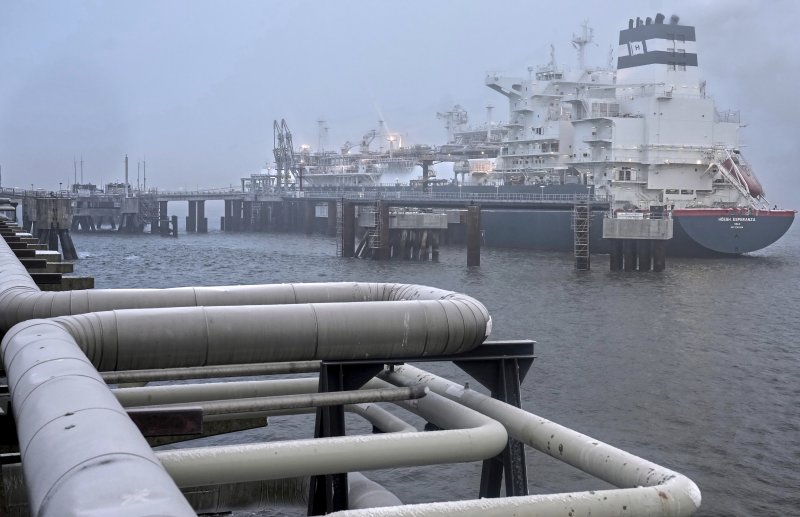
According to The Financial News, the closure of the Strait of Hormuz, a key route for global Liquefied Natural Gas (LNG) supplies, due to war in the Middle East is intensifying the race between Asia and Europe to secure energy.
The situation resembles the energy crisis that erupted four years ago in the immediate aftermath of Russia’s invasion of Ukraine.
On the 10th (local time), the Financial Times (FT) reported, citing shipping-route tracking data, that LNG carriers originally bound for Europe are now diverting to Asia after the Strait of Hormuz, through which about one-fifth of global LNG supply passes, was blocked by attacks on the Islamic Republic of Iran (Iran) by the United States of America (U.S.) and Israel.
Asian countries have long been heavily dependent on LNG from Qatar and the United Arab Emirates (UAE), which is shipped through the Strait of Hormuz.
Citigroup data show that South Korea and Japan each rely on Qatar for about 15% of their LNG imports, while Taiwan depends on Qatar for 30%.
Compared with Europe, Asian countries use more gas for power generation to meet summer cooling demand.
LNG is mainly imported under long-term purchase contracts rather than on the spot market, but FT noted that some buyers are canceling purchases when prices are high and even switching suppliers just before contracts are finalized.
LNG prices in Asia have surged sharply since the outbreak of the war.
On the 9th, the LNG Japan/Korea Marker (JKM), a benchmark for natural gas prices in Northeast Asia, reached 24.80 dollars per million BTU, more than double its level just before the conflict began. This is equivalent to about 73.10 euros per megawatt-hour (MWh).
On the same day, European LNG prices also more than doubled from pre-war levels, rising to 69.50 euros per MWh.
European gas buyers are now facing a situation similar to the reduction in Russian LNG supplies that followed the outbreak of the war in Ukraine four years ago.
However, prices still remain below the 2022 peak of 342 euros.
European gas companies have strengthened their ability to secure LNG, drawing on lessons from the Russia-driven energy crisis four years ago. Even so, a prolonged closure of the Strait of Hormuz and the lack of long-term contracts are emerging as new sources of risk.
Alex Kerr, a partner at Baker Botts, assessed the situation by saying, "Europe now has many more tools to counter this extreme price spike scenario."
European buyers have begun inserting clauses into contracts that impose far higher penalties than in the past if LNG suppliers divert cargoes elsewhere in pursuit of higher profits.
Another factor working in Europe’s favor is that, unlike Qatari LNG, which is subject to strict destination restrictions, a large volume of new U.S. LNG project cargoes with flexible destination terms has come onto the market.
Many European gas buyers, expecting a global supply glut, have delayed signing long-term supply contracts in the hope that prices would fall. Some analysts now warn that this caution could backfire.
Di Odoardo, an analyst at Wood Mackenzie, explained, "Because of the European Union (EU)’s new methane emissions regulations, and the uncertainty over future fines and compliance costs, buyers have been hesitant to commit to LNG purchases."
This "gap in long-term contracts" is likely to translate into much higher costs if war-related disruptions persist.
With the closure of the Strait of Hormuz dragging on, the risk of price spikes driven by competition between Asia and Europe to secure energy supplies is growing.
Natural gas is harder to store and transport than oil, making it far more vulnerable to price shocks.
In a recent report, Oxford Economics warned of a worst-case scenario in which shipping disruptions and storage capacity limits coincide, stating, "The longer the Strait of Hormuz remains blocked, the greater the risk that what began as a simple maritime logistics problem will turn into an actual gas shortage."
[email protected] Yoon Jae-joon Reporter