"Can't We Have a Ceasefire?" The 'Ceasefire' Keyword Emerges Just Two Weeks Into the United States–Iran War
- Input
- 2026-03-10 13:23:32
- Updated
- 2026-03-10 13:23:32
[Financial News] As the United States–Iran war enters its second week, the international community is beginning in earnest to mediate a ceasefire. After United States President Donald Trump suggested the war could end sooner than expected, major powers including Russia, China, France and the Republic of Türkiye have been seeking diplomatic solutions one after another.
On the 9th (local time), according to the Iranian Students' News Agency (ISNA) and state television, Iranian Deputy Foreign Minister Kazem Gharibabadi stated, "Several countries, including China, Russia and France, have contacted us regarding a ceasefire." This is the first time Iran has publicly acknowledged receiving ceasefire requests from the international community.
Gharibabadi went on to say, "The condition for a ceasefire is that such attacks are never repeated," setting a halt to additional strikes by the United States and the State of Israel as a precondition.
Rising expectations for an early end to the war are rooted in a shift in Trump's rhetoric. In an interview with Columbia Broadcasting System (CBS) that day, Trump said the war was "entering the final phase." At a Republican Party (GOP) event and in a press conference, he also remarked that it would "end very quickly." Just a day earlier, he had voiced dissatisfaction with Mojtaba Khamenei, who was selected as Iran's supreme leader, prompting concerns that he might again pursue a decapitation strike. His tone has since softened considerably.
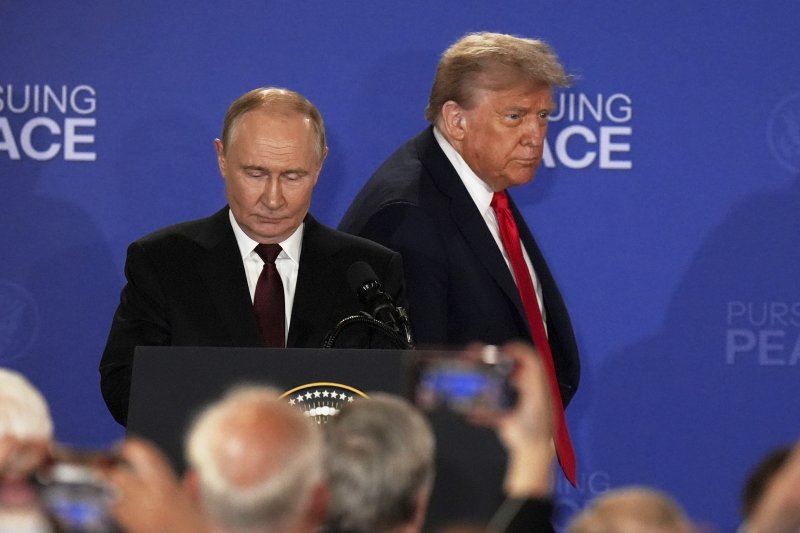
Major countries are also accelerating their mediation efforts. Russian President Vladimir Putin held a phone call of about an hour with Trump that day to discuss the situation in the Iran war.
Putin is reported to have conveyed to Trump what he had discussed the previous week with Iranian President Masoud Pezeshkian and leaders of Gulf states, and to have outlined his own views on the war in Iran. Russia appears to be positioning itself as a mediator, as it is both an ally of Iran and a country that can communicate directly with the United States.
Trump told reporters, "I had a very good call with Putin about the Middle East," but added, "Putin wanted to be helpful, yet he said the most helpful thing would be to end the Russo-Ukrainian War."
Recep Tayyip Erdoğan, president of the Republic of Türkiye, also spoke by phone with Iranian President Masoud Pezeshkian that day to discuss ending the war.
Erdoğan said, "Neither unlawful interference in Iran nor Iran's attacks on its regional neighbors is acceptable," stressing, "Now more than ever, we must keep the door to diplomacy wide open."
Middle Eastern countries are likewise calling for a diplomatic resolution. The Republic of Iraq proposed forming a diplomatic coalition that would include Middle Eastern states and the European Union (EU), with the goal of bringing hostilities to a halt.
Prime Minister of Canada Mark Carney also held a phone call with Qatar's ruler, Sheikh Tamim bin Hamad Al Thani, and the two agreed on the importance of diplomatic efforts to prevent further escalation of conflict in the Middle East.
[email protected] Kim Kyung-min Reporter