Sharp rise in emergency psychiatric admissions...Police to expand Mental Health Emergency Response Teams
- Input
- 2026-03-10 16:23:02
- Updated
- 2026-03-10 16:23:02
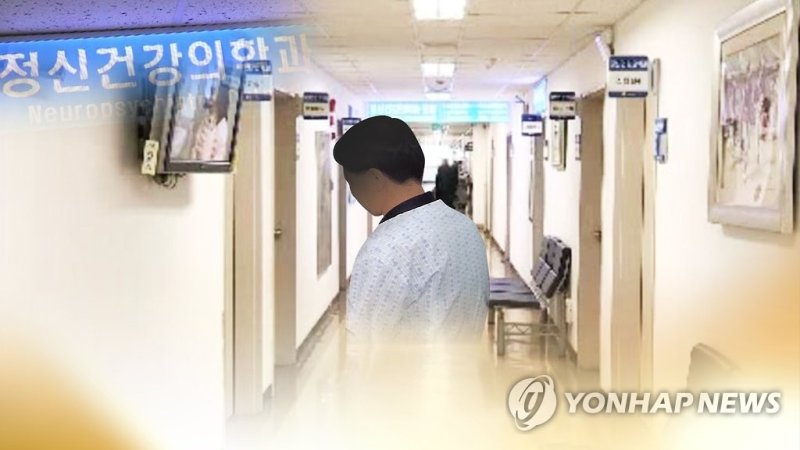
According to The Financial News, the police have decided to expand the operation of their "Mental Health Emergency Response Teams" as requests for emergency admissions related to mental illness continue to rise, increasing the workload at the scene.
Based on reporting by The Financial News on the 10th, the Korean National Police Agency (KNPA) will increase the number of Mental Health Emergency Response Teams from 20 teams with 99 officers at provincial and metropolitan police agencies to 28 teams with 170 officers. In particular, the Seoul Metropolitan Police Agency and the Gyeonggi Nambu Provincial Police Agency, where demand for emergency admission requests is concentrated, will each operate three teams. The Busan Metropolitan Police Agency, Incheon Metropolitan Police Agency, Gyeonggi Bukbu Provincial Police Agency, Jeonnam Provincial Police Agency, Gyeongbuk Provincial Police Agency, and Gyeongnam Provincial Police Agency will each expand to two teams.
Police responses to mental health emergencies are based on Article 50 of the Act on the Improvement of Mental Health and the Support for Welfare Services for Mental Patients. The act stipulates that, when a person presumed to have a mental illness poses a serious risk of harm to themselves or others and the situation is extremely urgent, they may be referred for emergency admission to a psychiatric medical institution with the consent of a doctor and a police officer.
Accordingly, when a related report is filed, the police may contact a psychiatric medical institution and request emergency admission measures. However, even when officers encounter a person in a mental health crisis on site, the lack of a systematic cooperation system among relevant agencies has often forced frontline officers to search on their own for a hospital that can admit the patient and transport them over long distances. This has repeatedly increased the workload of officers at the scene and fueled ongoing concerns about potential "gaps in public safety."
The KNPA created and began operating the Mental Health Emergency Response Teams in October 2022 precisely to address these problems. After a Police Precinct or police box receives a related case and hands it over, the response team supports emergency admission requests for high-risk psychiatric patients who may harm themselves or others and provides information on available hospital beds.
Despite the existence of these teams, the workload on frontline officers remains heavy as demand for emergency admissions related to mental illness continues to grow. In fact, the number of emergency psychiatric admission requests made by the police rose from 15,837 cases in 2023 to 18,066 cases in 2024, and then to 20,839 cases last year, showing a steady upward trend.
During the same period, due to staffing limits, the number of cases handled by the response teams accounted for only 5,833 cases (36.8%), 7,134 cases (39.5%), and 7,882 cases (37.8%) of all emergency admission requests, respectively. With the teams processing only about 38% of total demand, the remaining cases are being handled by personnel at frontline Police Precincts and police boxes.
To provide more support on the ground and reduce the workload of local officers, the police plan to expand the response teams and raise the share of emergency admission requests handled by these teams to 44% this year. In addition, to enhance expertise, they are working with local governments to gradually convert the police response teams into joint response teams that include professional counselors employed by the municipalities.
Some, however, argue that simply expanding police-level response units is not enough, and that more fundamental measures—such as strengthening early treatment and management systems for people with mental illness—must come first. Emergency admission is considered a last resort, used only when voluntary admission or admission by a legal guardian is not feasible and the risk of harm to self or others is extremely high.
According to the Ministry of Health and Welfare, only 12.1% of people currently use mental health services, and the mental health screening participation rate stands at just 39.4%. In response, the ministry is preparing a five-year mental health and welfare policy plan aimed at preventing and treating mental illness, supporting rehabilitation, welfare, and rights protection, and creating a more mental health–friendly environment.
A police official said, "Because the police are not medical professionals, we are working to convert the police response teams into joint response teams that include professional counselors from local governments." The official added, "Our role is to ensure that, in a crisis, patients are connected to safe treatment and that additional incidents are prevented. Ultimately, however, the most desirable outcome is to build a system in which people with mental illness receive protection and treatment before their condition escalates into a crisis, so that the number of emergency admissions itself declines."
[email protected] Jang Yu-ha Reporter