Bond market volatility surges on oil price spike; BOK to buy 3 trillion won in Treasuries
- Input
- 2026-03-10 10:25:09
- Updated
- 2026-03-10 10:25:09
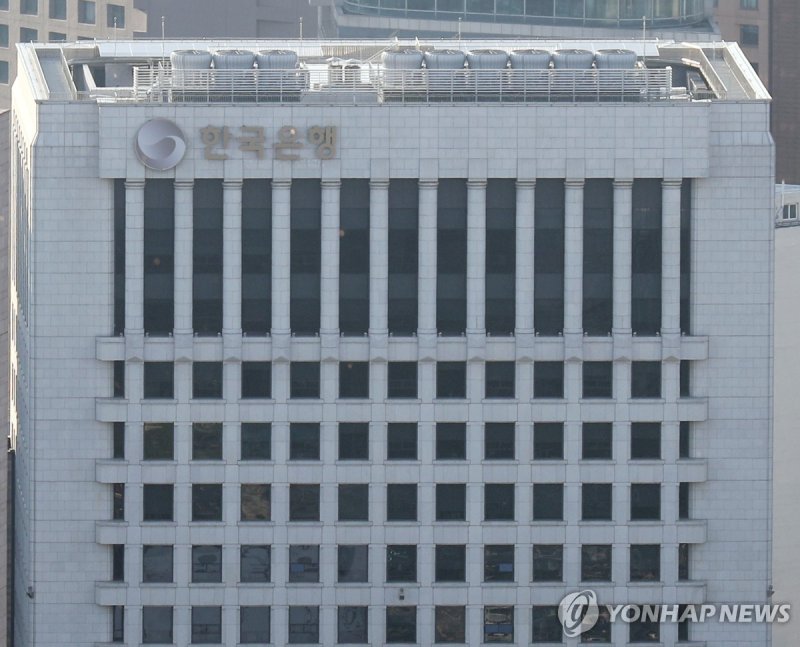
The Seoul bond market was shaken sharply by a surge in global oil prices. The Bank of Korea (BOK) plans to conduct a 3 trillion won outright purchase of Treasury Bonds, which is expected to help stabilize the market in the short term. However, analysts say the overall direction of market interest rates will ultimately depend on where global oil prices head.
According to the bond market on the 10th, the three-year Treasury Bond yield closed at 3.420% per annum the previous day, up 19.3 basis points (bp, 1 bp = 0.01 percentage point) from the prior session. This is the highest level since June 2024. Yields on short- to mid-term bonds with maturities of one to five years, which are highly sensitive to monetary policy expectations, hit new highs for the year. On the same day, the 10-year yield also climbed 12.3 bp to 3.739%.
The main driver of the heightened volatility was global oil prices. Brent Crude Oil and West Texas Intermediate crude oil (WTI), the key benchmarks, extended their gains on the back of the Iran crisis and broke above 100 dollars per barrel, stoking inflation fears. For South Korea, a net oil importer, high oil prices translate into stronger inflationary pressure, which in turn weighs on the bond market.
Foreign investor flows also rattled the market. The previous day, foreign investors were net sellers of 39,056 contracts of three-year government bond futures and 1,642 contracts of 10-year government bond futures.
As inflationary pressure from higher oil prices mounts, some have cautiously begun to discuss the possibility of further tightening by the Bank of Korea (BOK). In the past, periods of high oil prices and rising inflation pressure have often been followed by policy rate hikes.
Cho Yong Gu, a researcher at Shinyoung Securities, said, "With the scenario of a quick end to the war effectively off the table, the timing of the Federal Reserve System (Fed)'s first rate cut is likely to be pushed back to the fourth quarter, or may not come at all." He added, "The Bank of Korea will probably maintain its current hold stance, but the stronger the upward pressure on oil prices becomes, the greater the market's concern about a shift toward tightening."
Some, however, argue that it will be difficult for central banks to respond immediately with rate hikes, given that high oil prices can simultaneously dampen demand and increase downside risks to growth. Ahn Yeha, a researcher at Kiwoom Securities, analyzed, "Rising oil prices can lead to a broad-based weakening of demand, which will make it hard for central banks to quickly pivot back to aggressive tightening."
The Bank of Korea is conducting an outright purchase of Treasury Bonds on this day. The total purchase amount is 3 trillion won, targeting key benchmark issues such as three-, five-, and ten-year bonds.
Ahn explained, "The outright purchase can act as a factor capping the upper bound of yields, but it is unlikely to be a trigger for a full-fledged downward reversal in rates." She added, "Given that the 3 trillion won operation is the largest on record, it should have a short-term stabilizing effect on market interest rates."
Even so, the key variable that will determine the direction of market interest rates remains global oil prices. Depending on whether oil-producing countries implement additional production cuts, upward pressure on energy prices could intensify further.
Ahn said, "If production cuts are strengthened by major oil producers such as the Kingdom of Saudi Arabia (KSA) and the United Arab Emirates (UAE), we cannot rule out the possibility that global oil prices could rise to around 130 dollars per barrel." She continued, "It will be difficult for the BOK to decide on a rate hike based solely on an oil price spike, but higher inflation expectations could build upward pressure on market interest rates."
[email protected] Reporter Hong Yeji Reporter