Mexico Signals Trade Talks With Canada After US, as Trump Pressures by Calling Existing Three-Way Pact ‘Meaningless’
- Input
- 2026-03-10 12:28:29
- Updated
- 2026-03-10 12:28:29
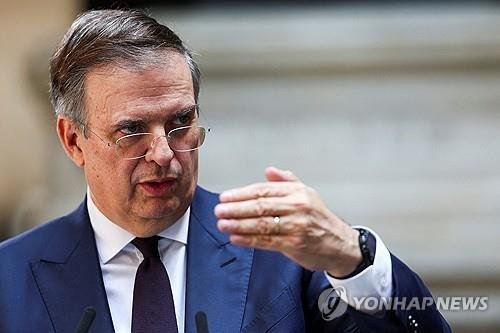
On the 9th (local time), Marcelo Ebrard, Mexico’s economy minister, said at an event announcing the results of a public consultation on the review of the United States–Mexico–Canada Agreement (USMCA), "Starting in early May, we plan to begin discussions with Canada to review the agreement," adding, "We will always support keeping this agreement in its current form." He continued, "Under the president’s instructions, I will travel directly to Canada together with our companies."
Earlier, the Secretariat of Economy of Mexico and the Office of the United States Trade Representative (USTR) had announced plans to hold their first bilateral talks next week to prepare for a joint review of the USMCA. The United States and Mexico are expected to coordinate the specific scope and key agenda items, including reducing dependence on imports from other regions, strengthening rules of origin, and enhancing the security of North American supply chains.
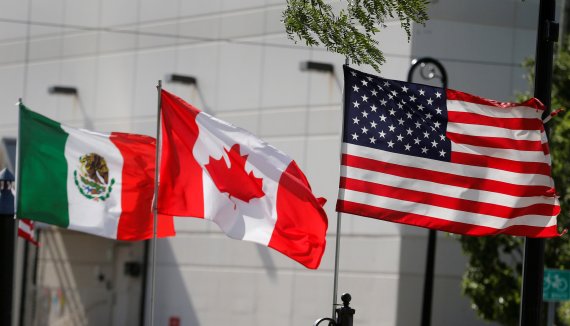
However, the three North American countries—the United States, Mexico, and Canada—must this year conduct reviews and analyses of how each country is implementing the USMCA. This is required under a clause that sets the agreement’s validity at 16 years and mandates a review every six years.
Through the USMCA, the three countries expanded market openness in sectors such as raw materials and dairy products, where mutual dependence had long been high, and significantly raised the required share under rules of origin. Even so, the current Donald Trump administration in the United States argues that the existing 75% regional value content requirement for auto parts should be increased further. President Trump has insisted that "the USMCA is meaningless for the United States" and has even hinted at the possibility of pursuing new bilateral free trade agreements (FTAs) with Mexico or Canada, instead of maintaining the current three-way framework.
In response, the Mexican authorities are striving to keep the current framework intact while limiting any changes to minor adjustments in detailed provisions. Minister Ebrard stressed, "After gathering USMCA-related opinions from 30 sectoral organizations and the governments of 32 states, including Mexico City, we found that nearly 80% support maintaining the USMCA."
A related 59-page report released by the Secretariat of Economy of Mexico also showed that 49% of respondents described the impact of the USMCA as "very positive," while 34% rated it as "positive." The report noted, "There is broad consensus that we should focus on improving implementation without substantially revising the current provisions."
[email protected] Hong Chae-wan Reporter