Asian Countries Seek Their Own Energy Solutions Amid Shock of Strait of Hormuz Blockade
- Input
- 2026-03-10 10:29:54
- Updated
- 2026-03-10 10:29:54
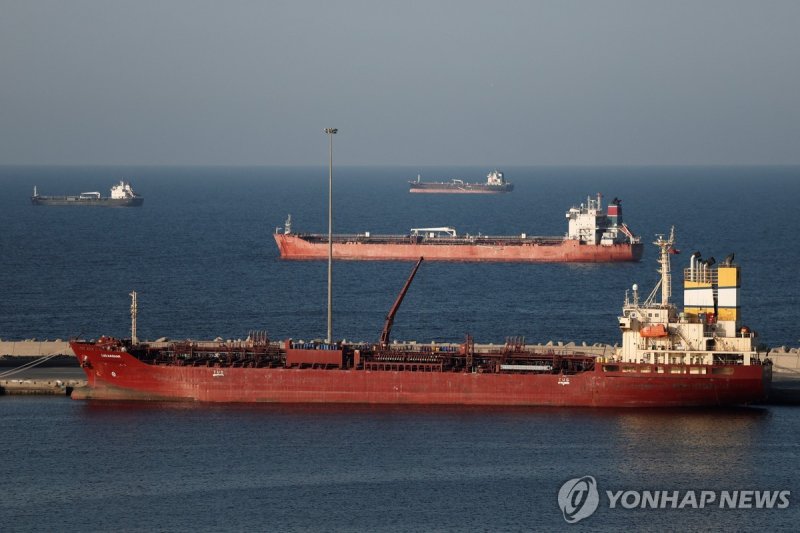
As the Strait of Hormuz, a key chokepoint for global seaborne crude shipments, has been effectively shut down, disruptions in energy supply chains are prompting highly import-dependent Asian countries to seek their own countermeasures, The Asahi Shimbun reported on the 10th. Some governments are introducing caps on retail energy prices, while others are suspending exports to foreign markets. The global economy had recently settled into modest annual growth in the low 3% range, but experts warn that the current spell of high oil prices, if prolonged, could trigger a new era of low growth.
Price caps on fuel sales, measures to prevent hoarding
The Government of South Korea announced on the 9th that it will introduce a maximum price system this week, setting a cap on retail prices of petroleum products to curb sharp increases. President Lee Jae Myung of South Korea said that the current situation in the Middle East is "a considerable burden" on the South Korean economy, which is heavily dependent on energy imports from the region. He also stressed the need to secure transport routes that bypass the Strait of Hormuz and to strictly crack down on illegal practices such as hoarding and cornering the market.According to the Government of South Korea, about 70% of the crude oil the country imports passes through the Strait of Hormuz. Although South Korea holds roughly seven months’ worth of strategic reserves, retail prices for gasoline and diesel at domestic gas stations are already rising across the board.
Bangladesh, which relies on imports for more than 90% of its crude oil, introduced a measure on the 6th that limits how much fuel individuals can buy at gas stations. Local media reported that daily purchases are capped at 10 liters for passenger cars and 220 liters for large trucks and similar vehicles. Bangladesh Petroleum Corporation explained that the move is intended to prevent hoarding.
Suspension of refined product exports, calls to restrict and save fuel use
Thailand, which imports crude oil from the Middle East and elsewhere and refines it domestically before exporting gasoline and diesel products, has in principle halted oil product exports as of the 1st of this month.
The Chinese government has also reportedly ordered major refiners to suspend exports of gasoline and diesel.
China is the world’s largest importer of crude oil and also has the largest capacity to refine crude into petroleum products such as gasoline. Most of this output is consumed domestically, so the impact on export markets in Southeast Asia and elsewhere is expected to be limited. The Asahi Shimbun noted that the move is being interpreted as a step to prioritize domestic demand.
Moves to restrict fuel use are also spreading.
In Myanmar, the ruling military authorities announced new restrictions on car use on the 3rd. From the 7th, vehicles whose license plate numbers start with an even digit may be driven only on even-numbered days, while those starting with an odd digit may be used only on odd-numbered days.
The government of Laos on the 2nd also urged citizens to refrain from unnecessary use of private cars and to avoid excessive fuel consumption.
Ferdinand Marcos Jr., president of the Philippines, on the 3rd called on government agencies and the public to implement energy-saving measures.
He encouraged the use of public transportation and carpooling, and recommended working from home to reduce travel. He also asked that air conditioners be set no lower than 24 degrees Celsius.
In India, which depends on imports for about 90% of its crude oil, Petroleum and Natural Gas Minister Hardeep Singh Puri stated on the 3rd that the country holds "sufficient stocks of key petroleum products such as gasoline." Local media reported on the 7th that a government official said there are no plans to raise retail gasoline prices for vehicles.
However, since the 5th, restrictions have been imposed on household and commercial supplies of liquefied petroleum gas (LPG), fueling concerns about potential shortages and price hikes going forward.
IMF chief: "Global economic resilience is being tested again"
There is growing concern that if the blockade of the Strait of Hormuz continues and the energy crisis emanating from the Middle East deepens, it could fundamentally shake an already low-growth global economy.The world economy has recently been growing at around 3% annually, but since 2023 it has not once exceeded the 2000–2019 average growth rate of 3.7%. Even before the United States and Israel launched attacks on Iran, the International Monetary Fund (IMF) had forecast global growth of 3.3% for this year and 3.2% for next year.
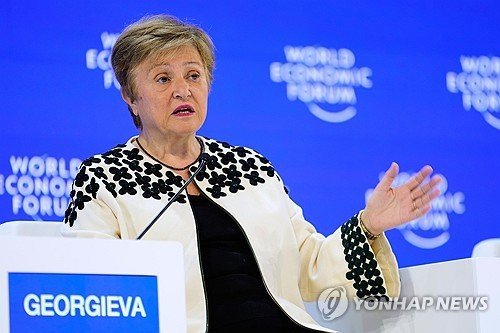
Kristalina Georgieva, managing director of the IMF, attended a symposium in Tokyo, Japan, on the 9th and remarked that "the deterioration of the situation in the Middle East is once again testing the resilience of the global economy."
She warned that a 10% rise in oil prices could push global inflation up by 0.4 percentage points and reduce output by 0.1–0.2 percentage points, adding that many countries, including those in Asia, could face risks in terms of energy security.
In a media interview on the 5th, Georgieva also voiced concern that the impact of Middle East tensions could spread to Asian oil-importing countries, Pacific island countries, and heavily indebted low-income nations. She said, "The IMF has already begun discussing support measures with several member countries."
[email protected] Seo Hye-jin Reporter