Ruling Party and Government Consider Price Cap on Electricity After Fuel
- Input
- 2026-03-10 09:22:15
- Updated
- 2026-03-10 09:22:15
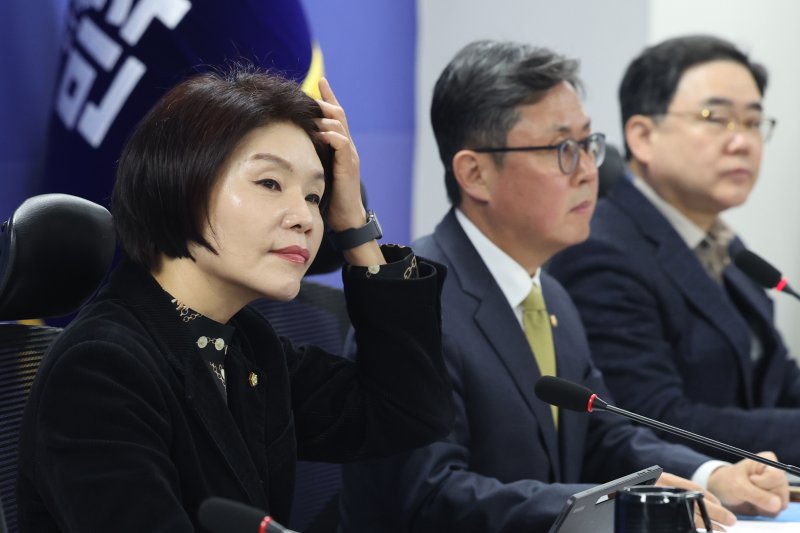
According to The Financial News, the Democratic Party of Korea (DPK) and the Government of South Korea launched the "Task Force on Economic Response to the Middle East Crisis" on the 10th and began preparing a comprehensive response to the economy, including energy, stock markets, prices, and exchange rates. In particular, they plan to introduce a temporary "maximum price notification system" to stabilize soaring domestic petroleum product prices, and the government has also floated the idea of placing a cap on wholesale electricity prices.
On this day, the ruling party and the Government of South Korea held an inauguration ceremony and first plenary meeting of the Economic Response Task Force on the Middle East Crisis at the National Assembly of the Republic of Korea. They discussed measures to counter economic risks stemming from the Middle East, triggered by airstrikes by the United States of America (US) and Israel on the Islamic Republic of Iran.
Han Jeoung-ae, Policy Committee Chairperson of the DPK, explained, "Given that the Republic of Korea (South Korea) relies on imports for 100% of its energy and has a trade dependence ratio of 75%, a prolonged crisis in the Middle East could inevitably deliver a major shock to our economy."
The ruling party and the Government of South Korea intend to monitor domestic and international trends in energy supply and prices, prepare countermeasures against the sharp rise in oil prices, and draw up responses to the broader macroeconomic impact, including rising domestic inflation and a weaker currency.
First, at the level of the Ministry of Trade, Industry and Resources (MOTIR), they will push for a temporary maximum price notification system for petroleum products to help stabilize domestic prices. As President Lee Jae-myung, President of the Republic of Korea, has repeatedly emphasized the need for a maximum price system, the ruling party and the Government of South Korea are expected to accelerate the institutional design.
In addition, they will call on refiners and gas station operators to refrain from raising prices excessively, and will launch special inspections to root out illegal oil distribution practices such as the sale of fake fuel and short deliveries.
They also plan to diversify supply chains. The key is to secure additional volumes to address potential supply disruptions by purchasing crude oil and gas from outside the Hormuz Strait and the Middle East, and to provide financial support through a "supply chain stabilization fund."
Furthermore, Korea National Oil Corporation (KNOC) will bring into the country volumes it produces overseas, including in the Socialist Republic of Vietnam and the United Kingdom of Great Britain and Northern Ireland (United Kingdom), and will exercise its rights under international joint stockpiling arrangements to secure additional supplies. If the supply crisis worsens, the government will pre-transfer strategic reserves so they can be released immediately, and will prepare detailed release scenarios, including allocation criteria by industry and the timing of releases.
The Ministry of Climate, Energy and Environment, as a short-term measure, will expand generation from renewable energy, nuclear power, and coal, while working to offset the burden of higher electricity bills.
Given the expected increase in coal-fired power generation, various regulations related to coal plants—such as the seasonal fine dust management system and restrictions on coal plant operations—are likely to be temporarily lifted.
Measures are also being considered to prevent electricity prices from rising due to higher fuel costs. These include lowering production costs by reducing individual consumption taxes and tariffs on power generation fuels, and potentially introducing a cap on the system marginal price (SMP) in the wholesale electricity market. The government will also expand support under the Energy Voucher Program to ease the energy burden on vulnerable households.
The Financial Services Commission has also prepared measures to address the domestic stock market and exchange rate, which have been hit hard by risks from the Middle East.
They plan to activate a market stabilization program worth more than 100 trillion won, and will intensively crack down on market-disrupting activities such as spreading fake news about the domestic stock market and manipulating prices. Authorities warned that any violations will be met with zero tolerance and severe punishment.
At the same time, the government will expand policy finance for exporters to the Middle East and strengthen preemptive, tailored financial support for industries exposed to the crisis, such as the petrochemical sector.
[email protected] Kim Hyeong-gu Reporter