Iran: "Passage through Hormuz allowed if US and Israeli ambassadors are expelled"
- Input
- 2026-03-10 07:47:19
- Updated
- 2026-03-10 07:47:19
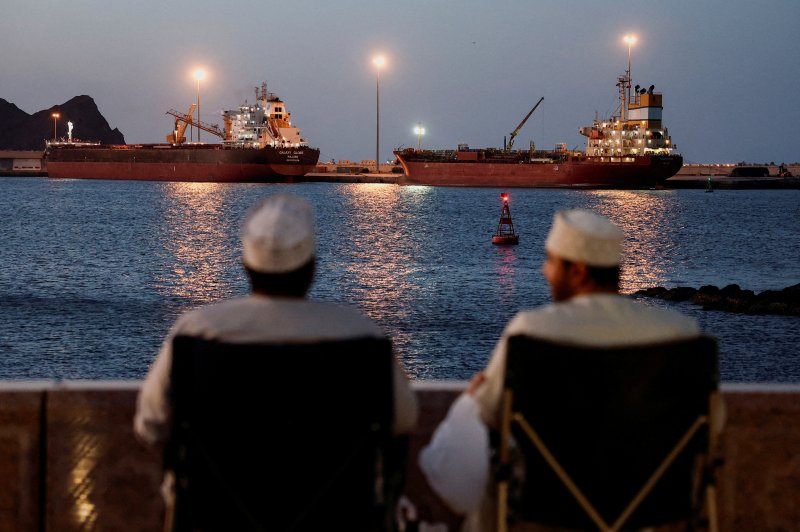
[The Financial News] The government of the Islamic Republic of Iran, which has been blocking the Strait of Hormuz since the 28th of last month (local time) and tightening the global oil supply chain, has announced that ships from countries that expel the ambassadors of the United States of America and Israel will be allowed to pass through the strait.
According to foreign media including The Jerusalem Post of Israel on the 9th (local time), the Islamic Revolutionary Guard Corps (IRGC), Iran’s political-military force, disclosed the conditions for passage through the strait to Arab and European countries that day. The IRGC stated via the state broadcaster, "We will grant full authority and freedom to pass through the Strait of Hormuz to any Arab or European country that expels the ambassadors of Israel and the United States of America from its territory."
The Strait of Hormuz, through which about 20% of the world’s seaborne oil trade passes, has been effectively sealed off by Iranian forces since the United States of America and Israel attacked the Islamic Republic of Iran on the 28th of last month. As a result, international oil prices have climbed to their highest level since 2022.
Donald Trump, President of the United States of America, mentioned on social media on the 3rd that he was considering providing naval escorts and insurance support for oil tankers passing through the Strait of Hormuz. In an interview on the 9th, he said that ships are currently transiting the Strait of Hormuz, but added that he is "considering taking control of the area." At a press conference the same day, Trump warned, "If Iran harms the oil supply, we will hit back even harder."
In relation to this, The Wall Street Journal (WSJ) cited Vikas Dwivedi, Global Oil and Gas Strategist at Macquarie Group Limited, as saying that international oil prices, currently in the high 80-dollar range per barrel, could rise further. In a recent report to investors, Dwivedi argued, "If the blockade of the Strait of Hormuz continues for several weeks, the ripple effects could push oil prices above 150 dollars per barrel."
[email protected] Park Jong-won Reporter