"35% Chance of US Recession This Year" Prediction Markets and Experts Sound the Same Alarm as Oil Prices Soar
- Input
- 2026-03-10 03:18:56
- Updated
- 2026-03-10 03:18:56
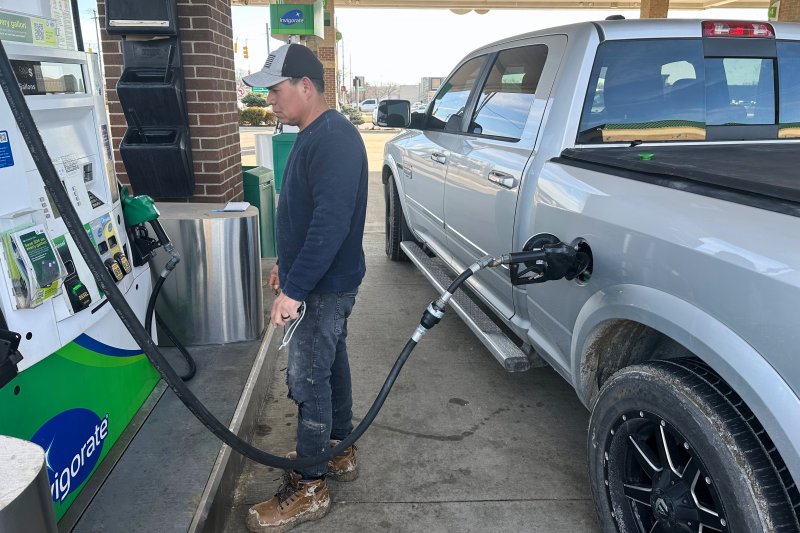
As international oil prices enter the era of $100 a barrel, prediction markets have begun to place bets on the likelihood of a US recession this year.
After war broke out, Iran moved to blockade the Strait of Hormuz, through which about 20% of the world’s oil and natural gas consumption passes. As a result, on the 9th (local time) international oil prices nearly reached $100 per barrel, and in overnight electronic trading they briefly approached $120.
Inflation driven by an oil supply shock, unlike price rises caused by stronger demand, typically has a negative impact on economic growth.
Higher logistics and production costs push prices up, while weaker consumption drags growth down, potentially leading to stagflation.
Prediction markets are focusing on this risk of stagflation.
According to Consumer News and Business Channel (CNBC), trading on prediction market Kalshi on this day implied that people see the probability of a US recession this year as exceeding 34%. This is about a 10 percentage point jump from late last week, when it was below 25%.
On another prediction market, Polymarket, the implied probability stood at 31%.
Kalshi data also showed an 11% probability that a US recession will begin in the first quarter of this year.
The National Bureau of Economic Research (NBER) is the body that officially determines US recessions, but in general the term refers to a situation where economic growth is negative for two consecutive quarters.
These prediction market views, which reflect public sentiment, are not far from expert forecasts.
JPMorgan Chase had already put the probability of a US recession this year at 35% even before the war involving Iran. The bank warned that stubborn inflation and the resulting policy of keeping interest rates high—effectively halting rate cuts—could weigh on US growth this year.
With oil prices entering the $100-per-barrel range, such concerns appear to have intensified.
Goldman Sachs Group (Goldman Sachs) had previously been relatively optimistic, arguing that the Donald Trump administration’s tax cuts and deregulation would offset inflationary pressure from tariffs. However, the recent spike in oil prices is prompting a shift in its stance. Goldman Sachs warned that every 10% rise in oil prices adds 0.28 percentage points to the US Consumer Price Index (CPI), and that if oil stays above $100 for three months, CPI could climb above 3%.
Ed Yardeni, founder of Yardeni Research, sharply raised his estimated probability of a recession from 20% to 35%.
Yardeni warned that the surge in oil prices could push the US into 1970s-style stagflation.
[email protected] Song Kyung-jae Reporter