G7 'Ready to Support Energy Supply' as It Weighs Tapping Oil Reserves
- Input
- 2026-03-10 01:43:25
- Updated
- 2026-03-10 01:43:25
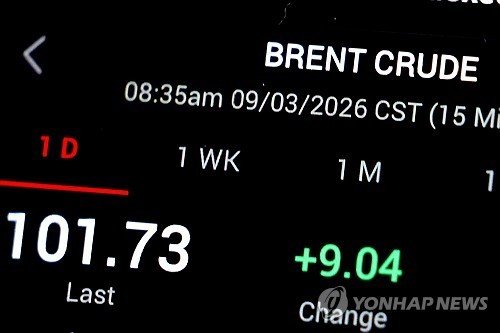
G7 finance ministers held an emergency virtual meeting on the 9th local time to discuss how the war in the Middle East is affecting energy markets and the global economy.
The G7 stated that it is "ready to take the necessary measures to support energy supply," adding that a release of reserves is among the options under consideration.
They nevertheless failed to reach a conclusion on whether to proceed with an actual release.
Roland Lescure, the French Minister of the Economy and Finance, told the Financial Times (FT) after the meeting, which was held together with the International Energy Agency (IEA), that "it is still too early to decide on a release of reserves."
Sources familiar with the discussions said G7 energy ministers are scheduled to hold a separate meeting on the 10th, and that concrete response measures could be decided there.
Executive Director of the International Energy Agency (IEA) Fatih Birol warned that there is "a significant and growing risk to energy markets" and said the recent situation is deteriorating further.
He explained that there are not only disruptions to shipping in the Strait of Hormuz, but also a substantial amount of crude oil production has been halted.
Under the IEA program, 32 member countries hold about 1.2 billion barrels in their strategic petroleum reserve (SPR). The system was created after the oil crisis of the 1970s and has been used only five times as an emergency measure.
Releasing part of these reserves into the market in a coordinated manner is one of the tools available in the event of a supply crisis.
Decisions to release reserves are generally made after the IEA Secretariat analyzes market conditions, and the volumes are allocated according to each country's level of consumption.
Some officials in the United States have reportedly proposed releasing about 300 million to 400 million barrels, equivalent to roughly 25% to 30% of the 1.2 billion barrels held in reserve.
[email protected] Reporter Lee Byung-chul Reporter